




USD$ 89.00
Handwoven Palm Leaf Beach Tote with Sunflower Embroidery and Leather Handles
We added you to this product's waitlist and we'll send you an email when the product is available.
Leave WaitlistThis product is currently sold out.
No worries! Enter your email, and we'll let you know as soon as it's back in stock.


Guaranteed Safe Checkout
| Weight | 0.5 kg |
|---|---|
| Size | H 11.5″ (30cm) x W 17.7″ (45cm) |
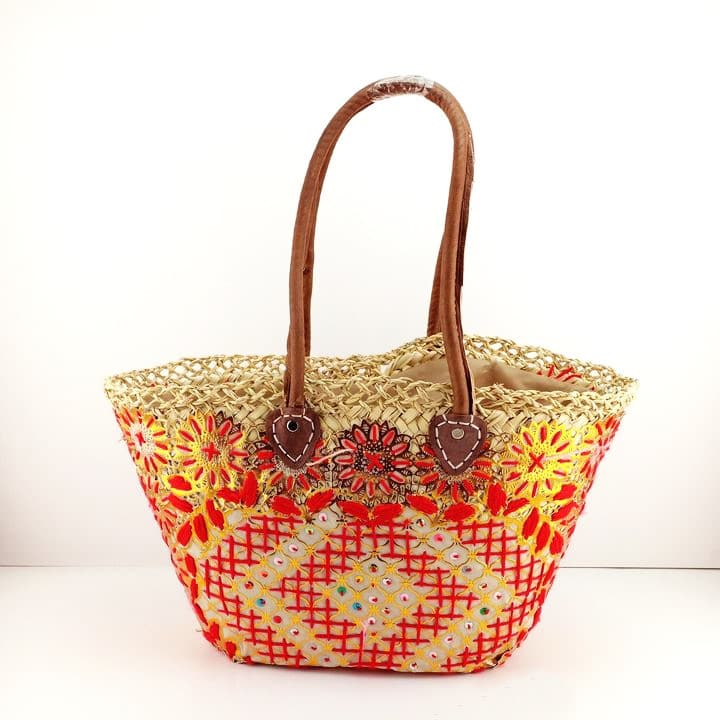
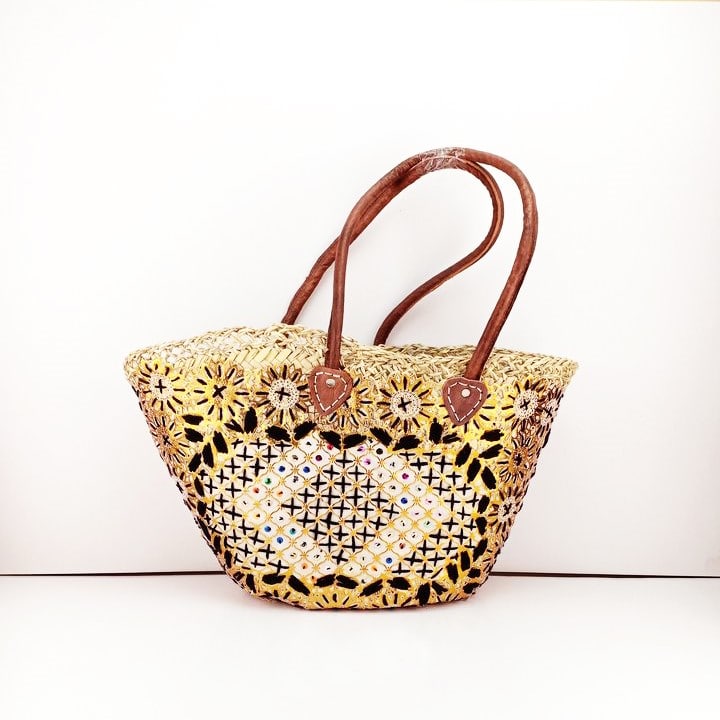
| Color | Black, Gray, Orange, Pistachio |
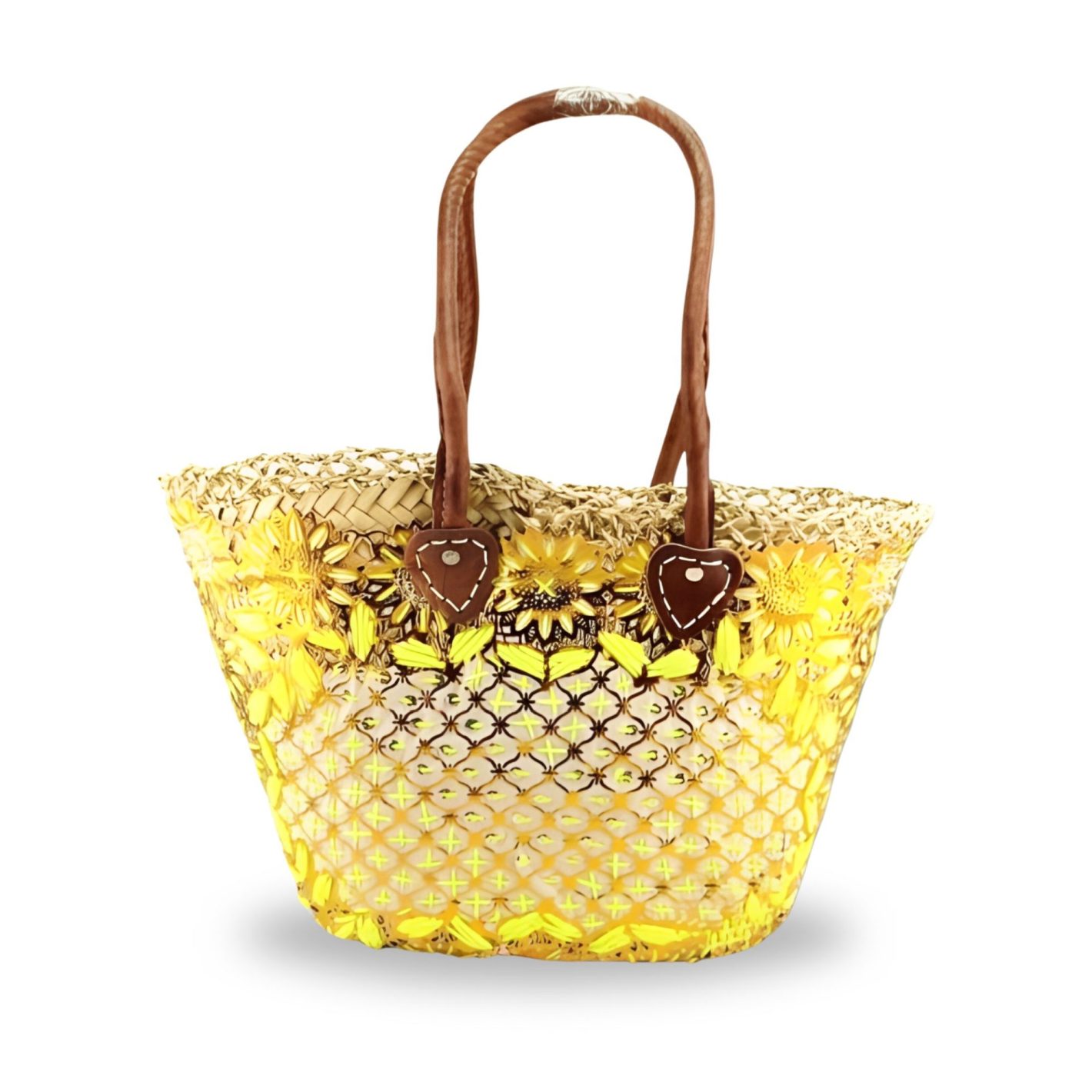
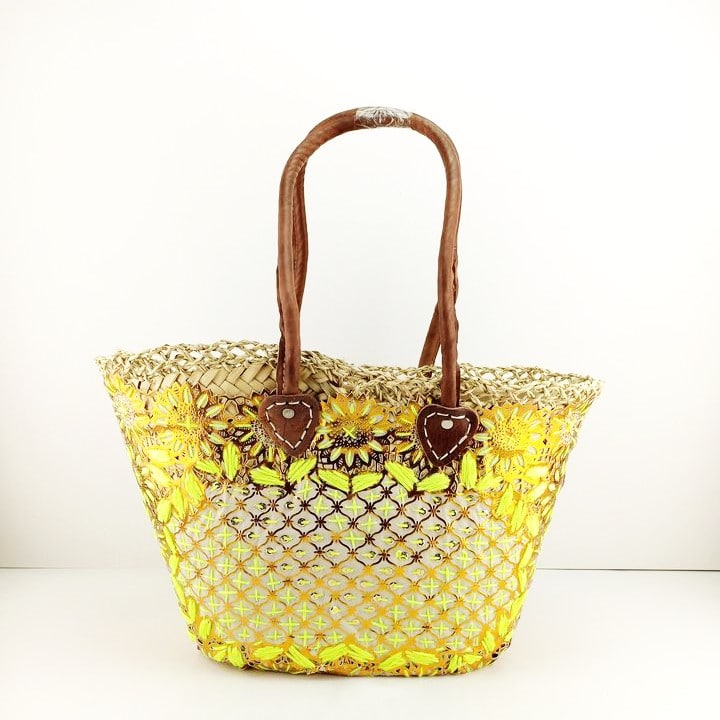
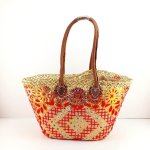
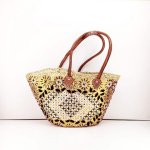
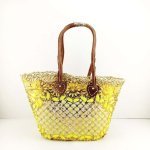
Feel the sun-warmed texture of handwoven palm leaf beneath your fingertips—this open-top tote brings the rhythm of Moroccan craft straight to your beach days. The body is woven from natural palm straw in a matte, earthy beige, then adorned with a cheerful band of embroidered sunflowers in bright yellow, brown, and white. Below the floral border, a geometric lattice pattern with tiny cross details adds depth, all stitched directly onto the straw for a tactile, dimensional finish.
Design & Construction
Two sturdy brown leather handles are anchored to the bag with heart-shaped leather patches, each secured by a single rivet and framed with white contrast stitching. At the apex of each handle, a neat white thread wrapping reinforces the grip and adds a subtle artisanal detail. The open-top silhouette makes it effortless to toss in a towel, sunscreen, and a paperback, while the structured weave holds its shape even when empty.
Meet the Maker
This tote is woven by artisan weaver Dounia, whose hands shape each palm leaf strand with a rhythm passed down through generations. Her work is part of our larger handwoven straw bag collection, where every piece carries the subtle variations that prove it was made by a person, not a machine.
Technical Specifications
- Material
- Handwoven palm leaf (straw), genuine leather handles and patches
- Colors available
- Natural beige, bright yellow, brown, white
- Pattern
- Embroidered sunflower band with geometric lattice and cross motifs
- Closure
- Open top (no zipper or magnetic snap)
- Handle attachment
- Heart-shaped leather patches with rivets and white contrast stitching; white thread wrapping at handle apex
- Surface finish
- Matte, textured natural straw
Pro-Tip & Care
Natural palm straw may shed a few fine fibers during the first few uses—this is completely normal and lessens over time. To clean, simply shake out debris or wipe gently with a dry cloth. Avoid prolonged exposure to moisture to preserve the leather and embroidery.
Your Questions Answered
Will this bag fit a laptop?
This tote is designed for beach and market outings, not as a work bag. It comfortably holds a towel, water bottle, and small essentials, but a 13-inch laptop would be a tight squeeze and is not recommended due to the open weave.
Is the interior lined?
No, the bag is unlined to keep it lightweight and breathable—perfect for sandy days. Small items like keys or lip balm can be tucked into a pouch inside.
Can I use this as a daily purse?
Absolutely. The sunflower embroidery and leather handles make it a cheerful everyday tote for farmers’ markets, picnics, or casual errands. Just be mindful that the open top doesn’t secure valuables in crowded spaces.
How do the leather handles hold up?
The leather is durable and will develop a soft patina with use. The heart-shaped patches and rivets are securely attached, but avoid overloading the bag with heavy items to maintain the shape of the straw body.
For boutique owners and resort buyers, contact our trade team to discuss bulk orders. Explore more one-of-a-kind finds in our full range of handmade bags and accessories.
A: Moroccan straw bags are handwoven from various natural plant fibers, each with unique properties:
- Rattan: Durable vine-like material from tropical palms, known for strength and structured shape
- Raffia: Soft, flexible palm leaf fibers with natural water resistance
- Seagrass: Fast-growing coastal grass with superior water resistance and durability
- Water hyacinth: Sustainable aquatic plant fibers that are soft and pliable
- Palm leaves: Traditional material from date palms and doum palms
- Reed and sedge: Natural marsh grasses used for tight, decorative weaving
All materials are biodegradable, sustainable, and eco-friendly, harvested responsibly and woven by skilled artisans using centuries-old techniques. Each fiber type creates unique textures and patterns, making every bag one-of-a-kind.
A: Proper care keeps your straw bag beautiful for years:
Regular maintenance:
- Empty and vacuum with upholstery brush attachment to remove dust from crevices
- Dust weekly with a soft, dry cloth or soft-bristled brush
- Use packing tape (sticky side out) between cleanings to pick up lint and dust
Spot cleaning:
- Dampen (not soak) a soft cloth with water and gently wipe visible dirt
- For stubborn stains: Mix few drops of mild dish soap in 1 cup warm water, gently scrub with old toothbrush following the grain of the straw
- Wipe away soap with clean damp cloth, pat dry with towel
- Always air dry completely away from direct heat and sunlight
Never: Machine wash, soak in water, use bleach or harsh chemicals, or apply excessive moisture.
A: No, straw bags are not waterproof. Natural plant fibers are absorbent and can be damaged by water. Here's what you need to know:
Water exposure risks:
- Excessive moisture weakens fibers and can cause warping or distortion
- Prolonged wetness can lead to mold or mildew growth
- Water stains may become permanent
Protection strategies:
- Avoid rain: Don't use straw bags in wet weather
- If it gets wet: Immediately blot with dry cloth, stuff with tissue paper to maintain shape, and air dry completely in well-ventilated area
- Optional waterproofing: Some natural fiber protector sprays offer light protection—test on small hidden area first
- Smart planning: Carry a backup fabric tote inside for unexpected weather
Straw bags are best for dry weather occasions: beach days, markets, festivals, brunches, and indoor events.
A: Straw bags are sturdy but not designed for heavy loads. Here's how to use them properly:
Weight guidelines:
- Light to medium items only (towel, sunscreen, wallet, phone, book)
- Avoid overloading—it distorts shape and weakens structure
- Distribute weight evenly throughout the bag
Proper handling:
- Always carry by handles or straps—never grab the woven body
- Rest bag on its flat base, not on rough surfaces that can damage fibers
- Never roll, fold significantly, or compress the bag
What to avoid carrying:
- Heavy electronics (laptops, tablets)
- Multiple bottles or containers
- Wet items (damp towels, swimsuits)—place in waterproof pouch first
- Sharp objects that could snag or tear fibers
With proper use, quality straw bags last for many years.
A: Proper storage preserves shape and prevents damage:
Storage guidelines:
- Stuff with tissue paper or bubble wrap to maintain original shape
- Store in cotton dust bag or pillowcase (never plastic—promotes mold)
- Keep in cool, dry place away from direct sunlight and humidity
- Store upright or lay flat—don't hang by handles (stretches straps)
- Avoid placing heavy items on top
Off-season storage:
- Clean thoroughly and ensure completely dry before storing
- Check periodically for any signs of mold or pests
- Refresh with baking soda sachet to absorb odors
Never store in:
Compressed spaces that crush the structure
A: While traditionally summer accessories, quality straw bags can be styled year-round:
Best seasons:
- Spring/Summer: Perfect for beaches, markets, picnics, outdoor events
- Fall: Great for farmer's markets, casual outings in dry weather
- Winter: Indoor use only (shopping, brunch, as decorative storage)
Year-round styling tips:
- Pair with neutral tones for fall/winter sophistication
- Use as statement piece against darker seasonal wardrobes
- Transition to indoor décor: plant holder, magazine basket, or entryway organizer
Avoid during:
- Rainy seasons
- Snowy/wet winter weather
- High humidity environments
With proper care and weather awareness, your straw bag becomes a versatile four-season accessory.
A: These are marks of authenticity, not defects! Handcrafted straw bags naturally show:
- Color variations: Natural fibers have organic color differences; hand-dyeing creates unique shading
- Weaving irregularities: Each artisan's hand-weaving style creates slightly different tension and patterns
- Texture differences: Natural materials have varying thickness and flexibility
- Size variations: Hand-measured dimensions may vary slightly (typically within 1-2 inches)
These "imperfections" prove your bag was handmade by skilled artisans using traditional techniques. Mass-produced bags lack this character and soul. Each variation makes your piece a one-of-a-kind work of functional art.
A: Yes! Minor damage can often be repaired:
DIY repairs:
- Small breaks or frays: Carefully trim loose ends with sharp scissors
- Loose handles: Hand-stitch reinforcements with strong thread or add leather/fabric patches
- Minor tears: Secure with matching thread following the weave pattern
Professional repairs:
- Significant damage to structure or large tears
- Handle reattachment requiring specialized tools
- Take to leather repair shops or shoe repair services—they have heavy-duty needles and materials
Prevention is best:
- Handle with care, avoid overloading
- Store properly to prevent crushing
- Keep away from pets and sharp objects
Quality straw bags, when properly cared for, can last decades—some families have bags from the 1950s still in use!
A: Absolutely! Straw bags are among the most sustainable accessories:
Environmental benefits:
- Biodegradable: All-natural plant fibers decompose without harm
- Renewable resources: Materials like seagrass, palm, and raffia grow quickly
- Low-impact production: Handweaving uses no electricity or machinery
- Zero waste: Artisans use entire plant with minimal waste
- Chemical-free: Most use natural dyes and traditional tanning methods
Social sustainability:
- Fair trade: Supports artisan communities with fair wages (often 3-4x local minimum wage)
- Preserves tradition: Keeps ancient weaving techniques alive
- Empowers artisans: Provides stable income for skilled craftspeople
- Community impact: Each purchase supports multiple families
Choosing a handmade straw bag is a vote for sustainable fashion and ethical production. Discover our artisan story at Meet Dounia - Moroccan Straw Artisan.
A: Prices reflect handcraft time, material quality, and artisan skill:
Small bags (clutches, mini bags, poufs): $35-$65
Medium bags (shoulder bags, crossbodies, standard totes): $55-$95
Large bags (beach totes, market bags, travel bags): $75-$135
Extra-large or highly detailed pieces: $135-$200+
Factors affecting price:
- Size and capacity
- Complexity of weaving (tight weaves take longer)
- Material type (rattan and water hyacinth often cost more)
- Embellishments (leather straps, tassels, pom-poms, embroidery)
- Artisan reputation and workshop location
Each bag represents days of skilled handwork creating functional art that lasts for generations. The investment supports traditional artisan communities and sustainable fashion. For bulk orders, explore our wholesale Moroccan products.
Choose from two delivery options for your handcrafted Moroccan treasures:
FREE Standard Shipping: USA, Europe: 7-15 business days -International: 10-25 business days. No minimum order requirement
Express Shipping: USA: 3-5 business days - Europe: 2-3 business days - International: 4-10 business days. Rates calculated at checkout
Fulfillment time: Please allow 2-3 business days before shipping begins.
Returns: We offer a 30-day return policy for your peace of mind. For complete details, please visit our Shipping Policy and Return and Refund Policy pages.

REVIEWS
RELATED PRODUCTS



YOU MAY ALSO LIKE


Reviews
Clear filtersThere are no reviews yet.