
Backpacks
Full-grain vegetable-tanned leather, hand-cut and saddle-stitched by Omar — seams built to last a decade of daily use.
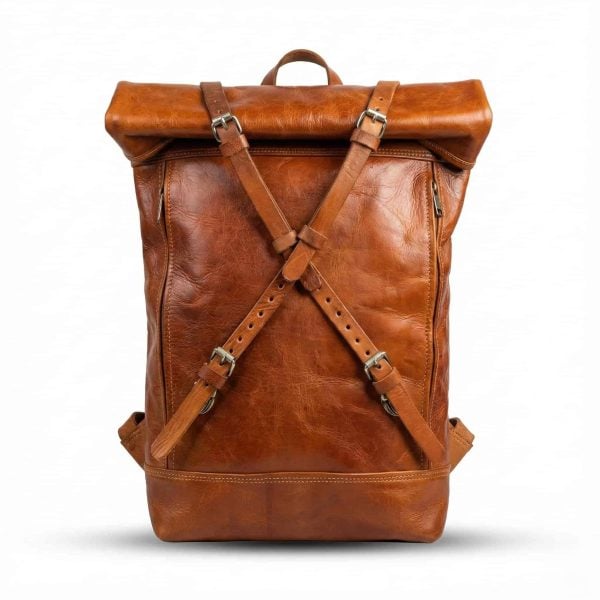


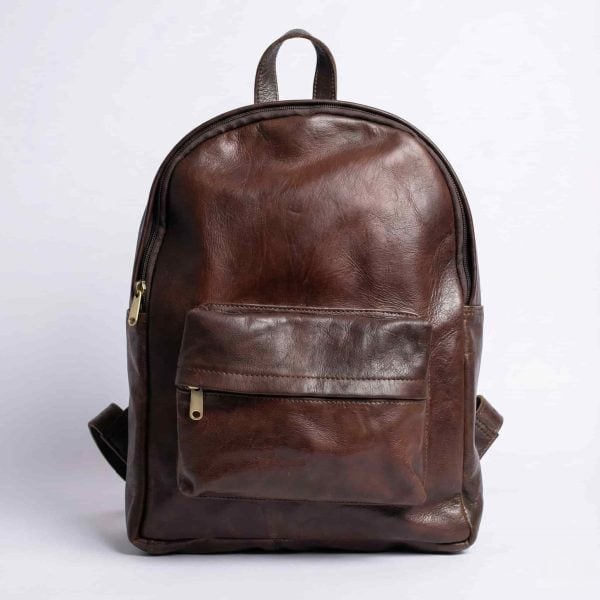


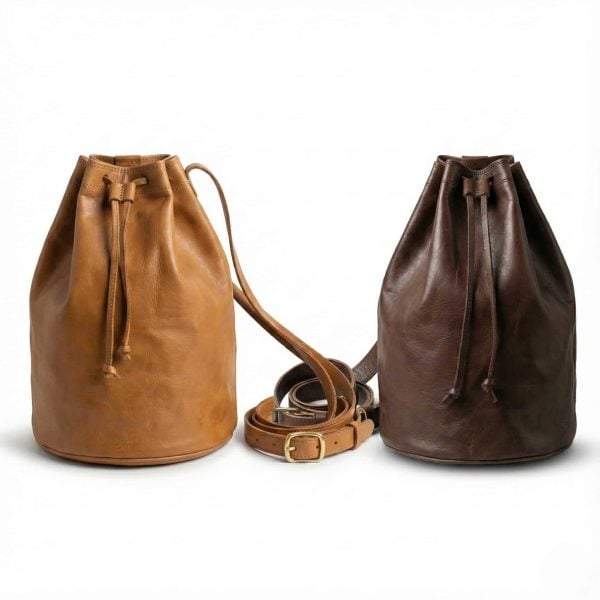


A handcrafted leather backpack is built differently from a synthetic or bonded-leather alternative: full-grain goatskin or cowhide is cut and saddle-stitched by hand, fitted with solid brass hardware, and finished with natural wax rather than synthetic coating. The result is a bag that starts firm and slightly stiff, then softens and molds to your back over weeks of use — developing a patina and fit that a machine-made bag never achieves. These are backpacks built to last a decade, not a season.
Every backpack in this collection is made in Marrakech in partnership with Omar, a master leather artisan with over 20 years of experience at the Bab Debbagh tanneries. Omar selects full-grain goatskin for most styles — prized for its lightweight strength and natural suppleness — and full-grain cowhide for heavier travel-oriented pieces. Each bag is hand-stitched using the traditional saddle stitch, the most durable stitching method in leatherwork, and hand-finished with brass rings, buckles, and drawstring closures sourced locally in Marrakech.
The collection covers six closure and carry styles:
- Rolltop backpacks — expandable top closure that adjusts capacity; fits up to 15″ laptop; ideal for travel and commuting; from $96
- Drawstring backpacks — brass hardware drawstring closure with a relaxed silhouette; from $102
- Buckle backpacks — classic front-strap buckle closure in a structured vintage shape; fits up to 15″ laptop; from $93
- Woven leather backpacks — basketweave-patterned leather panels for a textured, sculptural look; from $83
- Kilim accent backpacks — leather body with a hand-woven kilim textile panel; a collaboration between two Moroccan craft traditions; from $100
- Convertible backpack & shoulder bag — dual carry system, wearable as either style; available in brown, tan, and pink
Most styles accommodate a 13–15″ laptop in the main compartment. For specific dimensions, check the individual product pages.
All backpacks ship free worldwide. For care guidance, visit our Moroccan Leather Care Guide. For the full leather bag collection, see Moroccan Leather Bags.
Choosing the Right Leather Backpack Style
All 14 backpacks in this collection are handmade by Omar at the Bab Debbagh tanneries in Marrakech. The difference between styles is closure type, structure, and carry occasion — here's how they compare:
| Style | Closure | Laptop Fit | Best For | Price From |
|---|---|---|---|---|
| Rolltop | Roll-and-buckle, expandable | Up to 15" | Travel, commuting, variable load | $96 |
| Drawstring | Brass ring drawstring | Up to 14" | Day trips, casual city carry | $102 |
| Buckle | Front leather buckle straps | Up to 15" | Vintage aesthetic, daily work carry | $93 |
| Woven / Basketweave | Top strap buckle | Up to 15" | Statement piece, travel, weekend | $83 |
| Kilim Accent | Buckle + kilim panel | Up to 14" | Travel, gifting, artisan collector | $100 |
| Convertible | Dual backpack / shoulder | Up to 14" | Maximum versatility, travel | — |
How Leather Backpacks Break In Over Time
A new full-grain leather backpack feels firm and slightly rigid — that's normal and intentional. The leather is at its most protective state when it first leaves the workshop. Over the first few weeks of regular use, the hide begins to soften at the flex points: the shoulder straps, the base, and the area behind the main pocket. Within a month of daily carry, most bags have shaped themselves to the wearer's back and feel noticeably more supple.
The surface develops a patina — a deepening and enriching of the leather's natural tones — that grows more distinctive over years of use. Cognac leather moves toward a warm amber; dark brown develops subtle highlights at the stitching and edges. This is not wear or damage; it is the leather becoming more itself. A 10-year-old full-grain leather backpack made by Omar, properly cared for, is almost always more beautiful than it was on day one.
To support the break-in process, apply a small amount of natural leather conditioner (beeswax or jojoba-based) after the first month of use. Full instructions are in our leather care guide.
Frequently Asked Questions — Handcrafted Leather Backpacks
Most backpacks in this collection accommodate a 13–15" laptop in the main compartment. The rolltop, buckle, and woven styles all measure approximately 15.7" wide — sufficient for a standard 15" laptop. The drawstring and convertible styles run slightly narrower at 9.8–10" depth, which suits 13–14" laptops better. The expandable rolltop design adds useful flexibility for days when you need to carry more. Check the individual product page for exact dimensions before ordering if laptop fit is a priority.
Yes — several styles in the collection are designed with travel specifically in mind. The rolltop backpack's expandable closure handles variable packing needs on multi-day trips. The kilim accent backpack and the larger woven styles are sized for carry-on compatible use and airport days. All bags use solid brass hardware — which passes airport security without issue and doesn't corrode over time the way plated metals do. The leather also responds well to temperature and humidity changes better than synthetic alternatives.
Full-grain leather starts firm and softens gradually with use — typically 2–4 weeks of regular carry before the bag feels fully pliable. The shoulder straps soften first, then the body panels flex and mold to your shape. The surface develops a patina — a natural deepening and enriching of the leather's tone — that becomes more distinctive over years. Cognac leather moves toward warm amber; dark brown develops highlights at the edges and stitching. This process cannot be replicated artificially — it's specific to how you carry the bag and where you take it.
The main differences are closure type and structure. Rolltops expand and compress based on load — best for variable-capacity needs. Drawstring styles have a relaxed, open silhouette with brass hardware at the cinch point. Buckle styles use front leather straps for a structured, vintage aesthetic. Woven and basketweave styles have textured leather panels that give a sculptural, artisan-forward look. The kilim accent backpack pairs leather with a hand-woven textile panel — the most distinctly Moroccan style in the collection. The convertible style wears as either a backpack or shoulder bag depending on how the straps are configured.
Daily care is simple: wipe with a soft dry cloth after use to remove dust and surface moisture. Every 6–12 months, apply a small amount of natural leather conditioner — beeswax or jojoba-based — to the main panels and straps. Avoid storing the bag compressed or folded for extended periods; stuff it lightly with tissue paper if storing long-term to maintain its shape. Keep away from prolonged rain and direct sunlight. Full step-by-step instructions, including how to treat the brass hardware, are in our Moroccan Leather Care Guide.