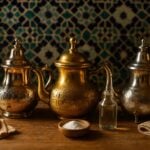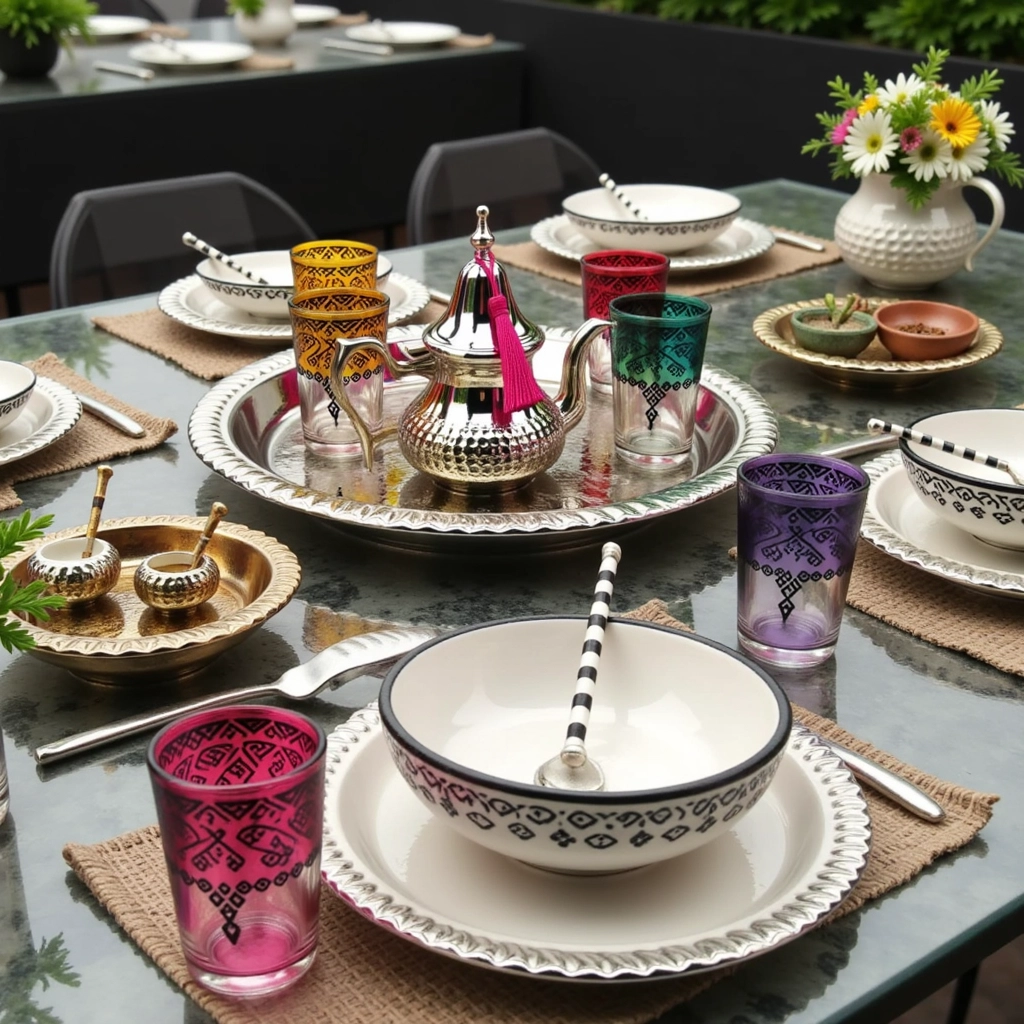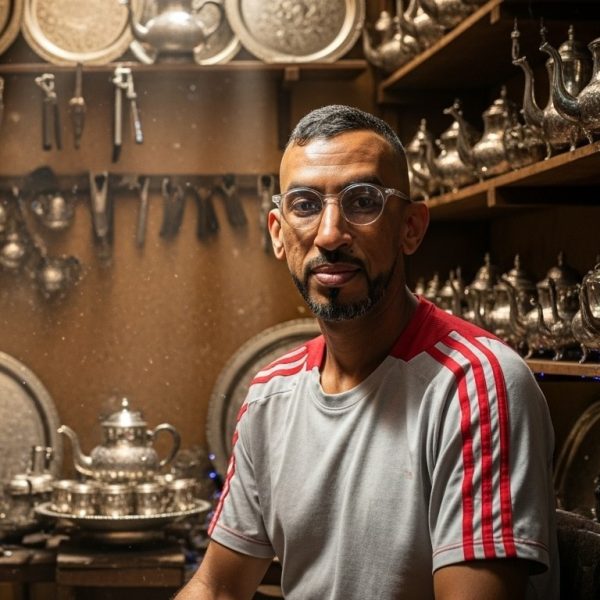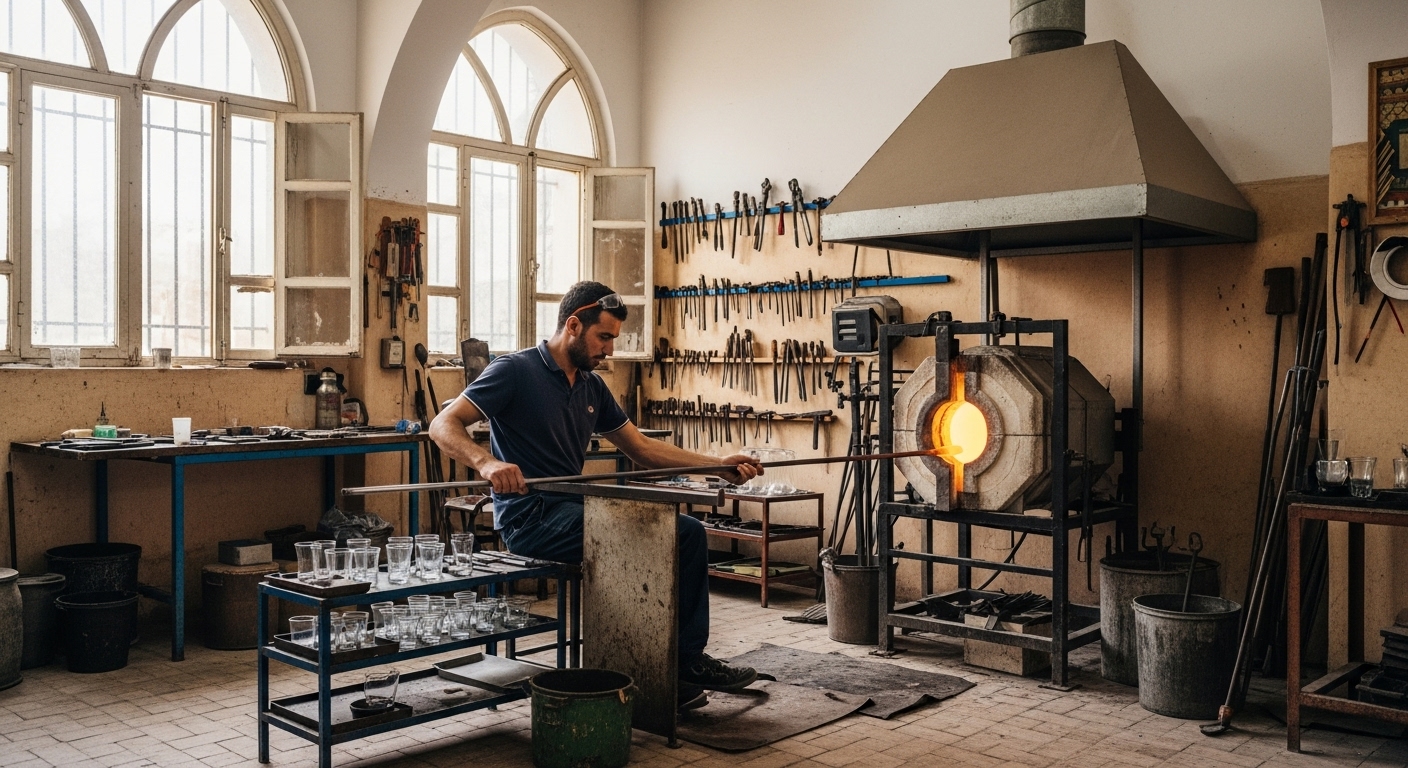
In a small workshop just steps from the Madrasat Ben Youssef, where the temperature hovers at 1,200°C and the glow of molten glass casts dancing shadows on worn walls, Younes shapes breath itself into beauty — crafting the glasses that complete our Moroccan tea sets and pair with our hand-engraved teapots. For twenty years, this master glassblower has been transforming raw silica and recycled glass into delicate drinking vessels, each one carrying the signature of Moroccan tradition—and his own steady hands.
The workshop smells of heat and sand. The furnace roars. And Younes, now 34, moves with the quiet confidence of someone who has made this dance thousands of times before.
Learning to Listen
Younes was just fourteen when his uncle first put a blowpipe in his hands. “I thought it would be easy,” he laughs, remembering. “I’d watched him do it a hundred times. But the first time I tried to blow, the glass collapsed. The second time, it shattered. My uncle just smiled and said, ‘The glass is teaching you.'”
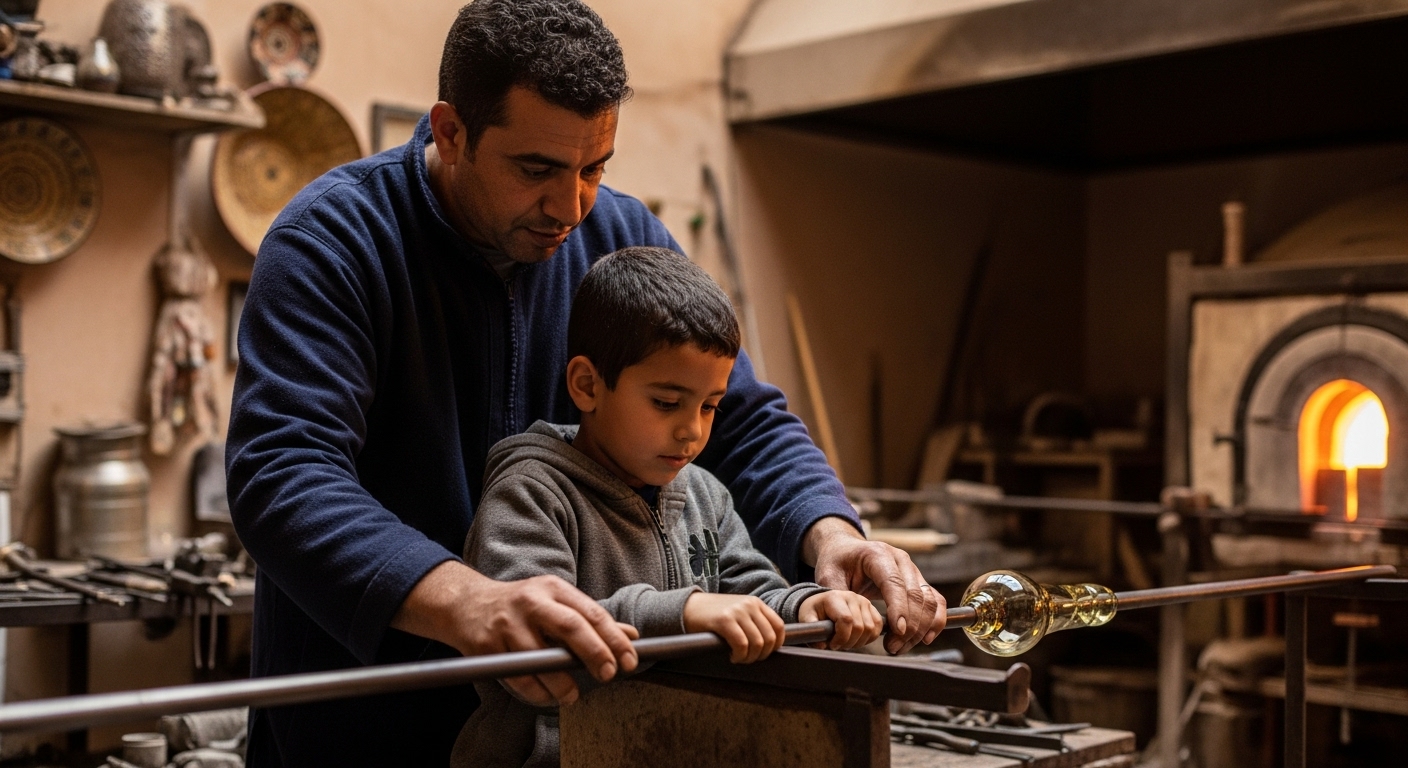
He was right. For two years, Younes’s job was simple: gather the molten glass, watch, and learn. He learned that glass has moods—that the same piece of glass at 1,200°C behaves differently than at 1,300°C. He learned that your breath can’t be rushed, can’t be forced. That glassblowing isn’t about power; it’s about listening.
“The glass speaks to you,” Younes says now, turning a freshly blown cup in his weathered hands. “You learn to listen with your breath.”
Today, Younes is a third-generation glassblower, carrying on a family tradition that stretches back to his grandfather. His workshop, tucked in the maze of Marrakech’s medina, is where ancient technique meets daily practice—and where eight members of his family earn their living.
The Dance of Fire and Breath
Watch Younes work and you’re watching a meditation. He dips his long metal blowpipe—the kasaba—into the furnace, rotating it slowly to gather a glowing blob of molten glass. The glass drips like honey, orange-hot and mesmerizing.

Then comes the first blow. Younes lifts the pipe to his lips and exhales—steady, measured, controlled. Inside the molten glass, a bubble forms. This is the critical moment. Too much breath and the glass becomes too thin, fragile, doomed to crack. Too little and the form won’t take shape at all.
“Every breath must be measured,” he explains. “Too hard, the glass breaks. Too soft, the form collapses. After twenty years, my lungs know the rhythm before my mind does.”
He returns the piece to the glory hole—a smaller opening in the furnace—to keep the glass at working temperature. Then he begins to shape. Using gravity and centrifugal force, spinning the pipe constantly, he coaxes the glass into form. Wooden paddles—mafraj in Arabic—help him flatten the bottom. Metal shears and tweezers—mlaqat—trim and adjust.
The workshop reaches 45°C on a good day. In summer, it’s hotter. But Younes barely notices anymore. His focus is on the glass, on the subtle shifts in color that tell him when it’s ready, when it needs more heat, when it’s time to move to the next step.
Finally, he transfers the piece to a pontil rod and opens the rim—the delicate flaring that makes a simple vessel into a drinking glass. A quick pass through the flame to polish the edge, and it’s done. One glass, perfect and unique, ready to cool slowly in the annealing oven.
Younes makes about thirty glasses a day. Some days more, some days less. Each one slightly different—the natural variations that come from working by hand, by eye, by feel.
Where Art Meets Heart
But the story doesn’t end when Younes finishes a glass. In many ways, that’s where it begins.
At home, in the family courtyard, his wife Fatima waits with her brushes and paints. Around her, sisters, cousins, and aunts sit together in the dappled shade, each with their own collection of plain glass vessels waiting to be transformed.
This is where breath becomes art.
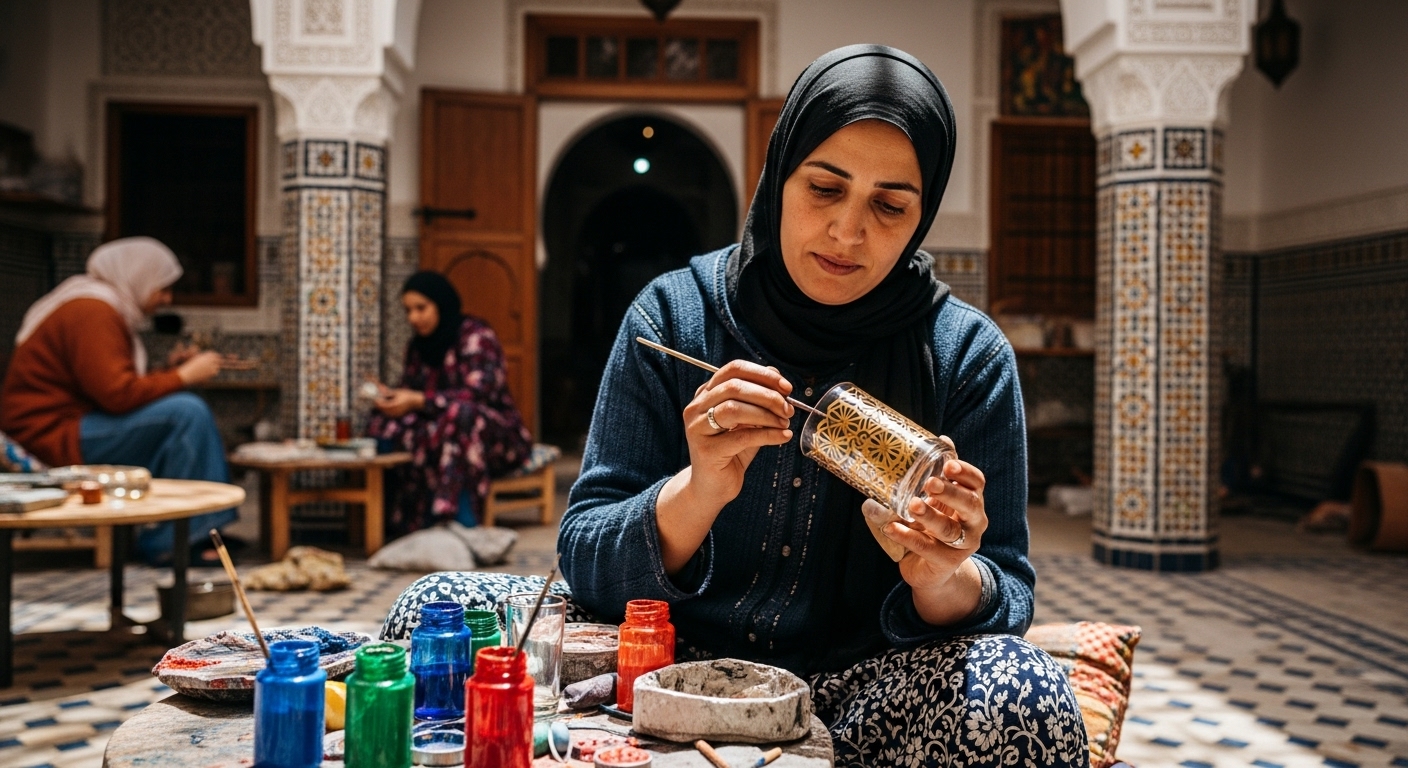
Fatima learned to decorate glass from her mother, who learned from her grandmother. The patterns she paints—delicate geometric designs inspired by Berber heritage, golden filigree that echoes the carved plaster of historic palaces—carry centuries of tradition in every brushstroke.
“Each glass takes me about three hours,” Fatima explains, her brush moving with practiced precision across the smooth surface. “But when I finish, it’s no longer just a cup—it’s a piece of our heritage.”
The women work with specialized glass paints in rich colors: cobalt blue, emerald green, ruby red, and burnished gold. Some glasses receive simple geometric borders. Others bloom with floral designs or flowing calligraphic elements. For special orders—wedding sets, restaurant commissions—the decoration becomes even more elaborate.
While Younes can create thirty glasses in a day, the women together decorate about twenty. The pace is slower, more contemplative. There’s tea, conversation, laughter. Children play nearby. This is work, yes, but it’s also family, community, tradition passed from hand to hand.
“My husband shapes the vessel,” Fatima says. “But we give it its soul.”
A Family Affair
Between Younes’s workshop and the family’s home atelier, eight people depend on this craft for their livelihood. eight people depend on this craft for their livelihood through ethical partnerships and sustainable practices. Like other artisan families across Marrakech’s medina, they’ve built a sustainable business preserving traditional crafts. Younes’s son, now training as an apprentice, is learning the same lessons his father learned twenty years ago. A nephew helps manage the furnace. The women decorators each have their specialties—one excels at geometric patterns, another at floral designs, a third at custom calligraphy.
It’s a sustainable model, rooted in both cultural tradition and economic necessity. The women can work from home, caring for children while creating art. The workshop remains small, manageable, personal. Every piece that leaves their hands carries not just a pattern but a story—of family, skill, collaboration.
The glasses travel far from that small workshop near the Madrasat Ben Youssef. They appear in riads across Marrakech, in restaurants throughout Morocco, and increasingly, through partnerships with ethical retailers like Marrakeche Crafts, in homes around the world.
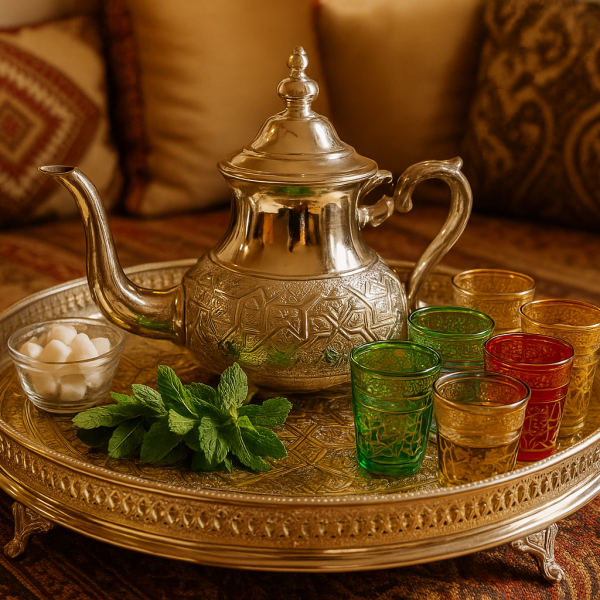
Each glass—whether used for traditional mint tea or as a unique drinking vessel—carries with it the heat of Younes’s furnace, the precision of his breath, and the artistry of Fatima’s brush.
Why It Matters
In an age of mass production, mouth-blown glass is a quiet act of resistance. It takes longer, costs more, requires skills that take years to develop. Machine-made glasses are cheaper, more uniform, easier to source in bulk.
But they don’t have the slight variations in thickness that catch light differently. They don’t have the tiny bubbles—testament to the breath that shaped them. They don’t have the pontil mark on the base where the glass was cut from the rod. They don’t have Fatima’s hand-painted patterns, each one slightly different from the last.
Younes knows the challenges. Young people in the medina increasingly choose other careers—ones with air conditioning, regular hours, steady pay. Imported glassware floods the market. Material costs rise while buyers expect traditional prices.
“When tourists come to Morocco, they see these glasses in every riad, every restaurant,” Younes says. “But they don’t see the hands that made them, the families that depend on them. That’s why partnerships matter—they help our story reach the world.”
He’s training his son now, just as his uncle trained him. The boy is learning to listen to the glass, to measure his breath, to trust the heat. It’s still early—the pieces collapse more often than they hold—but Younes remembers his own beginning. He knows the glass is teaching.
In that hot workshop near the ancient Madrasat Ben Youssef, in the courtyard where women transform plain vessels into art, a craft survives. Not just survives—thrives. Each glass blown, each pattern painted, is a choice. A choice to preserve, to honor, to continue.
And when you lift one of Younes’s glasses to your lips—perhaps filled with sweet mint tea, perhaps with something else entirely—you’re holding all of that. The heat, the breath, the family, the tradition. The patient practice of turning raw materials into something beautiful.
You’re holding a piece of Marrakech. A piece of history. A piece of someone’s hands and heart.
Every handcrafted glass in our collection supports artisan families like Younes’s — just as every leather pouf supports Omar, and every brass lamp supports Abdul Jalil. Browse our glass collection to bring authentic Moroccan craftsmanship into your home. For trade and hospitality orders, visit our wholesale program.