The Traditional Art of Tadelakt: Understanding Morocco’s Ancient Waterproof Plaster

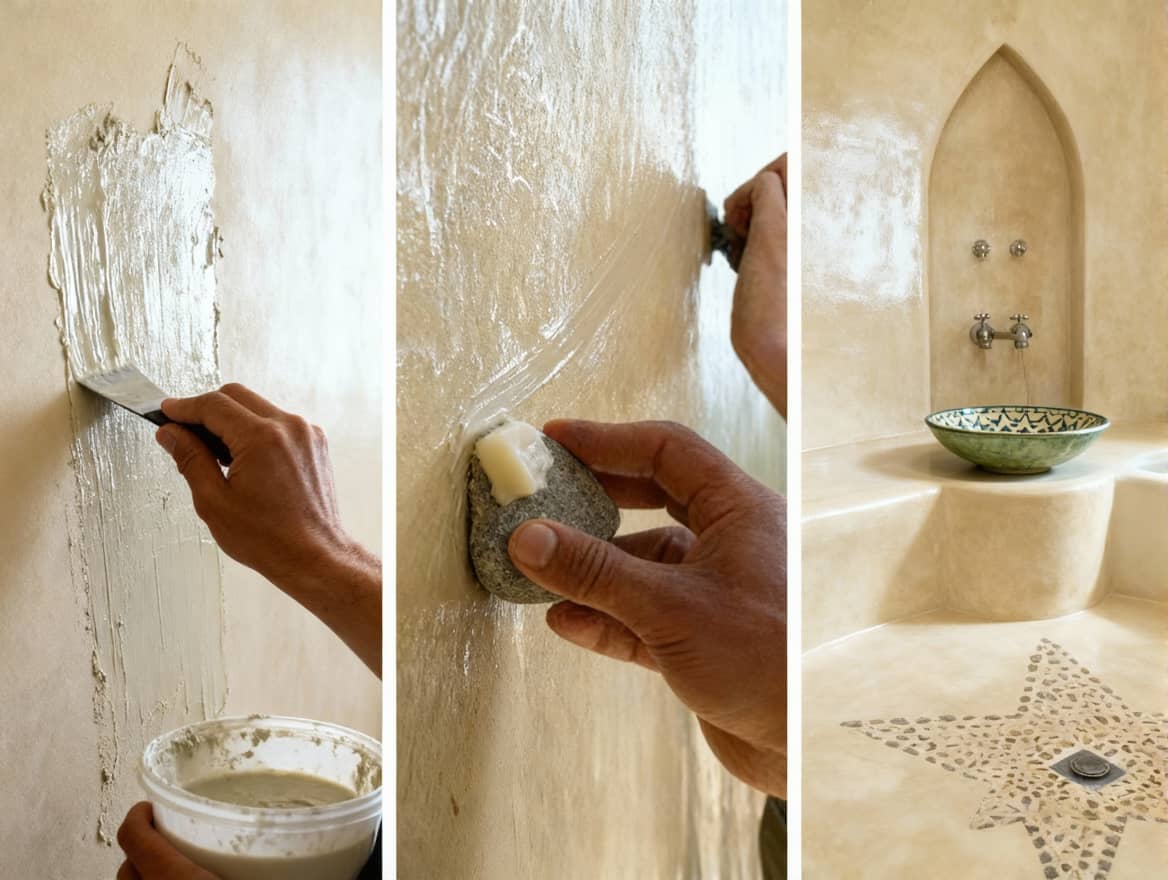
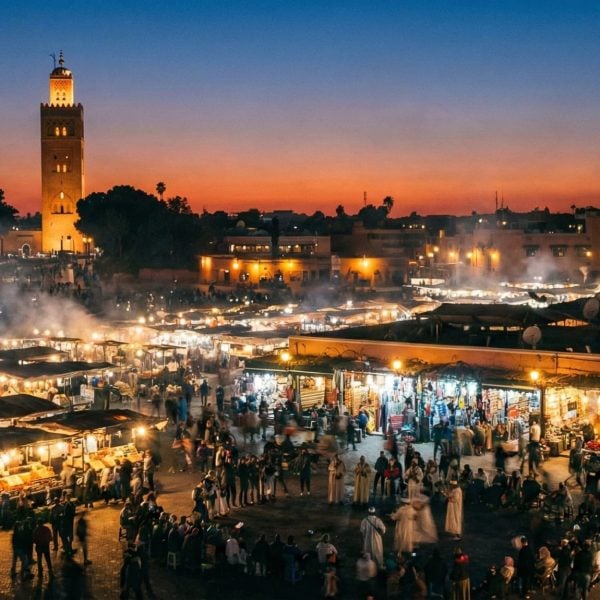
Walk through the riads of Marrakech’s medina, and you’ll notice something extraordinary: bathroom walls that gleam with a soft, stone-like finish, completely waterproof yet breathable, seamless and luxurious. This is Tadelakt—one of Morocco’s most celebrated and misunderstood craft techniques.
As specialists in authentic Moroccan craftsmanship at Marrakeche, we work directly with artisans who preserve these traditional techniques. This comprehensive guide goes beyond the surface-level information you’ll find elsewhere, exploring the chemistry, craftsmanship, and cultural significance of genuine Tadelakt.
What is Tadelakt?
Tadelakt (sometimes spelled “Tadlakt”) is a traditional Moroccan waterproof lime plaster technique that originated in the Marrakech region. The name derives from the Arabic verb “dalaka” (دلك), meaning “to rub” or “to knead”—a direct reference to the burnishing technique that defines this ancient craft.
For centuries, Moroccan artisans have used Tadelakt to create waterproof surfaces in hammams (traditional bathhouses), fountains, and water cisterns. Today, it’s highly sought after by interior designers and architects worldwide for luxury wet areas including showers, bathtubs, basins, and feature walls.
What makes Tadelakt special isn’t just its aesthetic beauty—it’s the remarkable way it becomes waterproof through chemistry, not through coating.
The Two Tadelakts: Understanding Market Confusion
If you’ve researched Tadelakt online, you’ve likely encountered conflicting information. This confusion stems from what we call the “Two Tadelakts” problem.
Modern Commercial Systems
The majority of products marketed as “Tadelakt” in Western markets are pre-mixed, proprietary systems that fundamentally differ from the traditional Moroccan process:
- Pre-formulated powders mixed with water
- Synthetic additives for workability and adhesion
- Wax-based sealers (beeswax or carnauba wax) as the final waterproofing layer
- Simplified application that often omits traditional polishing stones
These systems are convenient and can produce attractive finishes, but they rely on topical sealants rather than integrated chemical waterproofing.
Traditional Moroccan Tadelakt
Authentic Tadelakt, as practiced in Morocco for generations, is an entirely different system:
- From-scratch lime plaster using specific lime types
- Natural materials including lime, fine aggregates, and natural pigments
- Black olive oil soap that chemically reacts with the lime
- Stone burnishing as an essential, not optional, component
- Chemical waterproofing through saponification
This article focuses exclusively on understanding the traditional process—the knowledge that Moroccan artisans have refined over centuries.

The Material Science: How Tadelakt Becomes Waterproof
Here’s what most lifestyle blogs won’t tell you: Tadelakt’s famous waterproofing isn’t created by applying a sealer to the surface. It’s the result of a chemical reaction called saponification—essentially, soap-making that happens directly within the plaster.
The Chemistry of Tadelakt
The waterproofing process involves two key reactants:
Reactant 1: The Lime Plaster Traditional Tadelakt uses lime plaster rich in calcium hydroxide [Ca(OH)₂]. In Morocco, this comes from locally sourced limestone from the Marrakech region, which is naturally hydraulic due to silica and alumina impurities in the stone.
Reactant 2: Black Olive Oil Soap Known in Morocco as savon noir or sabun beldi, this traditional soap contains fatty acids—primarily stearic acid—derived from olive oil.
The Reaction
When the soap solution is applied to the lime plaster and burnished with a stone, a chemical reaction occurs:
Calcium Hydroxide + Stearic Acid → Calcium Stearate
The resulting compound, calcium stearate [Ca(C₁₈H₃₅O₂)₂], is a hydrophobic (water-repelling) metallic salt. This new compound forms in situ—meaning it’s created in place, penetrating the pores of the plaster rather than sitting on top as a coating.
The result is a surface that is:
- Waterproof: Calcium stearate repels water at the molecular level
- Breathable: Unlike wax sealers, it allows moisture vapor to pass through
- Durable: The waterproofing is integrated into the plaster matrix, not a surface film
- Self-renewing: Additional soap applications “feed” the plaster over time
Why Wax is Not Traditional
This is the most critical distinction: wax is a sealant, not a reactant.
When modern systems recommend beeswax or carnauba wax as the final step, they’re creating a topical, non-breathable coating. Wax traps moisture rather than repelling it, can soften with heat, and requires complete removal for re-application.
The traditional process uses soap specifically because it contains hydrolyzed fatty acids that can chemically react with lime. Raw oils (like plain olive oil) won’t work—they would simply darken the plaster and potentially go rancid. The soap must be genuine saponified oil, not a modern detergent.
Traditional Tadelakt Materials
Understanding authentic Tadelakt requires knowing its precise material requirements.
The Lime
Traditional Moroccan Tadelakt uses lime from the Marrakech region, which is naturally hydraulic. This means it contains natural impurities (silica, alumina) that allow it to set through a chemical reaction with water, in addition to the slow carbonation cure that all lime undergoes.
For practitioners outside Morocco:
- Most available lime is pure hydrated lime (Type S lime, calcium hydroxide), which is non-hydraulic
- Natural Hydraulic Lime (NHL) is a closer modern equivalent, rated as NHL 2, 3.5, or 5 based on strength
- The lime should be made into a putty consistency for traditional application
The challenge: Even with correct lime type, the aggregate and technique are equally critical to success.
The Aggregate
The sand or aggregate must be exceptionally fine—this is non-negotiable for authentic Tadelakt.
Requirements:
- Very fine marble sand or sieved lime sand
- Particle size: 0-2mm (effectively powder-fine)
- Not standard masonry sand, which is too coarse
The fineness is essential because the final burnishing process compacts and polishes the surface. Coarse sand particles would prevent the smooth, stone-like finish and impede proper compaction.
Traditional ratio: Approximately 1 part lime putty to 1-1.25 parts fine aggregate (by volume).
Natural Pigments
Traditional Tadelakt can be colored using lime-fast natural pigments:
- Earth pigments: Ochres, umbers, siennas for warm tones
- Mineral pigments: Iron oxides for reds and blacks
- Pigments are mixed into the plaster before application, not painted on afterward
The natural variation in these pigments contributes to Tadelakt’s organic, hand-crafted appearance—much like the natural variations in our Moroccan ceramics.
Black Olive Oil Soap (Savon Noir)
The traditional soap is Moroccan sabun beldi, a soft, paste-like soap made entirely from olive oil and potash.
What makes it work:
- High concentration of fatty acids, especially stearic acid
- No synthetic detergents or additives
- Completely natural saponification
Modern alternatives: Some practitioners successfully use other natural soaps high in stearic acid (such as those made from coconut oil or animal fats), as the reaction depends on fatty acid content rather than the specific oil source. However, traditional practice uses olive oil soap.
For application, the soap is diluted significantly—typically 1 part soap to 10-20 parts water, creating a milky solution.
The Polishing Stone: More Than Decoration
In lifestyle articles, the Tadelakt polishing stone is often described as a tool for creating a “shiny finish.” This fundamentally misunderstands its role.
The stone serves two critical, inseparable functions:

1. Mechanical Compaction
The stone—typically a hard river stone or agate with a Mohs hardness of 7 or higher—is used to vigorously rub and compress the plaster surface. This action:
- Closes microscopic pores
- Creates an incredibly dense surface
- Brings lime to the surface for reaction
- Produces the characteristic smooth, stone-like finish
2. Chemical Catalyst
The stone is used after the soap solution is applied. The pressure and friction from burnishing:
- Forces the soap deep into the plaster matrix
- Accelerates the saponification reaction
- Ensures the calcium stearate forms throughout the surface layer, not just on top
- Generates slight heat that aids the chemical reaction
Critical understanding: Without the stone burnishing, you don’t have traditional Tadelakt. Modern systems that skip this step and rely solely on wax are creating a different finish entirely, regardless of what they’re marketed as.
The Traditional Application Process
Tadelakt is as much about technique as materials. The timing and physical execution are crucial to success.
Step 1: Substrate Preparation
Traditional Tadelakt requires a rigid, stable substrate:
- Historic application: Directly onto brick or stone walls
- Modern application: Cement board, properly installed and sealed
- Critical requirement: The substrate must not flex or move
A base coat is applied first—either a rough lime plaster or a thinset mortar. A fiberglass mesh is embedded in this base coat to prevent shrinkage cracks from transmitting to the finish coat.
Step 2: Tadelakt Plaster Application
The final Tadelakt mixture (lime putty and fine aggregate, with optional pigments) is applied:
- Thickness: Typically 3-5mm for the finish coat
- Method: Troweled on in one or more thin layers
- Working time: Must be planned carefully, as timing is critical for subsequent steps
Step 3: Initial Compression
As the plaster begins to set (usually within 30-60 minutes), the surface is smoothed and compressed with a steel trowel:
- Fills any voids or pinholes
- Begins the compaction process
- Creates a uniform surface for later polishing
Step 4: The Critical Saponification Phase
This is where mastery matters most. When the plaster has hardened but not fully cured—often described as “leather hard”—the soap application begins.
Timing indicators:
- The plaster is firm enough to resist fingerprints
- It’s no longer wet or sticky
- It has begun to lighten in color as it dries
- Typically 2-6 hours after application, depending on temperature and humidity
The process:
- The diluted soap solution is applied liberally with a soft sponge or brush
- The soaped surface is immediately burnished with the polishing stone
- More soap solution is applied during burnishing to keep the surface workable
- The burnishing continues—this is laborious, repetitive work
- The process repeats until the surface becomes compacted, begins to “sparkle,” and water beads on the surface
Moroccan artisans can spend hours polishing a single square meter, working the stone in circular motions with significant pressure. This is not a quick buffing—it’s intensive physical work that fundamentally transforms the plaster.
Step 5: Curing and Maintenance
After the initial soap treatment:
- The plaster continues to cure and harden for weeks
- Full cure can take several months
- The surface should not be heavily used for at least a week
- Ongoing maintenance: Additional soap applications every few years “feed” the plaster and renew the waterproof calcium stearate layer
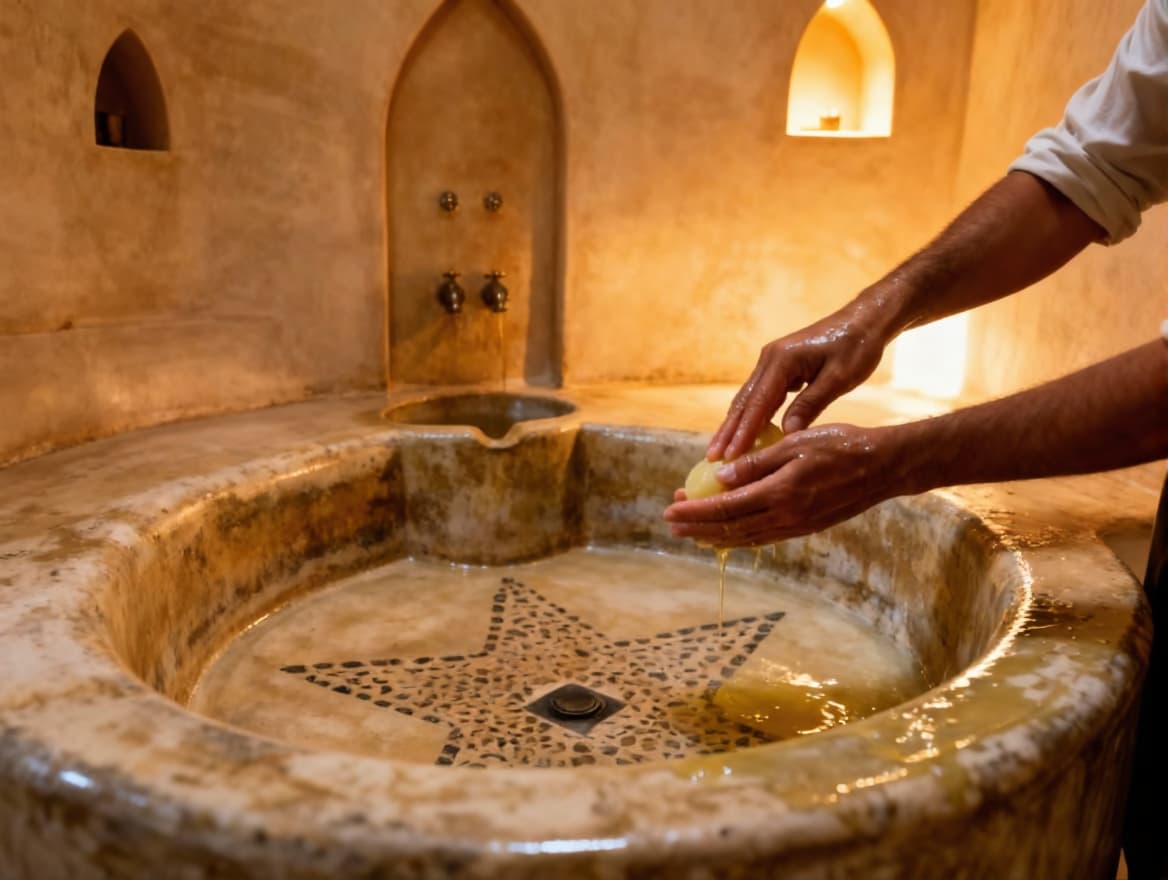
This maintenance aspect is important: traditional Tadelakt is a living finish that benefits from periodic re-soaping, much like how traditional Moroccan leather goods improve with proper care.
Common Mistakes and Misconceptions
Having worked with both practitioners attempting Tadelakt and traditional Moroccan artisans, we’ve observed recurring errors:
Using the Wrong Lime Type
The mistake: Using pure hydrated lime without understanding its limitations, or selecting the wrong grade of Natural Hydraulic Lime.
Why it fails: Non-hydraulic lime cures extremely slowly and differently than traditional Moroccan lime. The timing, strength, and final properties all differ.
The fix: Source proper Natural Hydraulic Lime (NHL 3.5 is a good starting point) or work with suppliers who provide lime specifically formulated for Tadelakt.
Coarse Sand Instead of Fine Aggregate
The mistake: Using standard masonry sand or mortar sand.
Why it fails: Coarse particles cannot be properly compacted and polished. The surface remains rough, porous, and cannot achieve the characteristic smooth finish.
The fix: Source marble dust, fine marble sand (0-2mm), or carefully sieve standard sand to remove larger particles. The aggregate should feel almost like powder.
Substituting Wax for Soap
The mistake: Following modern instructions to apply beeswax as the waterproofing agent.
Why it fails: This creates a topical coating, not integrated waterproofing. Wax traps moisture, can soften with heat, and must be stripped for reapplication. It’s chemically incompatible with the traditional process.
The fix: Use genuine black olive oil soap (savon noir) or another natural, saponified soap high in fatty acids. The soap must be real soap, not synthetic detergent.
Skipping the Polishing Stone
The mistake: Attempting to achieve the finish with trowel work alone, or using soft buffing tools.
Why it fails: Without hard stone compression, the surface remains porous, the soap doesn’t penetrate properly, and saponification is incomplete.
The fix: Source a proper polishing stone—a hard, smooth river stone or agate. The burnishing is not optional; it’s the heart of the process.
Incorrect Timing of Soap Application
The mistake: Applying soap too early (when plaster is still wet) or too late (when fully cured).
Why it fails: Too early, and the soap dilutes or disrupts the plaster. Too late, and the plaster is too hard to absorb the soap or be properly burnished.
The fix: Learn to read the plaster’s condition. Practice on test panels to understand the “leather hard” stage. Temperature and humidity dramatically affect timing.
Expecting Instant Waterproofing
The mistake: Testing water resistance immediately after application.
Why it fails: The saponification reaction takes time, and the plaster needs to cure. Full waterproofing develops over days to weeks.
The fix: Patience. Protect the surface from water for at least a week, and understand that properties improve as the plaster cures.
Cultural Context and Ethical Considerations
Before we discuss modern applications, it’s essential to address an important truth: this knowledge represents generations of Moroccan artisan expertise.
Living Craft Tradition
Tadelakt is not a historic, museum-piece technique. It’s a living craft practiced today by skilled artisans in Morocco who learned from masters who learned from their predecessors. This knowledge is:
- Ancestral: Passed down through families and apprenticeships
- Regional: Specific to the Marrakech area and Moroccan building traditions
- Economic: The primary livelihood for craftspeople who’ve devoted their lives to mastery
- Cultural: Deeply embedded in Moroccan architectural heritage
When you see genuine Tadelakt in a traditional Moroccan riad, you’re witnessing a craft that has evolved continuously for centuries. Just as our artisan profiles showcase the individual craftspeople behind Moroccan goods, Tadelakt has names, families, and communities attached to it.
The Knowledge Gap is Intentional
The technical information in this article is largely absent from other websites not by accident, but by design. Artisan families protect their specific techniques, proportions, and methods as proprietary knowledge that distinguishes their work and sustains their livelihoods.
Respectful Engagement
Understanding Tadelakt chemistry doesn’t make one a Tadelakt artisan any more than understanding glaze chemistry makes one a master potter. There’s a difference between:
- Scientific understanding: Knowing how saponification works
- Technical replication: Successfully applying the process
- Artisan mastery: The speed, intuition, and quality that comes from years of practice
We encourage:
- Attribution: Always acknowledge that this is Moroccan traditional knowledge
- Support: When possible, hire qualified Moroccan-trained practitioners
- Respect: Understand that you’re learning the science of a cultural practice
- Transparency: Don’t claim expertise that comes from study rather than apprenticeship
Much like how we ensure our Moroccan ceramics come directly from artisan cooperatives, authentic Tadelakt deserves the same supply chain integrity.
Modern Applications and Practical Considerations
With proper context established, let’s discuss where and how traditional Tadelakt excels in contemporary settings.
Ideal Applications
Traditional Tadelakt is exceptionally well-suited for:
Wet Areas:
- Shower enclosures and walls
- Bathtub surrounds
- Bathroom sinks and basins
- Hammam-style steam rooms
- Pool edges and water features
Feature Walls:
- Fireplace surrounds
- Accent walls in living spaces
- Kitchen backsplashes
- Architectural details
Why it excels:
- True waterproofing without grout lines or seams
- Warm, organic aesthetic unlike tile or stone
- Breathable (prevents mold in humid environments)
- Improves with age when properly maintained
- Unique, hand-crafted appearance
Limitations and Considerations
Tadelakt is not suitable for every application:
Not recommended for:
- High-impact areas (it can scratch or chip)
- Floors (insufficient hardness for foot traffic)
- Outdoor applications in freeze-thaw climates (lime-based plasters can fail)
- Situations requiring guaranteed standardization (every application is unique)
Installation requirements:
- Requires skilled application (steep learning curve)
- Time-intensive (much slower than modern tile or panels)
- Substrate must be absolutely stable (no flex)
- Climate-controlled curing is ideal
Cost factors:
- Labor-intensive = higher cost than conventional finishes
- Materials are relatively inexpensive, but skill commands premium pricing
- Finding qualified practitioners outside Morocco can be challenging
Sourcing Authentic Materials
For those committed to traditional Tadelakt:
Lime:
- Cornish Lime Company (UK) – Traditional lime products
- Lime Works.us (USA) – Natural hydraulic limes
- Look for NHL 3.5 or NHL 5 classifications
Fine Aggregates:
- Specialty plastering suppliers
- Marble fabrication shops (marble dust as waste product)
- Traditional plastering supply companies
Black Olive Oil Soap:
- Moroccan import shops
- Savon Stories – Traditional Moroccan soaps
- Can be purchased directly from Morocco through specialty importers
Polishing Stones:
- River stone suppliers
- Lapidary suppliers (agate, semi-precious stone offcuts)
- Look for Mohs hardness 7+ and smooth finish
At Marrakeche, we’re expanding our offerings to include authentic materials for traditional Moroccan crafts. Contact us if you’re seeking genuine Moroccan Tadelakt materials or want to connect with qualified practitioners.
Finding Qualified Practitioners
The skill gap is real. Consider these options:
Ideal: Moroccan-trained artisans who learned through traditional apprenticeship
Good: Plasterers or craftspeople who have studied extensively with Moroccan masters and can demonstrate completed Tadelakt projects
Risky: General contractors or painters offering Tadelakt based solely on online research or modern kit training
Ask potential practitioners:
- Where did you learn Tadelakt? From whom?
- Can you show me completed projects that are several years old?
- What materials do you use? (If they mention wax as primary waterproofing, be cautious)
- Do you use polishing stones or just trowels?
- How do you prepare substrates and handle moisture management?
The Tadelakt Aesthetic: Beyond Function
While we’ve focused heavily on the technical process, Tadelakt’s enduring appeal is ultimately aesthetic.
The finish has qualities that no manufactured product can fully replicate:
Visual depth: The polished surface has a subtle depth and luminosity, similar to polished stone or leather, that changes with light angles.
Organic variation: Hand application means subtle variations in texture, tone, and sheen across the surface—the opposite of industrial uniformity.
Tactile luxury: The surface invites touch—smooth, cool, stone-like yet somehow warmer than tile or stone.
Aging gracefully: Unlike finishes that degrade over time, well-maintained Tadelakt develops a patina that enhances its character, much like traditional Moroccan metalwork that improves with use.
Seamless form: The monolithic, jointless appearance creates sculptural forms impossible with tile—curved walls, integrated sinks, continuous surfaces.
This aesthetic is why Tadelakt appears in luxury spas, high-end residences, and design-forward commercial spaces worldwide. It delivers an unmistakable quality that signals craftsmanship and authenticity.
Tadelakt in Moroccan Architecture and Design
To truly understand Tadelakt, one must see it in its original context.
Traditional Applications
In Morocco, Tadelakt has been integral to architecture for centuries:
Hammams: The traditional bathhouses where Tadelakt was perfected. The waterproof, heat-tolerant surfaces were ideal for steam rooms and washing areas.
Riads: Traditional Moroccan houses built around central courtyards feature Tadelakt in bathrooms, fountains, and water features.
Fountains: Public and private fountains throughout Marrakech showcase Tadelakt’s durability—some have been continuously waterproofed for decades through the traditional re-soaping maintenance.
Cisterns: Underground water storage systems relied on Tadelakt’s waterproof properties.
Contemporary Moroccan Design
Modern Moroccan architecture continues to celebrate Tadelakt:
- Boutique hotels and riads throughout Marrakech feature Tadelakt extensively
- High-end hammams and spas use it as both authentic and luxurious
- Contemporary Moroccan homes blend Tadelakt with modern materials
- Design-forward spaces use it to connect to traditional Moroccan craft heritage
Experiencing authentic Tadelakt in Morocco provides an education no article can match. The variations in color, the way it captures light, the integration with traditional Moroccan tiles, and the overall sensory experience reveal why this craft has endured.
Resources for Further Learning
For those committed to deeper understanding of traditional Tadelakt:
Books and Publications
- “Tadelakt: Moroccan Lime Plaster” by various authors on traditional plastering
- “Earth Plasters” by the Natural Building Colloquium
- Building with Lime: A Practical Introduction – Institute of Historic Building Conservation
Organizations
- International Network for Traditional Building, Architecture & Urbanism (INTBAU)
- Natural Building Colloquium
- Traditional building preservation societies in your region
Online Communities
- Traditional building and natural plaster forums (while searching for authentic information, apply critical thinking to distinguish traditional from modern kit methods)
- Lime plastering specialist groups
Experimentation
The best learning comes from practice:
- Create test panels before attempting full installations
- Start with small, non-critical projects (a decorative niche, small bathroom)
- Document your process, timing, and results
- Accept that mastery takes time and many iterations
Conclusion: The Chemistry of Craft
Tadelakt exemplifies something increasingly rare in our modern world: a craft where material science, technique, and cultural tradition are inseparable.
The waterproofing doesn’t come from a product you buy—it comes from understanding the chemistry of calcium hydroxide reacting with fatty acids. The finish doesn’t come from a tool you purchase—it comes from hours of hand-burnishing with a stone. The aesthetic doesn’t come from a formula—it comes from generations of artisan refinement.
This is why, despite modern alternatives, traditional Tadelakt remains sought after. It delivers something that industrially produced materials cannot: the irreplaceable quality of human craftsmanship combined with time-tested material science.
At Marrakeche, our mission is to connect people with authentic Moroccan crafts—from handwoven textiles to artisan-made ceramics to traditional building techniques like Tadelakt. We believe that understanding these crafts deeply, respecting their origins, and supporting the artisans who keep them alive is essential.
Whether you’re a designer specifying Tadelakt for a project, a homeowner drawn to its beauty, or a craftsperson seeking to understand the technique, we hope this guide provides both technical clarity and cultural context.
Tadelakt is more than waterproof plaster—it’s a testament to the genius of traditional Moroccan craft, where chemistry becomes art, and function becomes beauty.
Related Articles:
- Meet the Artisans: Craftspeople Behind Moroccan Traditions
- The Chemistry of Moroccan Ceramics: Understanding Tamegroute Green
- Caring for Traditional Moroccan Crafts: Maintenance Guides
- Moroccan Design Elements: Bringing Authentic Style Home
- Complete the Look: Moroccan Brass Lighting and Leather Poufs to furnish your Tadelakt-finished space
Shop Related Products: