Meet Abdul Jalil: The Moroccan Copper Lamp Artisan Lighting Up the World from Marrakesh

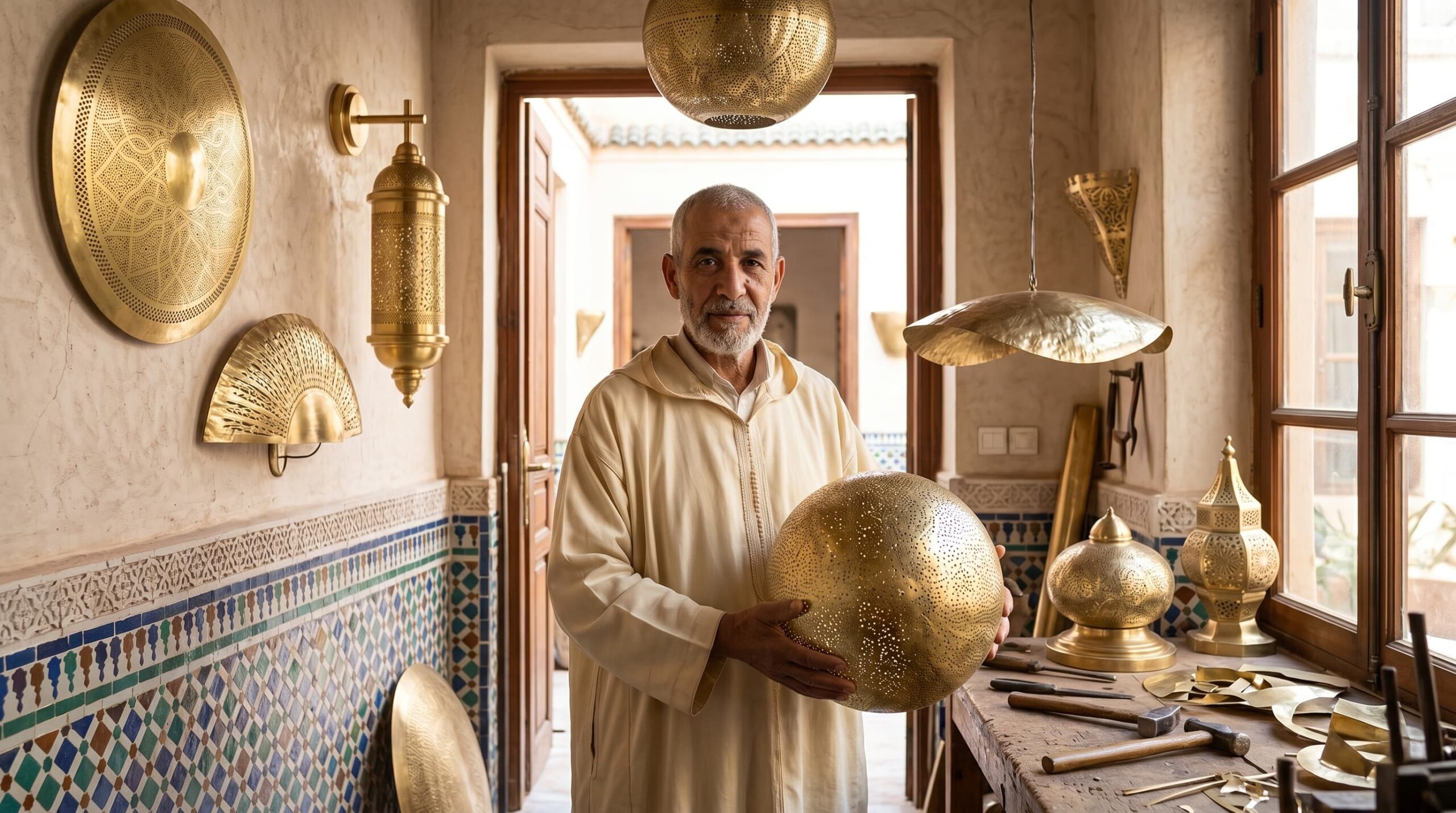
A Legacy Forged in Copper: Thirty Years of Living Tradition
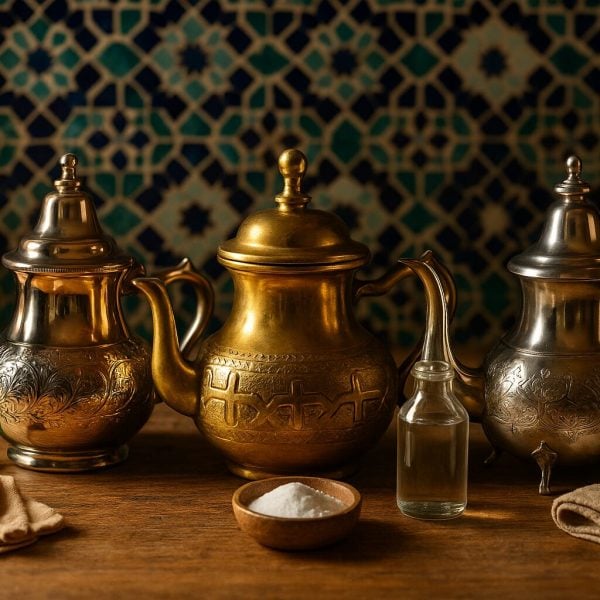
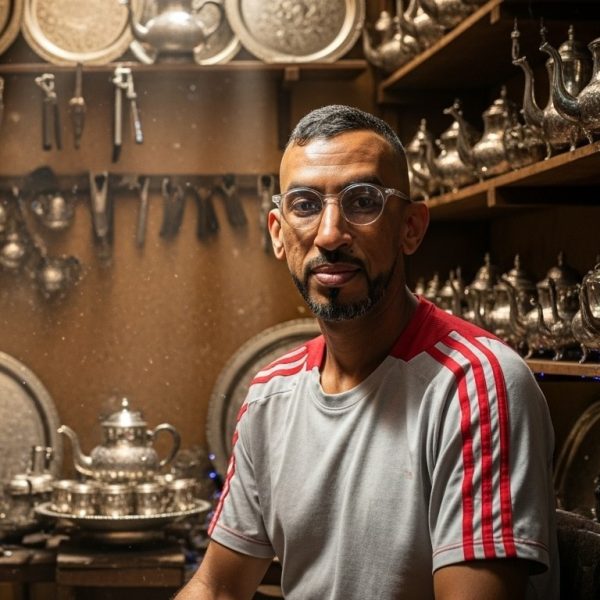
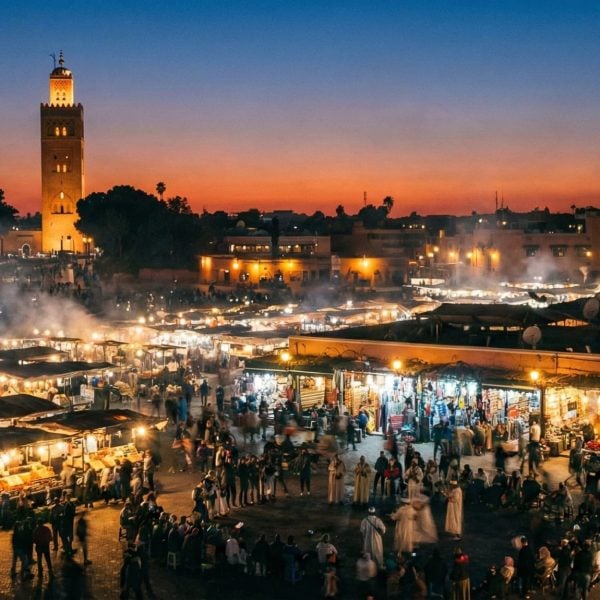
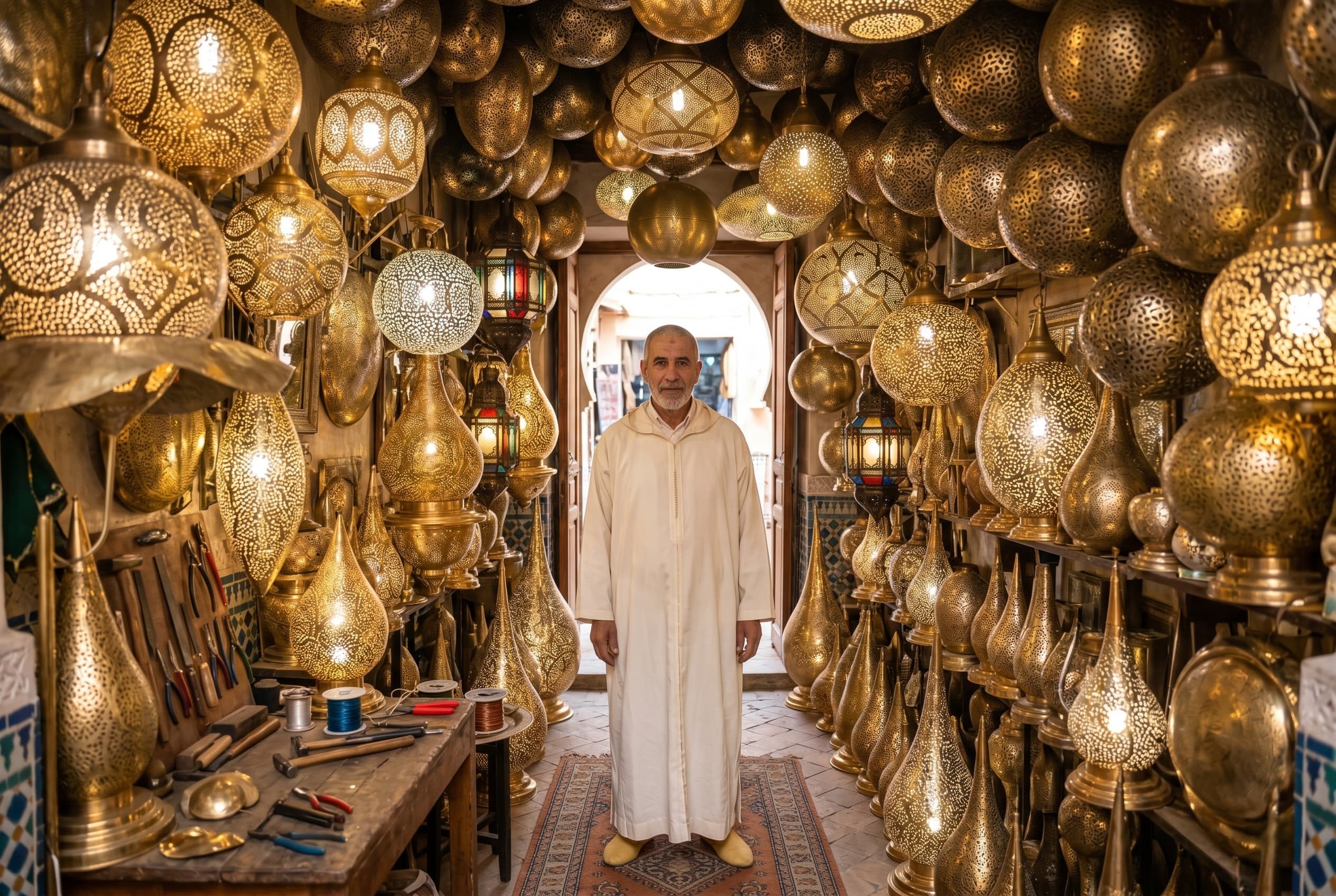
Deep within the ancient Medina of Marrakesh, in the narrow lanes of the Souq Nhas — the old copper and brass market that has served the city’s metalworkers for centuries, steps from the famous leather Souq — master craftsman Abdul Jalil breathes life into metal. For over 30 years, his weathered hands have transformed flat sheets of copper and brass into breathtaking lanterns, each one destined for our Moroccan lighting collection. The rhythmic tap-tap-tap of his hammer against metal is the soundtrack of this quarter — a sound that has echoed through these alleyways for generations, and that Abdul Jalil has kept alive with rare devotion.
What separates Abdul Jalil from most craftsmen is his mastery of not one, but three distinct traditional techniques — each requiring years of dedicated apprenticeship to learn, and decades to perfect:
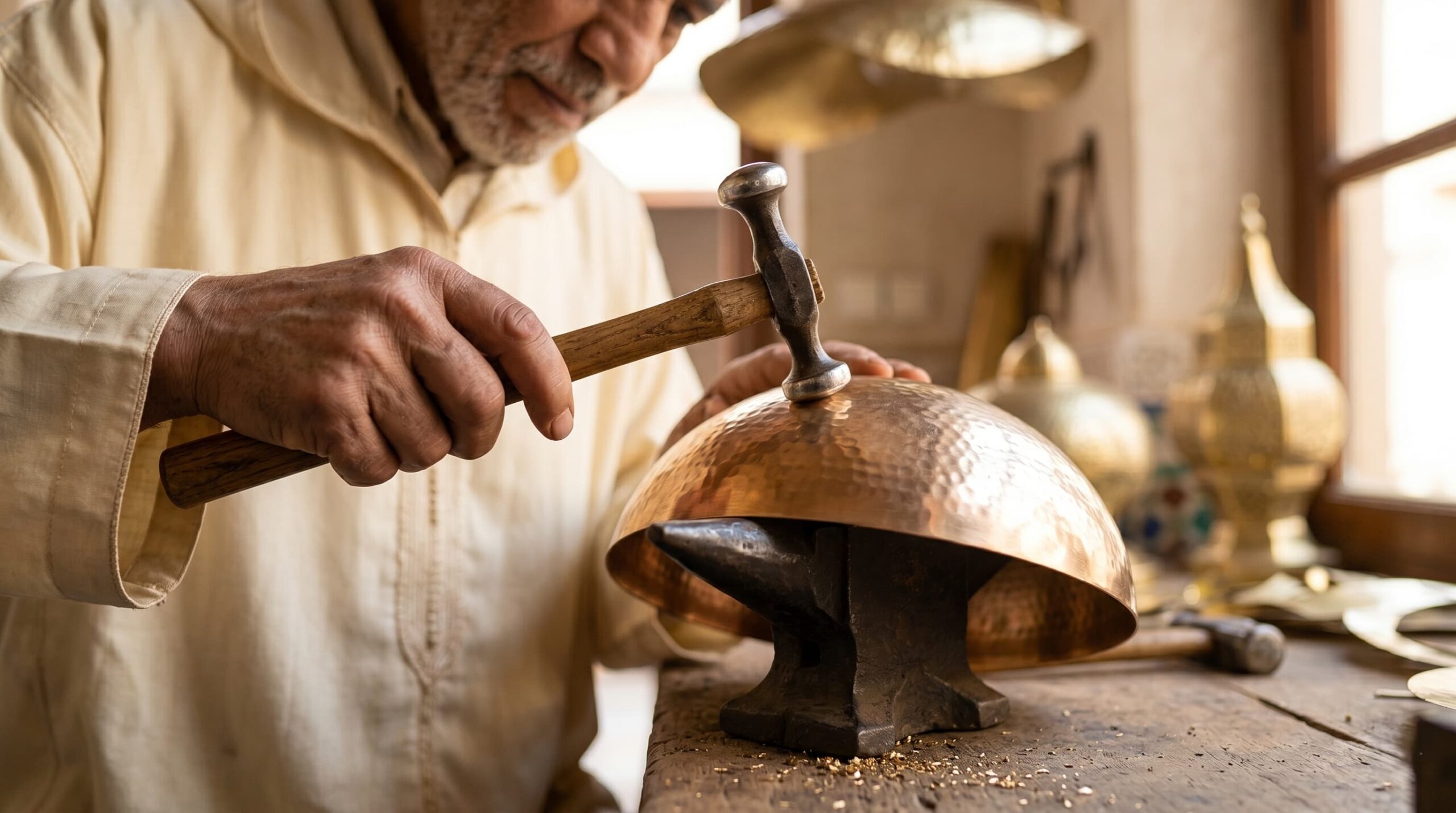
- Hand-Hammering (Dinanderie): The foundational technique. Abdul Jalil shapes flat brass or copper sheets into three-dimensional forms — domes, cylinders, teardrop lanterns — using a progression of hammer heads and an iron anvil. No two blows are identical; the final form is guided entirely by the artisan’s eye and hand memory accumulated over decades. The subtle irregularities of hand-hammering are what give each lamp its organic warmth.
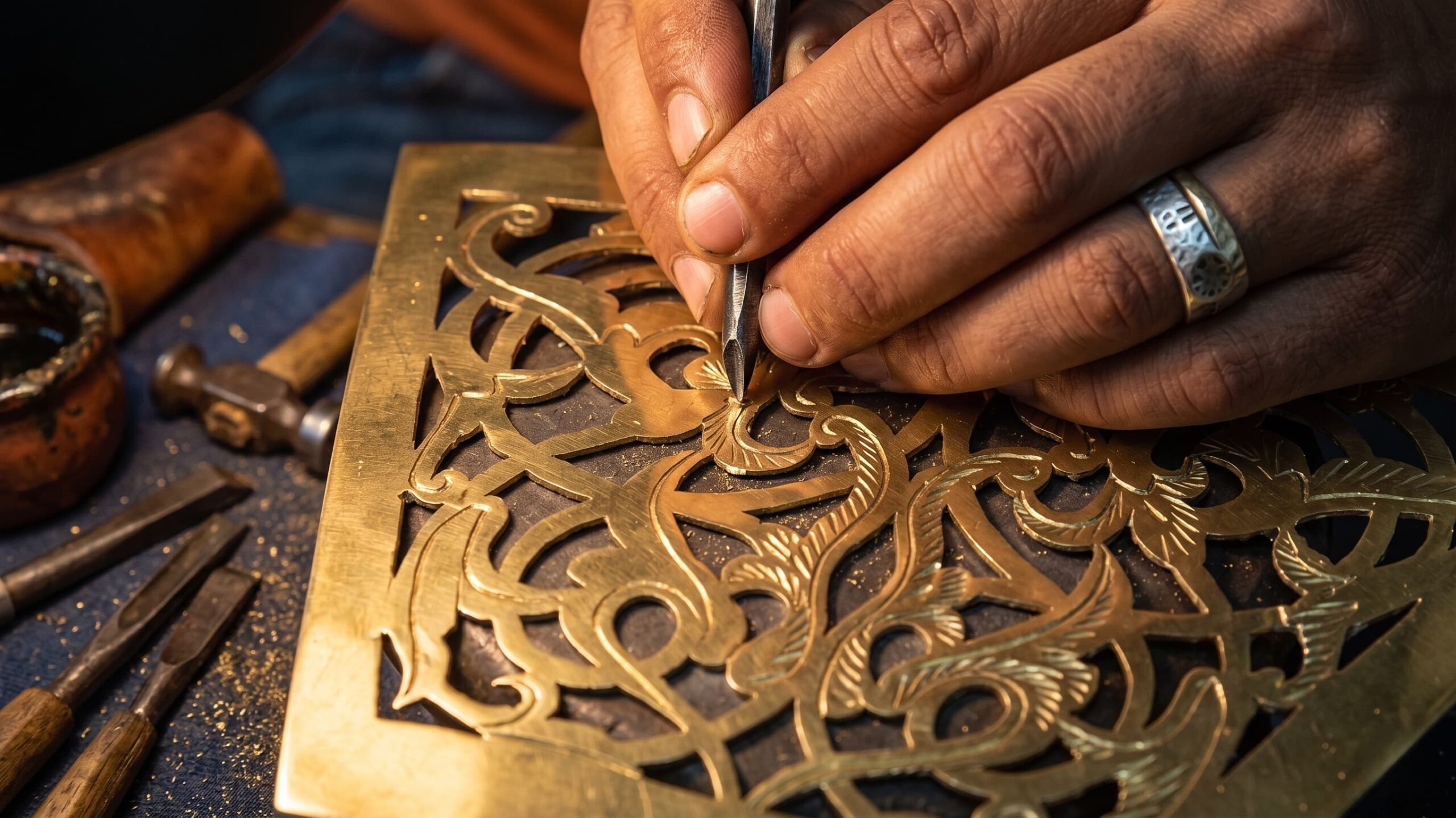
- Hand-Engraving (Naqsh): Once the base form is shaped, Abdul Jalil engraves arabesques, geometric stars, and interlocking floral motifs directly into the surface using steel chisels of varying widths. Crucially, he works entirely from memory — no stencils, no printed guides. Each pattern is a composition held in the mind, drawn out one chisel stroke at a time. This is the technique that defines the visual identity of authentic Moroccan metalwork.
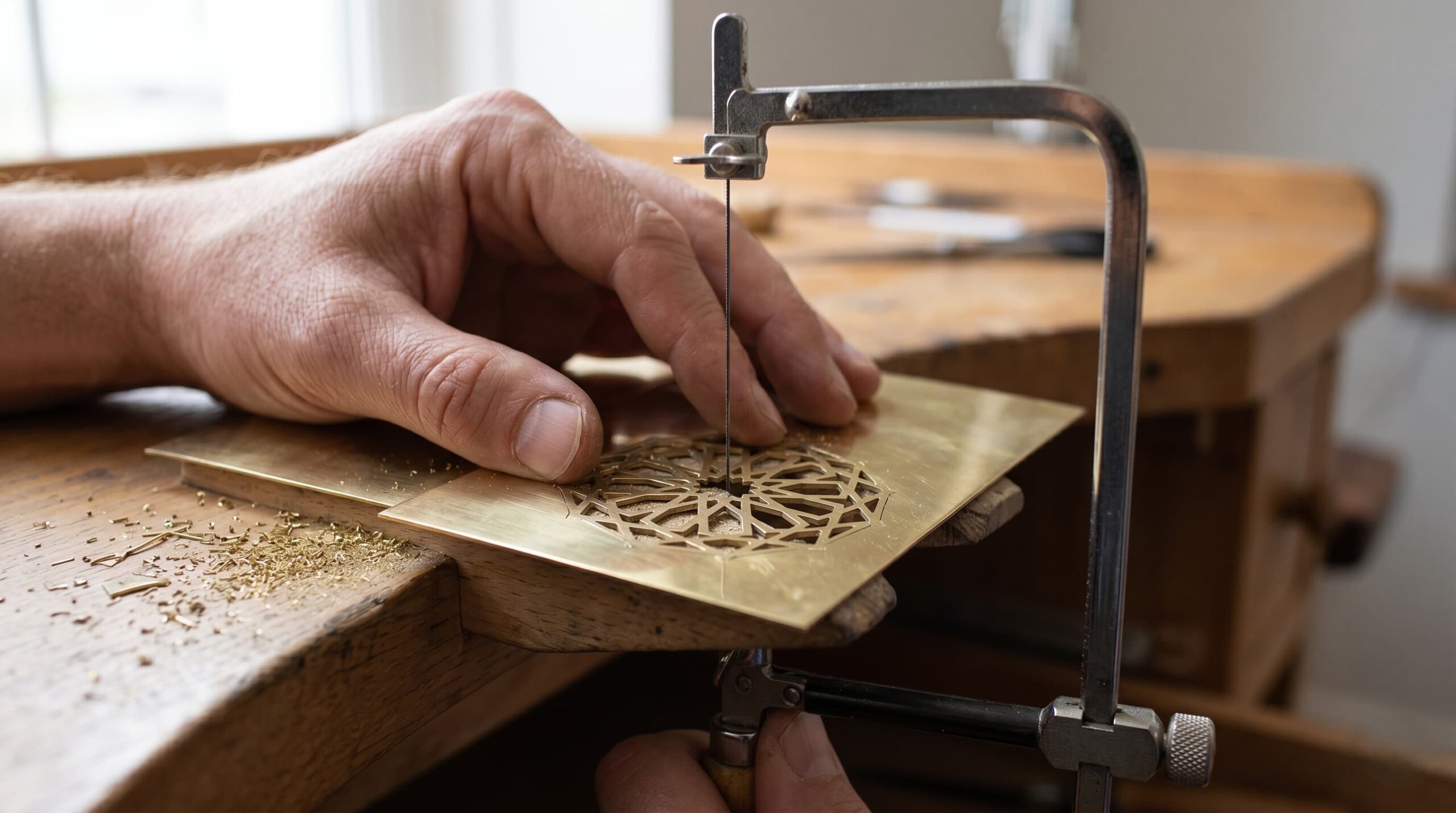
- Perforation / Fretwork Cutting (Serrouj): The most labour-intensive of the three. Using a very fine jeweler’s saw — a thin blade stretched across a small metal frame — Abdul Jalil cuts intricate patterns directly through the brass sheet, removing sections entirely to create open fretwork. A design is first traced onto the surface; then the saw blade is threaded through a tiny starter hole and guided by hand along every curve, angle and arabesque until the full pattern is freed from the metal. A single lamp panel can require hundreds of individual saw cuts, each one demanding steady hands and total concentration. This open fretwork is what allows light to pass through completely unobstructed, projecting the geometric pattern as crisp, sharp shadows — not a soft glow, but a precise constellation cast on the surrounding walls and ceiling.
“Every hole I punch has a reason. The pattern is not decoration — it is a language. My grandfather taught me the geometry; my hands learned the rhythm over thirty years. You cannot rush this.” — Abdul Jalil
Explore our full brass and copper lamp collection and table and floor lamps — each piece handcrafted by masters like Abdul Jalil.
Rooted in Place: The Souq Nhas and Its Living Heritage
Abdul Jalil’s workshop sits at the heart of Souq Nhas, Marrakesh’s ancient metalworkers’ quarter, a short walk from the leather Souq where tannery workers have cured hides in the same open stone vats for a thousand years. The two souqs together form the artisanal core of the Medina — one working in hides, the other in metal — and both have resisted the march of industrial production with stubborn, living continuity.
In Souq Nhas, workshops pass from father to son or from master to apprentice. The smell of hot metal and beeswax polish mingles with the smoke of a hundred small braziers. Abdul Jalil has worked at the same bench for three decades, his tools hanging in the same order his master placed them, his techniques unchanged from those documented in centuries of Moroccan metalwork tradition. To sit across from him while he works is to understand, in the most direct way possible, what living heritage actually means.
Family, Heritage, and the Heart of the Home
Abdul Jalil’s greatest inspiration stems not just from metal, but from his cherished family. Devoted to his wife, Aisha, and their children, Omar and Samira, their modest home — lit, naturally, by his own lamps — is filled with warmth and the comforting aroma of simmering tagines. His deepest dream? To provide for his family while ensuring Omar and Samira inherit a profound pride in their rich Moroccan heritage. Every lamp he creates is a tangible piece of this legacy, a beacon of their culture. Discover the cultural significance of Moroccan geometric patterns and Berber symbolism at The Museum of African Art.
The Medina Hustle: Talent Tested by Tradition
Despite Abdul Jalil’s 30 years of unparalleled skill, the vibrant souks of Marrakesh presented a relentless challenge. Tourists marvelled at the beauty of his copper lamps — the way the pierced Serrouj patterns projected shadows like constellations across whitewashed walls — but they often haggled fiercely, unknowingly devaluing the weeks of hand-hammering, engraving, and piercing embedded in each piece. The local market, though appreciative, couldn’t sustain his family and his art. Many evenings ended with unsold lamps carefully packed away, a familiar weight settling in his heart. He yearned to connect with those who truly understood the value of authentic craftsmanship, beyond the bustling chaos of the Medina.
A Fateful Meeting: Bridging Tradition and Technology
One sun-drenched afternoon, as the muezzin’s call echoed over the ochre city, hope walked through Abdul Jalil’s door in the form of Mohammed, co-founder of Marrakeche Crafts. Mohammed, dedicated to showcasing authentic Moroccan artistry to a global audience, had heard whispers in the souq of an artisan whose lamps were “poetry in metal.” Unlike others, Mohammed didn’t haggle. He picked up a lamp, turned it slowly in the light, and watched the pierced shadows move across the workshop wall. He understood what he was looking at: thirty years of mastery, expressed in three interlocking techniques. He listened to the stories told by the intricate patterns — tales of Berber ancestors and Saharan nights.
“Your work is a treasure,” Mohammed declared with genuine awe. “The world needs to see this. The world needs to experience the light of Marrakesh.” These words ignited a spark in Abdul Jalil. A partnership was born. Learn more about Marrakeche Crafts’ mission to connect artisans with the world.
Navigating New Horizons: From Medina to Global Stage
The path wasn’t without hurdles. Abdul Jalil, a man of fire and hammer, now navigated the complexities of international shipping and e-commerce. With Mohammed’s expertise, they developed custom, robust packaging to protect the delicate lamps on their global journeys — each Serrouj-pierced piece wrapped carefully so the projecting pattern would survive transit intact. They crafted a stunning online gallery where professional photography captured the ethereal glow and breathtaking shadow-play of each lamp. The descriptions explained not just the design, but the three-step process — hand-hammering, hand-engraving, hand-piercing — inviting global customers to connect with the hands and the thirty years of knowledge behind the art.
The Light Shines Globally: Recognition and Renewal
The first international order — from Kyoto, Japan — was a moment of profound triumph. Abdul Jalil packed the lamp with immense care, including a heartfelt handwritten note. Soon, orders flowed in from every corner: a boutique hotel in Paris commissioned a lobby collection featuring our Moroccan hanging lamps; a family in New York sought a grand chandelier as their home’s centrepiece. The song of Abdul Jalil’s hammer now rang with renewed purpose. He took on two young apprentices from the Souq Nhas, passing on the trio of techniques — hammering, engraving, piercing — that might otherwise have been lost. His workshop transformed from a solitary haven into a vibrant hub of creativity and shared knowledge. Financial security replaced worry, bringing prosperity and immense pride to his family.
Ambassador of Light: A Dream Realized
One evening, atop his family’s rooftop terrace overlooking the glittering Marrakesh skyline, Abdul Jalil received a message. It was the woman from Kyoto. Attached was a photograph: his lamp, glowing warmly in her home, casting the enchanting Serrouj shadow-pattern across a pale Japanese screen. “Your lamp has brought a piece of Moroccan magic into our lives,” she wrote. “Thank you for sharing your gift with the world.” Tears filled Abdul Jalil’s eyes as he looked at his family, their faces bathed in the city’s light. He was no longer just a craftsman hidden in Souq Nhas.
Through his exquisite copper lamps — from ornate wall sconces to statement pendant lights — he had become an ambassador of his culture. His creations now graced homes worldwide, a luminous testament to the enduring power of tradition and the transformative magic of global connection. The light of Marrakesh, once a medina secret known only to those who found their way down the right lane in Souq Nhas, now shines brightly across the globe. Interior designers and hospitality professionals can explore our wholesale program to bring Abdul Jalil’s craft to their projects.