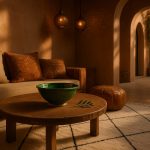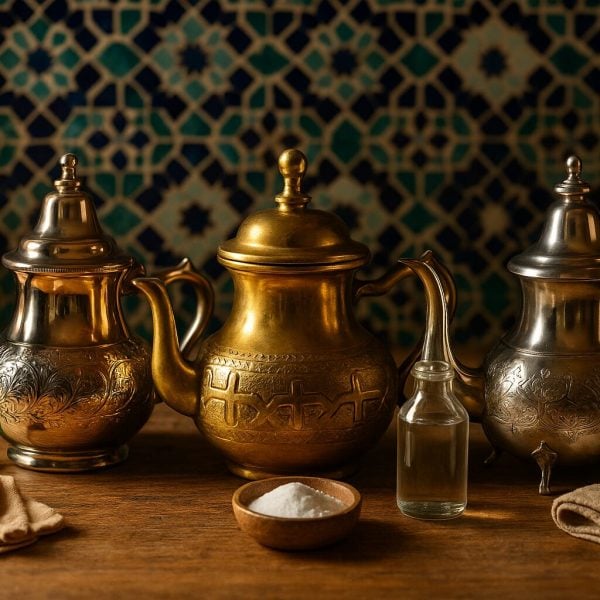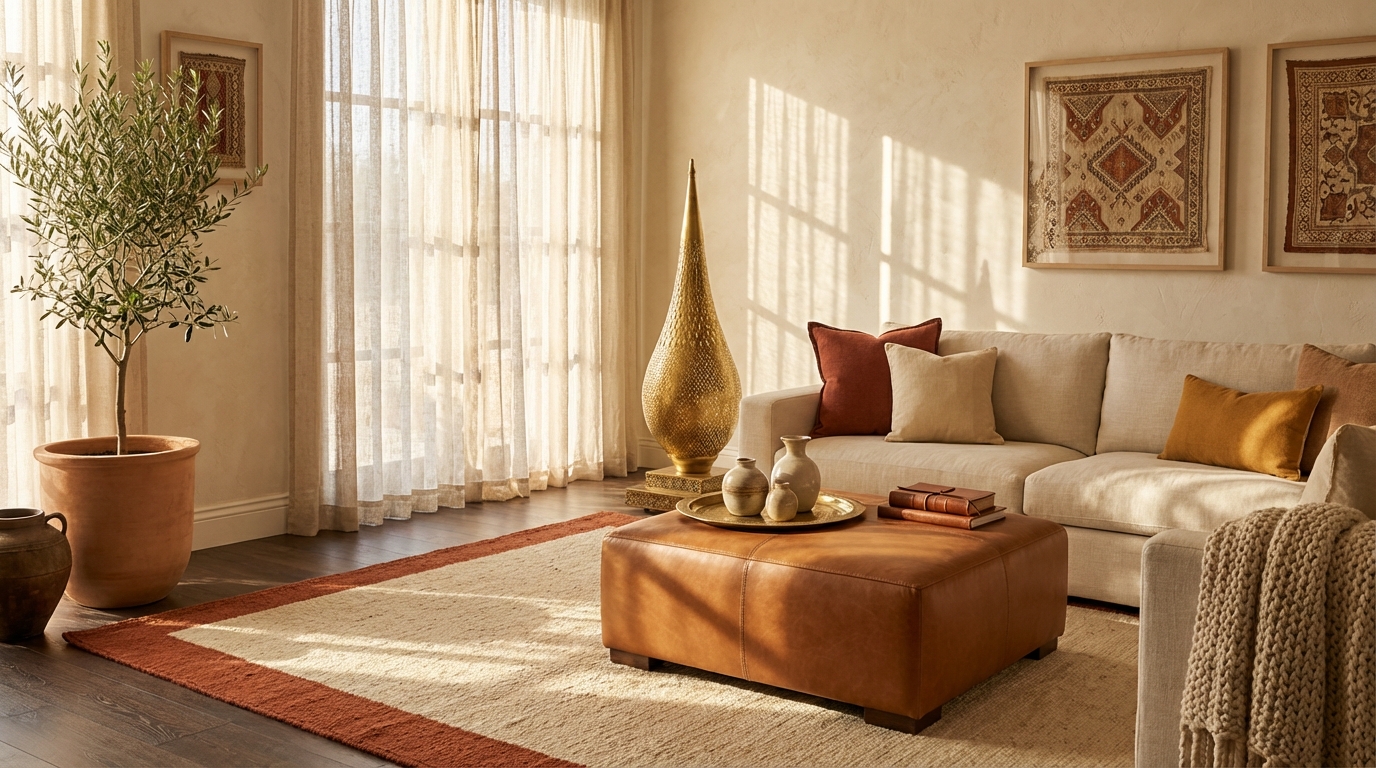
There’s a particular magic that happens when warm brass catches the late afternoon sun, casting intricate shadows across a room anchored by earthy terracotta tones. This interplay of light, texture, and warmth sits at the heart of Moroccan design—a tradition that has captivated interior designers and homeowners worldwide for its ability to transform ordinary spaces into inviting sanctuaries.
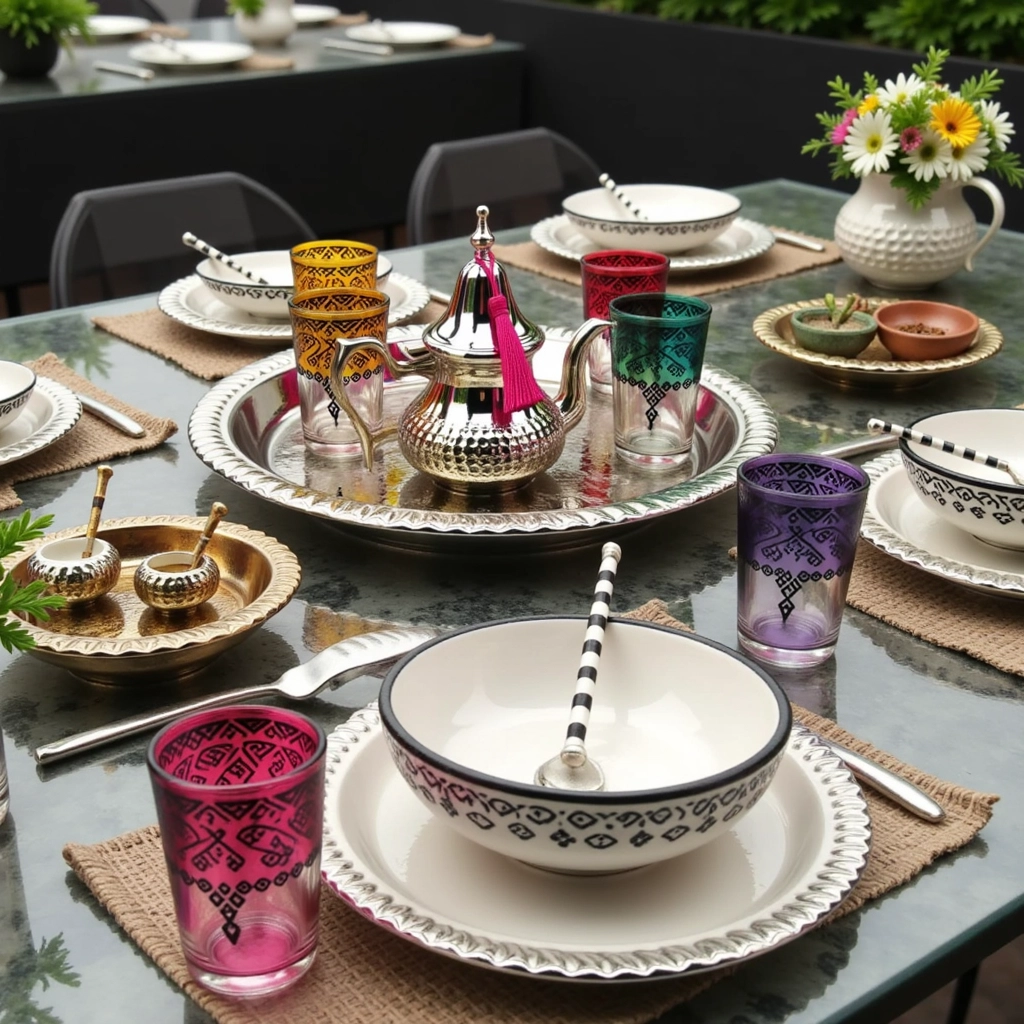
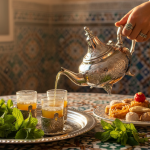
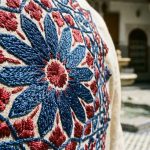
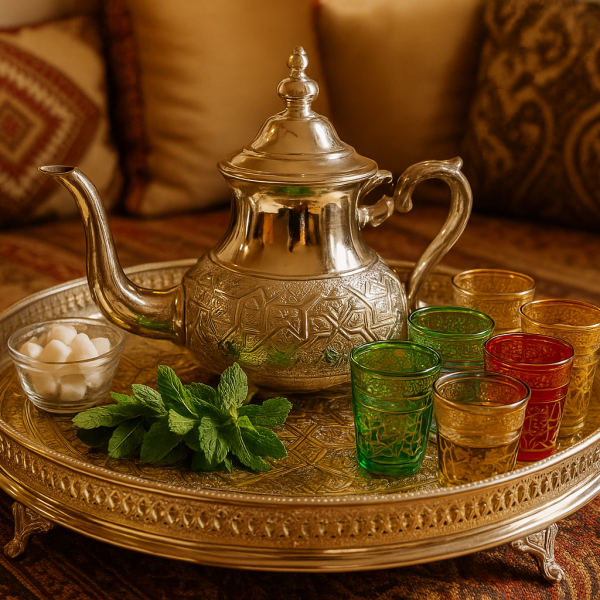
Creating a Moroccan-modern living room isn’t about recreating a riad in your home. It’s about thoughtfully layering handcrafted elements — a Moroccan tea set on the tray table, embroidered pillow covers on the sofa — that honor artisanal traditions while serving contemporary life. In this guide, we’ll walk through how to build a cohesive, sophisticated space using three foundational pieces: a textured wool rug, a statement brass floor lamp, and a versatile leather ottoman.
Setting the Foundation: Anchoring Your Space with the Terracotta Border Rug
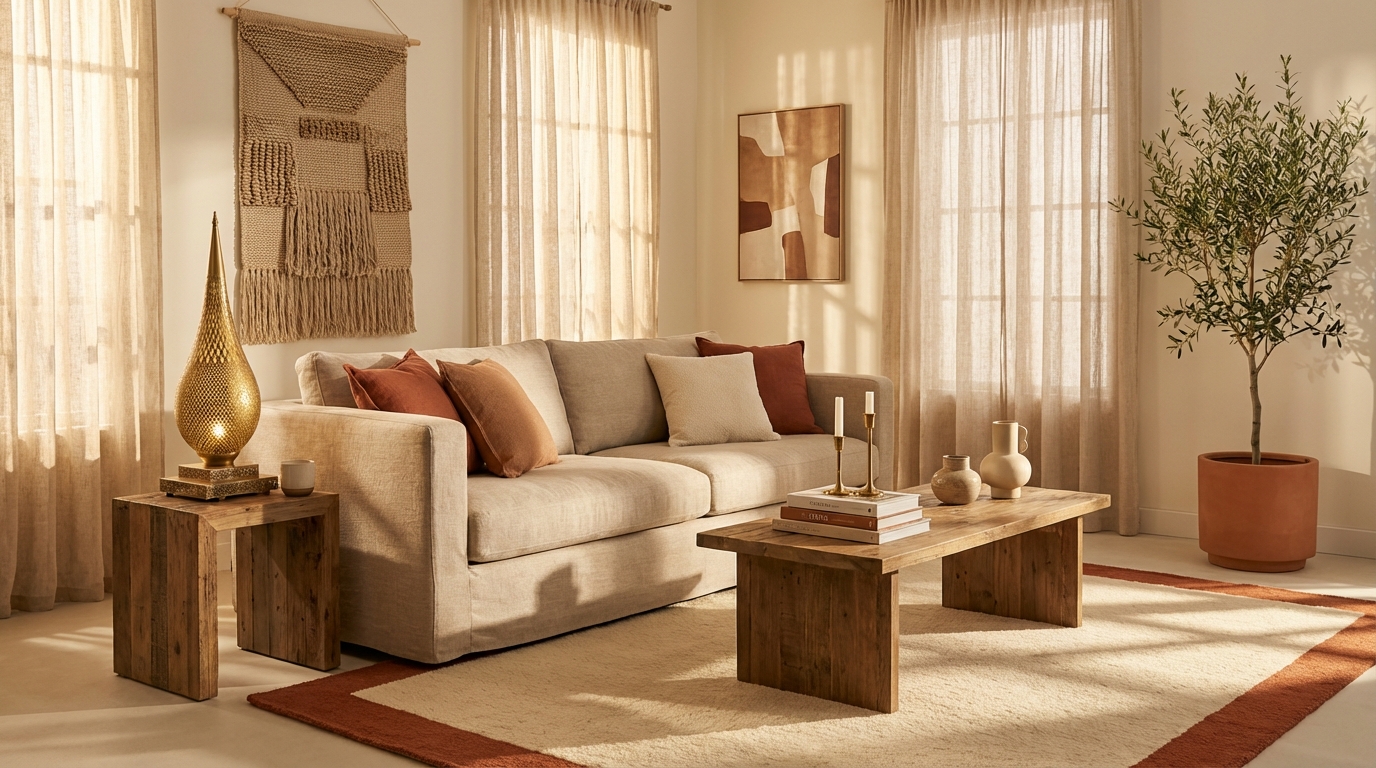
Every well-designed room begins from the ground up, and in Moroccan-inspired spaces, the rug does far more than cover the floor—it establishes the entire emotional vocabulary of the room. Browse our Moroccan rugs collection to find your anchor — the Terracotta Border Wool Rug serves as an ideal foundation piece, with its warm cream base and distinctive terracotta-rust border creating natural boundaries that define your seating area.
When positioning your rug, follow this designer principle: in a living room, the front legs of your sofa and accent chairs should rest on the rug, while the back legs can remain on the floor. This technique visually connects your seating pieces while making the room feel more expansive. For smaller spaces, centering the rug with furniture arranged around its perimeter works equally well.
The beauty of a handwoven wool rug lies in its texture. Unlike machine-made alternatives, you’ll notice subtle variations in the weave—slight irregularities that catch light differently throughout the day. These aren’t flaws; they’re signatures of human craftsmanship that add depth and authenticity to your space.
Practical Styling Tips
- Leave 12-18 inches of bare floor visible around the rug’s edges to create visual breathing room
- Position the rug so the terracotta border frames your seating arrangement like a natural boundary
- In open-concept spaces, use the rug to delineate the living area from adjacent zones
- Rotate your wool rug seasonally to ensure even wear and sun exposure
Statement Lighting: Positioning Your Brass Floor Lamp for Maximum Shadow Play
If the rug establishes your room’s foundation, lighting determines its soul. Moroccan artisans have understood this for centuries, crafting intricate pierced metalwork that transforms simple light into dancing patterns across walls and ceilings.
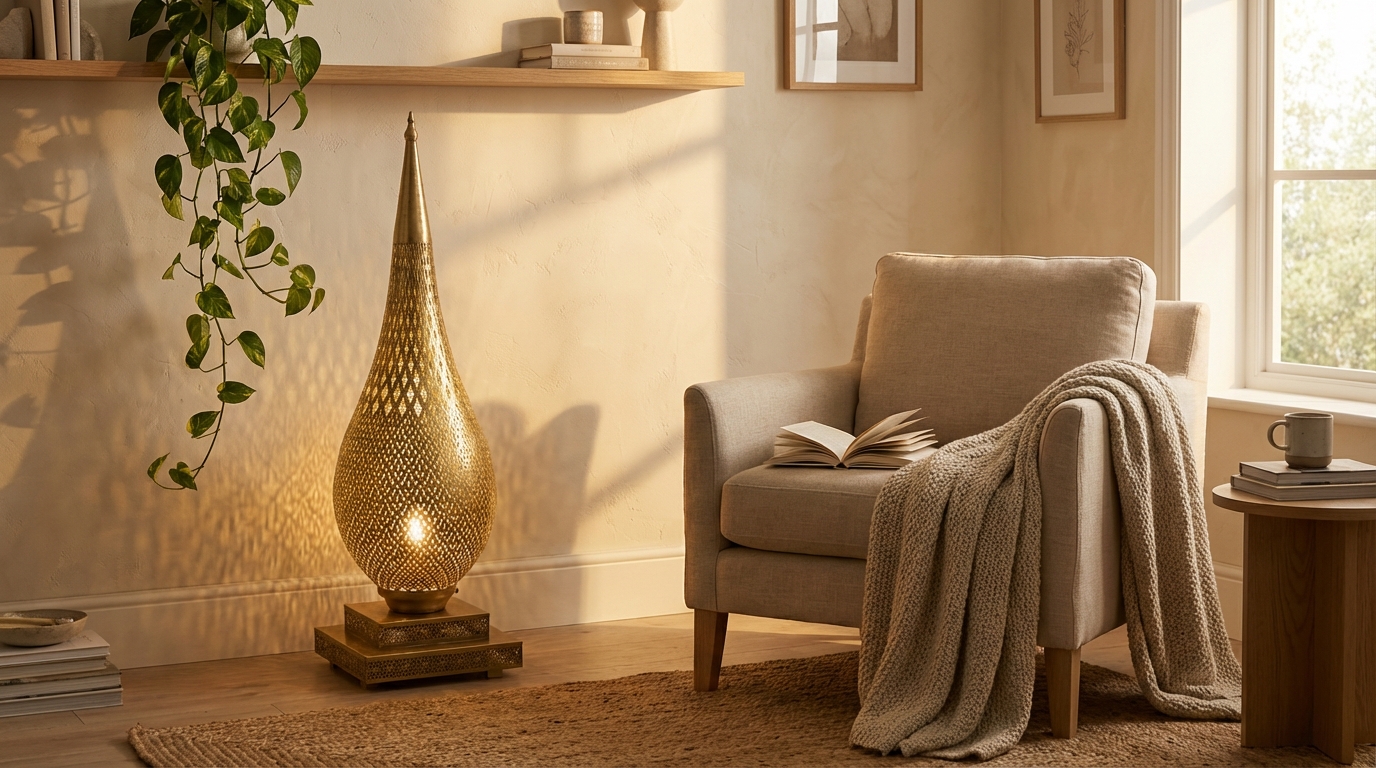
Our Moroccan brass lamp collection exemplifies this tradition — the Engraved Brass Floor Lamp in particular brings contemporary refinement to the craft. Its hand-ingraved surface creates subtle texture that catches and diffuses light, while the warm brass finish develops a beautiful patina over time—each lamp becoming uniquely yours through years of use.
Placement is everything with statement lighting. Position your brass floor lamp beside your primary seating—typically next to a sofa arm or behind an accent chair—at a height where the light falls naturally for reading or conversation. The goal is functional illumination that also serves as sculptural art when not in use.
Creating Shadow Play
Here’s where Moroccan lighting truly shines: in the evening, that hammered brass surface will cast soft, organic shadows that transform your walls into living canvases. To maximize this effect:
- Position the lamp 6-12 inches from the wall to create defined shadow patterns
- Use warm-toned bulbs (2700K-3000K) to enhance the brass’s golden glow
- Consider a dimmer switch to adjust ambiance from bright task lighting to intimate evening mood
- Place the lamp where its shadows won’t compete with your television or primary focal point
Versatile Seating: Styling the Leather Ottoman
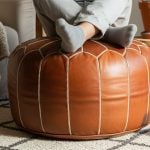
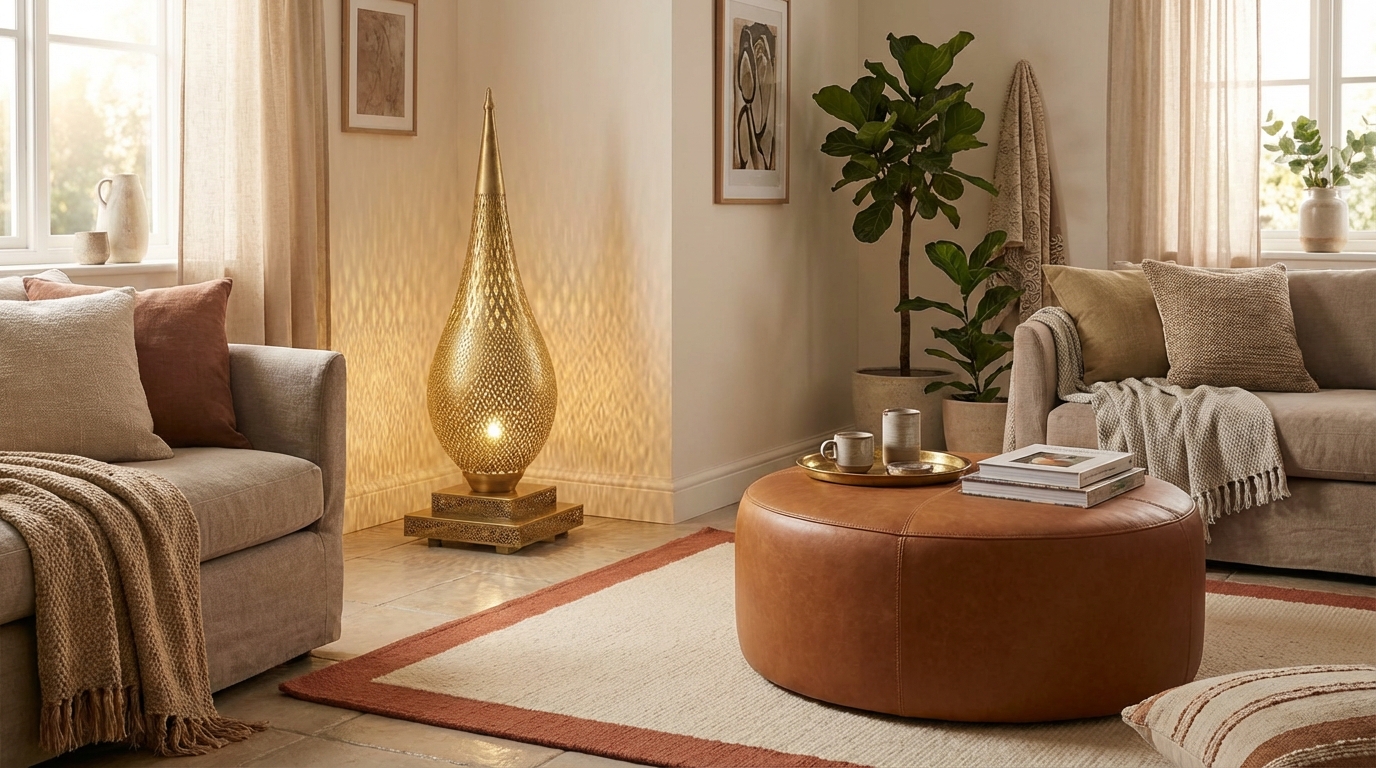
The Moroccan leather pouf has earned its place as a design icon for good reason — no other piece offers such flexibility. Browse our leather pouf collection to find a style that fits your space. The Cognac Leather Ottoman embodies this versatility, functioning seamlessly as footrest, coffee table, or impromptu seating depending on your needs.
The cognac leather brings warmth that complements both the terracotta border of your rug and the brass tones of your lighting. Over time, this vegetable-tanned leather will develop a rich patina, the surface softening and deepening in color with use. This aging process is a feature, not a flaw—your ottoman will grow more beautiful and characterful with each passing year.
Three Ways to Style Your Ottoman
As a footrest: Position it 14-18 inches from your sofa’s edge—close enough for comfortable lounging, far enough to allow easy passage. This classic arrangement invites relaxation and creates an immediate sense of comfort for guests.
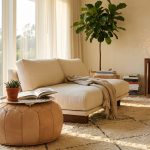
As a coffee table: Top it with a round brass tray to create a stable surface for drinks and books. The tray adds another layer of metallic warmth while protecting the leather. This works particularly well in smaller spaces where a traditional coffee table might overwhelm the room.
As extra seating: When entertaining, simply remove any tray and your ottoman becomes additional seating. Its lower height creates casual, conversation-friendly arrangements—perfect for intimate gatherings where guests naturally cluster and mingle.
Color Palette Harmony: Coordinating Terracotta, Brass, and Cognac
The success of this Moroccan-modern approach lies in its cohesive color story. Terracotta, brass, and cognac leather share a common warmth—they’re all variations on the theme of sun-baked earth and aged metal, colors that have defined Moroccan architecture and craft for millennia.
To build on this foundation without overwhelming your space, follow the 60-30-10 rule adapted for this palette:
- 60% neutral base: Cream, warm white, or soft sand on walls and larger furniture pieces
- 30% warm earth tones: Terracotta, cognac, and camel distributed through your foundational pieces
- 10% metallic accent: Brass through lighting, hardware, and small decorative objects
This ratio ensures your Moroccan elements feel intentional and curated rather than themed or costume-like. The neutral majority allows your handcrafted pieces to shine as the focal points they deserve to be.
Finishing Touches: Complementary Accessories
With your foundational pieces in place, thoughtful accessories complete the narrative. The key is restraint—Moroccan spaces traditionally balance ornate craftsmanship with areas of visual rest.
Consider these finishing elements:
- Textiles: Layer linen or cotton throw pillows in cream, terracotta, and muted gold. A chunky knit throw in natural wool adds texture without competing with your statement pieces
- Greenery: A potted olive tree, trailing pothos, or architectural cactus brings life to warm earth tones. Terracotta planters reinforce your color story
- Books and objects: Stack art books on your ottoman tray, display collected pottery, or arrange brass candleholders at varying heights
- Wall art: Abstract pieces in your palette, vintage textiles stretched and framed, or simple mirrors that reflect your lamp’s evening shadow play
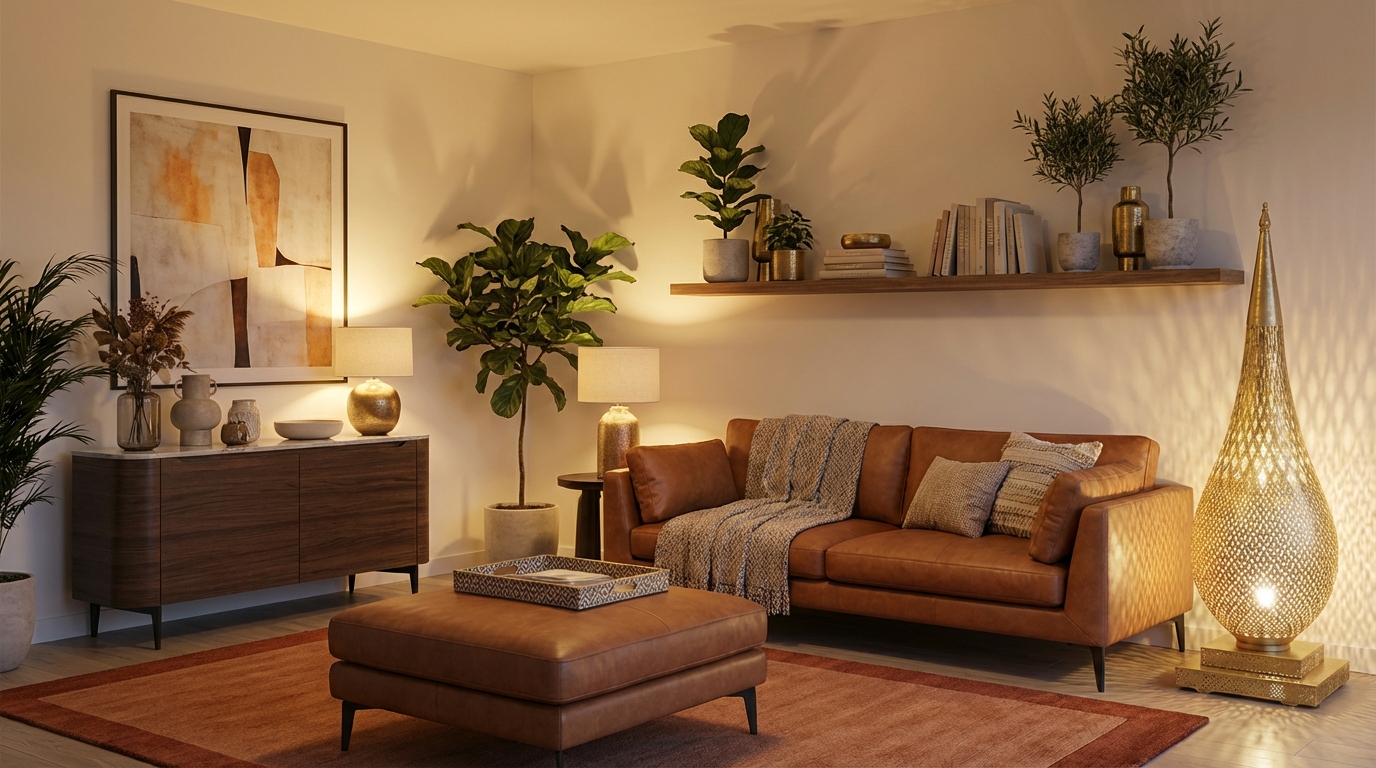
The goal is creating a space that feels collected over time—as though each piece arrived through travel, inheritance, or thoughtful discovery. This layered authenticity is the hallmark of truly successful Moroccan-modern design. Add a Moroccan brass pendant lamp overhead and a kilim pouf beside the sofa to complete the picture.
Living With Your Moroccan-Modern Space
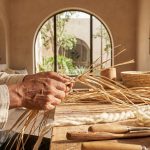
Perhaps the most beautiful aspect of designing with handcrafted Moroccan elements is how these pieces evolve alongside your life. The wool rug softens underfoot with years of gathering. The brass lamp develops its unique patina. The leather ottoman — hand-stitched by Omar, our Marrakech leather artisan — molds to your family’s rhythms.
This isn’t fast design or disposable decor. It’s an investment in quality craftsmanship that rewards patience and use. As you settle into your newly styled space, notice how the afternoon light transforms it, how evening shadows create intimacy, how the warm palette welcomes you home. That feeling—of sanctuary, of authenticity, of beauty born from human hands—is the true gift of Moroccan design.