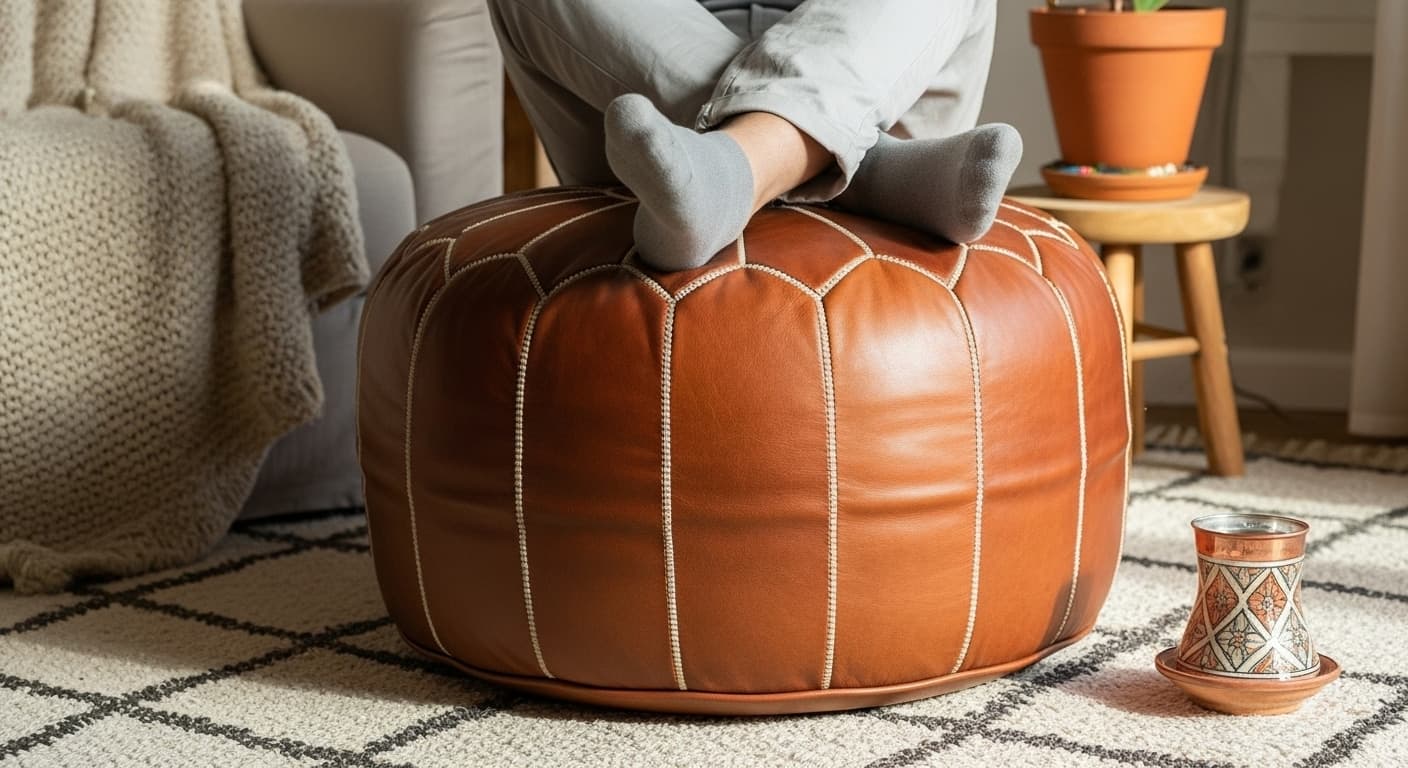
Quick Answer: How to Fill a Moroccan Pouf
The method: Unzip the base and keep the pouf right side out. Place a pillow or folded blanket against the top panel, pack dense textiles firmly around the sides and core with a dowel, add a soft layer at the base, then compress and zip. Top up after 3–5 days of use.
How much: A 21-inch round pouf takes roughly 10–20 lbs (4.5–9 kg) of household textiles, depending on how firm you want it. Lighter fills like polyester fiberfill weigh far less but give a softer result.
Best fillings: Old towels, blankets, and clothes for firm seating; a textile core wrapped in a pillow or blanket for the smoothest shape; polyester fiberfill for decorative poufs only. Always contain loose fill in a liner bag.
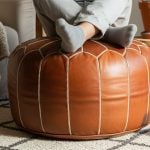
Hero product: Tan Leather Floor Ottoman – full-grain goat leather with a hand-embroidered star, zipped at the base so you can fill it to your preferred firmness. Browse the full leather pouf collection for more styles.
Prefer to watch? Here’s the whole method in two minutes — from flat leather shell to firm, finished pouf.
Your new Moroccan pouf arrives flat as an envelope. You run your fingers across the goat leather, admire the hand-embroidered star, and then pause: how do you turn this leather shell into the plump, firm ottoman you pictured? This guide walks you through it — the right filling for how you’ll use the pouf, how much you’ll need, and a six-step method that avoids the lumps, sags, and broken zippers that catch most first-timers.
Filling it yourself is also the pouf’s quiet advantage. You decide how firm it feels, you give old towels and blankets a second life, and because the shell ships flat, you avoid paying to send a bulky, fully stuffed piece across the world.
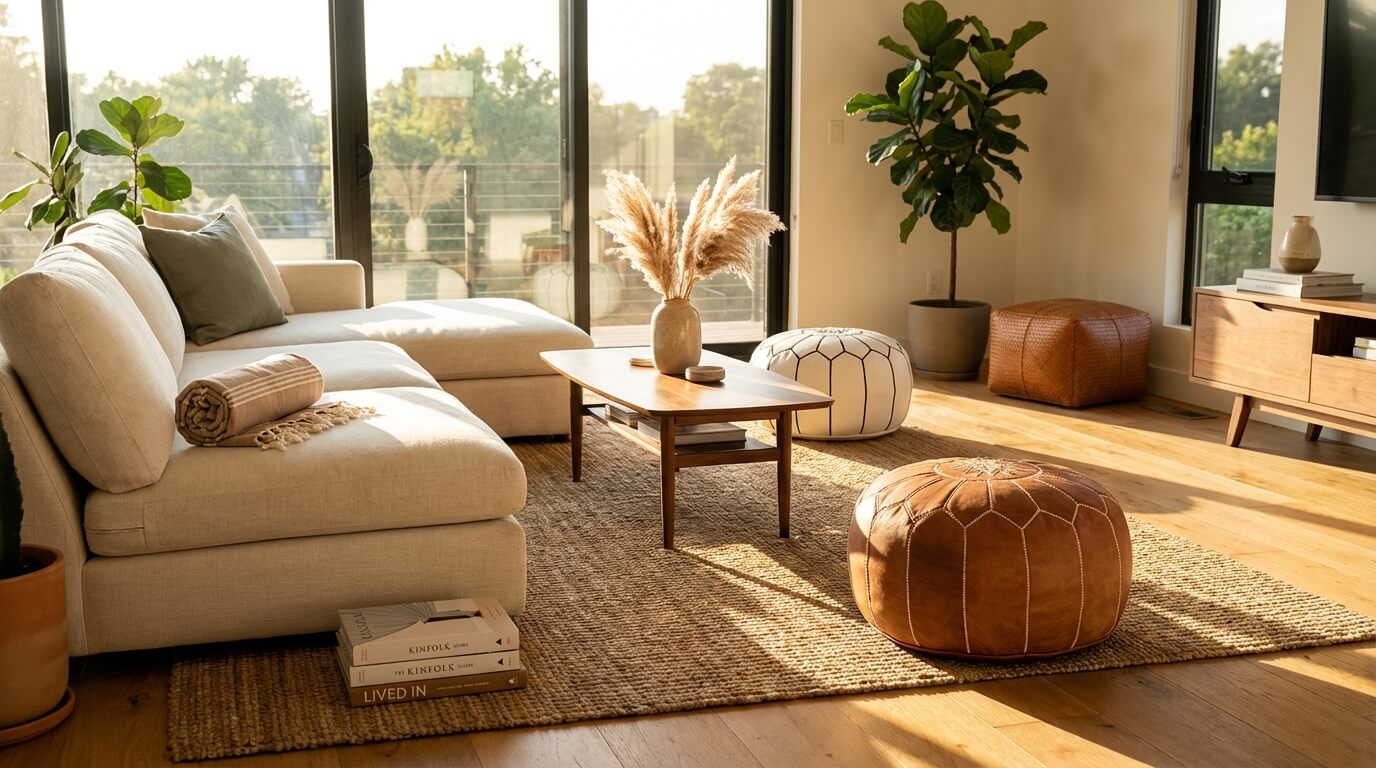
Why Moroccan Poufs Arrive Unstuffed
An unstuffed pouf ships flat, which lowers freight cost on a piece that would otherwise be mostly filling. It also leaves the firmness in your hands: pack it tight for a footstool or extra seat, or keep it softer for a floor cushion. And it lets you use materials you already own instead of buying new stuffing.
Prefer to skip the filling? Some of our poufs, like the Braided Leather Square Ottoman, can also be ordered stuffed — they arrive filled with polystyrene foam and cotton, ready to use.
Who Makes Our Leather Poufs
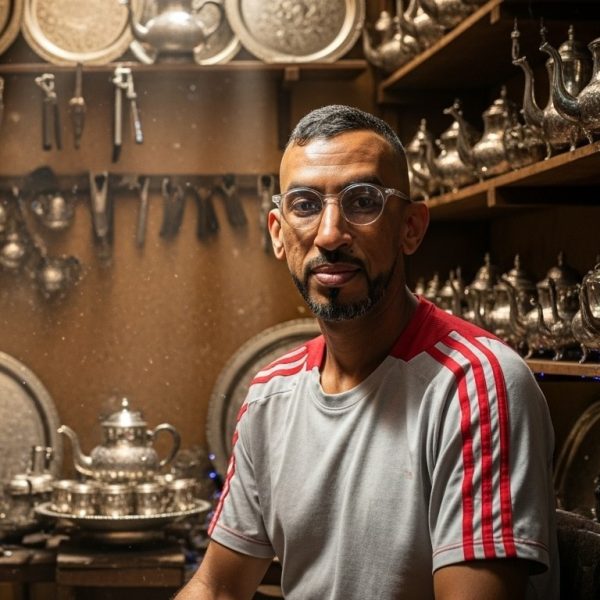
Our leather poufs are made by Abdelilah, who has worked in Marrakech’s leather souk near Souk Tala’a for 16 years. He hand-cuts, dyes, and stitches each goatskin shell, while women in his workshop hand-embroider the star and geometric patterns — five to ten days of work per pouf. That handwork is exactly why the filling matters: a smooth, even fill lets the seams and embroidery sit the way they were made to.
To learn more about the craft behind the leather, read our article on Morocco’s Traditional Leather Industry.
Tools and Materials You’ll Need
- Your unstuffed pouf, with the zipper at the base
- Filling material — see the comparison table below for amounts
- A pillow or folded blanket to shape the top panel
- A liner bag (an old duvet cover or large pillowcase) if you’re using loose fill such as beads, foam pieces, or fiberfill
- A broom handle or wooden dowel to push filling into the edges
- Scissors for cutting large textiles down to size
- A helper (optional) to hold the shell upright while you fill
How Much Filling Does a Moroccan Pouf Need?
Weight depends almost entirely on what you fill with. Dense fabrics like towels and denim pack heavy; fiberfill and foam fill the same space at a fraction of the weight. The figures below are approximate for a standard 21-inch (53 × 30 cm) round leather pouf — actual amounts vary with fabric type and how tightly you pack. A larger pouf or square ottoman needs proportionally more.
| Filling | Approx. amount (21-inch pouf) | Feel | Best for |
|---|---|---|---|
| Household textiles (towels, blankets, clothes) | 15–20 lbs (7–9 kg) | Firm, stable | Regular seating, footstool, zero-waste |
| Hybrid: textile core + pillow top + blanket lining | 10–15 lbs (4.5–7 kg) | Firm with a smooth, soft top | Everyday use with the neatest shape |
| Crumpled newspaper core wrapped in a blanket | 8–12 lbs (3.5–5.5 kg) | Firm and lighter | Budget fill, footrest |
| Shredded foam (in a liner) | 8–12 lbs (3.5–5.5 kg) | Medium-firm, springy | Square ottomans, lounging |
| Polyester fiberfill (in a liner) | 4–6 lbs (2–3 kg) | Soft to medium | Decorative poufs, nurseries, light foot props |
| Polystyrene (EPS) beads (in a liner) | About 2.5–3 cu ft (70–85 L) | Very light, shifting | Portable or purely decorative poufs |
Two rules of thumb: pack more than feels necessary, because every filling settles during the first week, and don’t rely on fiberfill alone for seating — it flattens under regular adult use. For a pouf you’ll sit on, wrap fiberfill around a dense textile core instead.
Choosing the Right Filling Material
Household Textiles (Most Popular)
Old towels, bed linens, blankets, jeans, and clothing make the firmest, most durable filling — and cost nothing if they’re already in your closet. Cut or tear large pieces to roughly 12–18 inches so they compress evenly, and make sure everything is clean and completely dry. Old cushion inserts work well too, especially as a soft top or base layer.
The Hybrid Method (Smoothest Finish)
For the neatest shape, build in layers: a pillow or folded blanket pressed against the top panel, an optional blanket or thin foam sheet lining the inside walls, and dense textiles packed into the core. The soft outer layers hide the ridges of the fabric underneath, so the leather stays smooth and the embroidery sits flat. This matters most on light-coloured poufs like the White Leather Floor Ottoman, which shows every lump.
Newspaper Core (Budget Option)
Tightly crumpled newspaper can make a firm, lightweight core — but only when it’s fully wrapped in an old blanket or packed inside a liner bag so it never touches the leather. Loose paper breaks down into dust, compresses unevenly, and can absorb moisture. Keep this option for dry rooms and check the pouf’s firmness more often.
Fiberfill, Foam, and Other Purchased Fillings
Polyester fiberfill gives a light, uniform shape but flattens under regular sitting on its own; use it for decorative poufs or as a soft wrap around a textile core. Shredded foam holds edges well, which suits square shapes like the Braided Leather Square Ottoman. Kapok is a soft, light natural fiber for floor cushions. Buckwheat hulls are firm but very heavy at this size, so they suit small poufs and meditation cushions better. Polystyrene beads make the lightest pouf of all — they’re also what goes into our stuffed poufs, alongside cotton — but they must always be sealed inside a liner.
What to Avoid
- Loose fill poured straight into the shell: beads, hulls, foam pieces, and fiberfill escape through seams and drift to one side — always use a liner
- Loose, unwrapped newspaper: turns to dust, compresses unevenly, and can hold moisture
- Plastic shopping bags: shift constantly and crinkle every time you move
- Straw or hay: sheds dust, breaks down quickly, and can attract pests
- Damp or unwashed textiles: trap moisture inside the leather and can lead to mildew and odour
How to Fill a Moroccan Pouf: Step by Step
Step 1: Prepare Your Filling
Cut large textiles into 12–18 inch pieces and sort them into two piles: dense (denim, towels, heavy blankets) and soft (fleece, t-shirts, old pillow stuffing). If you’re using loose fill — fiberfill, foam pieces, beads, or buckwheat — put it in a liner bag first and close it. Filling inside a liner also makes future top-ups and washing much easier.
Step 2: Open the Pouf — Don’t Turn It Inside Out
Unzip the base completely and stand the pouf on its top, opening facing up. Keep it right side out: turning a leather pouf inside out through the zipper strains the hand-stitched seams and embroidery, and once it’s full there’s no practical way to turn it back. Gently open out the folds so the sides stand up; a helper holding the rim makes this easier.
Step 3: Shape the Top Panel
Press a pillow or folded blanket flat against the inside of the top panel — the embroidered side. This soft cap gives the pouf a smooth, rounded dome and stops the dense filling beneath from pushing lumps through the leather. For an extra-smooth finish, line the inside walls with an old blanket or a thin foam sheet before adding anything else.
Step 4: Pack the Edges and Core
Pack dense textiles around the outer edge first, using your broom handle or dowel to push them firmly into the seams where the top meets the sides. Then fill the centre. Work in layers, compressing every few handfuls and rotating the pouf so the filling spreads evenly. Don’t be gentle — the pouf should feel increasingly firm and start holding its shape on its own.
Step 5: Add a Soft Base Layer and Zip Safely
When the pouf is packed almost to the opening, finish with a flat layer of soft fabric or a thin pillow. It evens out the base and keeps loose threads away from the zipper track. To close, press the filling down with one hand or a knee, pull the two leather edges together with your fingers, and only then slide the zipper along. Never force the zipper pull against the full tension of the leather — that’s how zippers break.
Step 6: Settle, Shape, and Top Up
Turn the pouf upright, press down across the top, and knead the sides to push out air pockets. Over the first 3–5 days of use, the filling will compress and the leather will relax. If the pouf feels soft or shows wrinkles, unzip the base and add more filling — usually another 1–2 lbs of textiles. The same top-up works any time the pouf softens with long use.
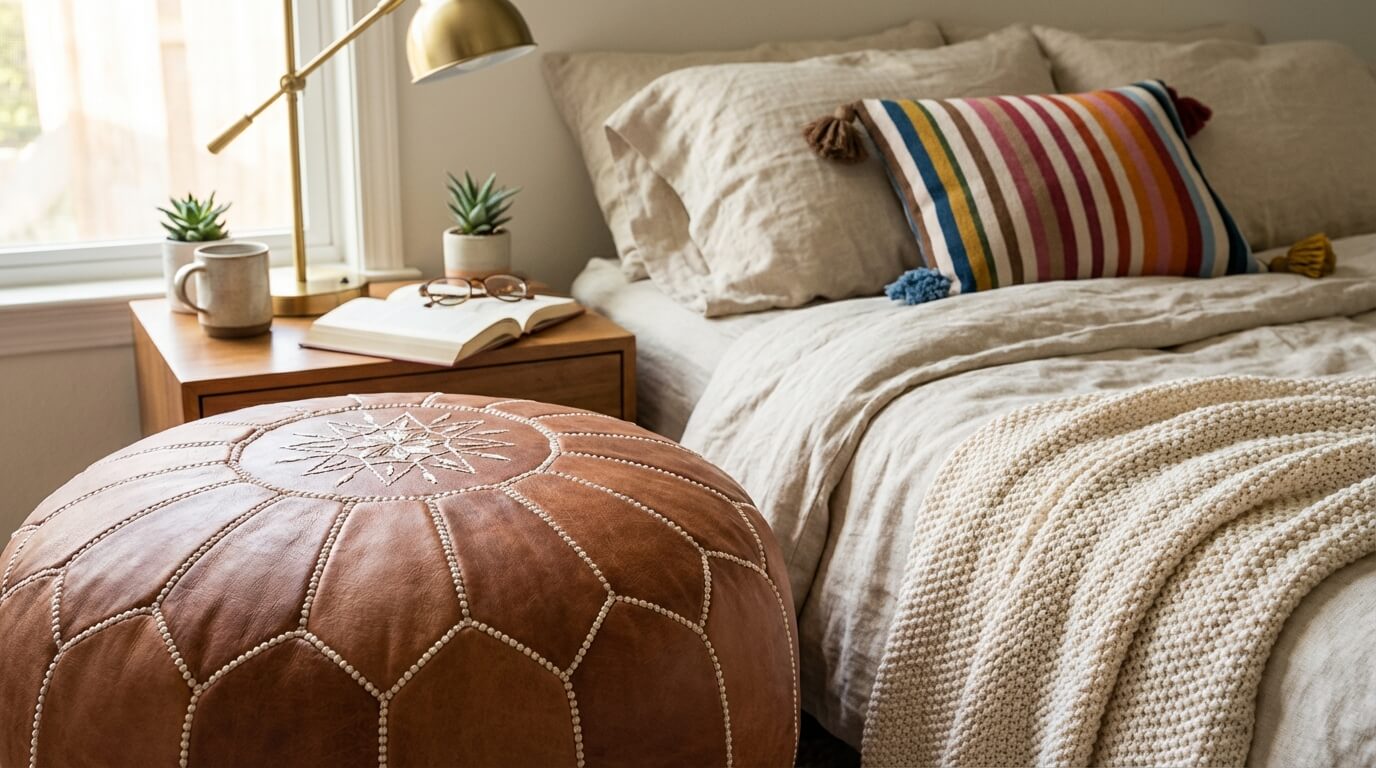
Styling Your Filled Pouf: Placement and Purpose
Once your pouf is plump and firm, place it where it can work hardest:
Living room anchor: Set your tan leather pouf 18–24 inches from the sofa’s front edge, angled slightly toward the seating. It becomes a footrest guests can pull closer as extra seating, and its warm cognac tone grounds navy, grey, or cream upholstery — a natural fit for a warm Moroccan-modern living room.
Coffee table alternative: Use the largest size of the braided square ottoman as a low table, topped with a round wooden tray for drinks and books. The herringbone leather weave adds texture a standard table can’t match, while the tray keeps glasses stable.
Foot-of-bed seating: Place the white leather pouf at the foot of your bed, centred or offset to one side. Its black geometric embroidery stands out against darker bedding, and it’s a handy perch for putting on shoes.
Reading corner: Pair any pouf with a floor lamp and a small side table for an instant reading nook — and move it with the seasons, toward a sunny window in winter or an open door in summer.
Nursery seating: A softer-filled pouf makes comfortable low seating for story time, and smooth leather wipes clean easily when life gets messy.
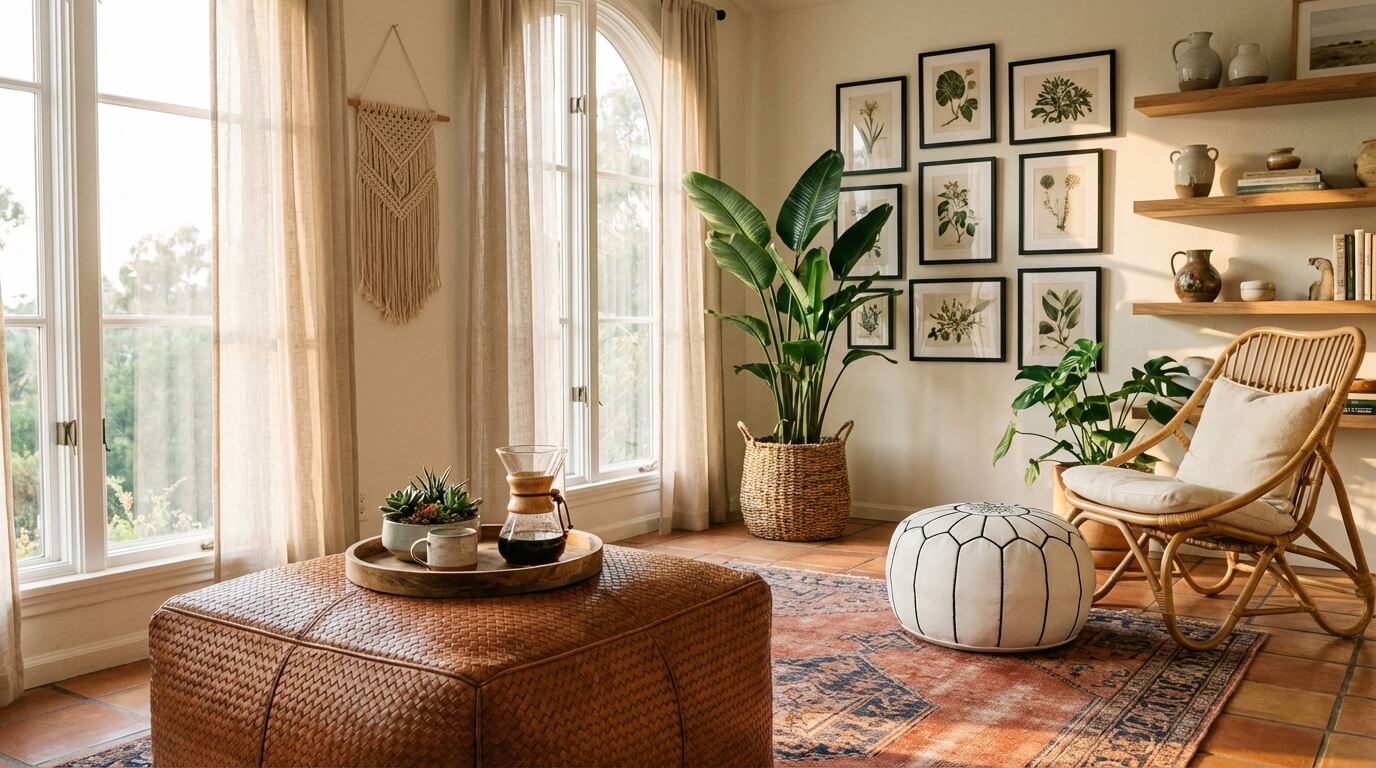
Caring for Your Leather Pouf
Full-grain goat leather softens and deepens in colour with use. A few simple habits keep your pouf looking its best.
Daily Care
- Wipe weekly with a dry microfiber cloth, or vacuum with a soft brush attachment
- Keep out of direct sunlight, which fades and dries leather over time
- Keep air circulating around it; avoid damp basements and closed storage
- Rotate every few months so wear spreads evenly, especially if it’s used as a footrest
Spot Cleaning
- Blot spills immediately with a clean, dry cloth — never rub
- For stubborn marks, use a barely damp cloth with a little mild soap, testing first on a hidden spot near the zipper
- Let the leather air-dry naturally, away from heaters and direct sun
- Avoid harsh household cleaners, solvents, and silicone sprays
- For sticky residue, rub gently with a clean pencil eraser
Conditioning (Every 6–12 Months)
- Use a neutral leather balm or cream, applied in a thin layer with a soft cloth
- Skip coconut, olive, and other kitchen oils — they can turn rancid, darken unevenly, and attract dust
- Test on a hidden area first; conditioning often darkens leather slightly
- Work it in with circular motions, paying attention to the top and the stitched seams
- Let it absorb, then buff off any excess
Prevention
- Keep away from radiators, fireplaces, heating vents, and air-conditioning outlets
- Keep keys, pet claws, and sharp objects off the surface
- Don’t stand on your pouf or use it as a step stool
- If it softens after months of heavy use, unzip and top up the filling
For advanced stain removal and long-term care, see our Moroccan Leather Care Guide.
Why Filling Your Own Pouf Matters
Filling your own pouf keeps old textiles out of landfill, avoids shipping a bulky stuffed piece across the world, and gives you a pouf tuned exactly to how you use it. It’s a small, practical example of sustainability in handicrafts — a handmade leather shell paired with materials you already own.
Every leather pouf we sell is handcrafted in Marrakech. Meet the artisans behind our collection and the hands behind every stitch.
Poufs Mentioned in This Guide
- Tan Leather Floor Ottoman 21″ – Handcrafted Pouf with Star Embroidery
- White Leather Floor Ottoman 21″ – Handcrafted Round Pouf
- Braided Leather Square Ottoman – Handwoven Herringbone — five sizes from 16″ to 23″, available stuffed or unstuffed
- Striped Cotton Cushion Covers with Corner Tassels – Set of 2 — fits standard square inserts, a fresh home for new cushions if your old inserts go into the pouf
Browse the complete pouf and ottoman collection — leather, straw, kilim, round, and square styles.
Your Moroccan Pouf Filling Questions Answered
It depends on the material. A standard 21-inch round pouf takes roughly 15–20 lbs of household textiles for firm seating, 10–15 lbs if you combine a textile core with a pillow top, or about 4–6 lbs of polyester fiberfill for a soft decorative pouf. Pack more than feels necessary — every filling settles during the first week, and you can top up through the zipper.
For seating, dense household textiles — towels, blankets, jeans — give the firmest, longest-lasting result. For the smoothest look, use the hybrid method: a pillow against the top panel, a blanket lining the sides, and textiles packed into the core. Polyester fiberfill suits decorative poufs only, because it flattens under regular sitting. Whatever you choose, contain loose fills like beads or foam pieces in a liner bag.
No. Keep the pouf right side out and fill it through the open zipper at the base. Turning a leather pouf inside out strains the hand-stitched seams and embroidery, and once it’s full there’s no practical way to turn it back. Instead, stand the pouf on its top, open out the folds, and pack the filling in from below.
Choose unstuffed if you want to control the firmness, reuse textiles you already own, and keep shipping lighter — the shell arrives flat. Choose stuffed if you want the pouf ready to use on arrival. Some of our poufs, such as the braided square ottoman, can be ordered either way; stuffed versions arrive filled with polystyrene foam and cotton.
Yes — old clothes are one of the best fillings. Wash and fully dry everything first, then cut large items into 12–18 inch pieces so they pack evenly. Keep dense pieces like jeans for the edges and core, and softer pieces like t-shirts and fleece near the top and base. Expect to need a lot: roughly 15–20 lbs for a firm 21-inch pouf.
It’s full when the sides stand firm without support, the top springs back quickly when pressed, and you have to hold the leather edges together to close the zipper. If it zips effortlessly, add more. Check again after 3–5 days of use — settling is normal, and another 1–2 lbs of filling usually restores the shape.
It’s best not to. Coconut, olive, and other kitchen oils can turn rancid, darken leather unevenly, and attract dust, especially in warm or humid rooms. Use a neutral leather balm or cream instead, applied thinly every 6–12 months after testing on a hidden spot near the zipper, then buff away any excess.
Yes. The zipper at the base means you can top up the filling whenever it softens. Unzip, push new textiles into the sides and core with a dowel, and close the zipper while compressing the filling. Filling the pouf inside a liner bag from the start makes this even easier, and lets you remove and wash the filling if needed.