Woven Dreams in the Medina
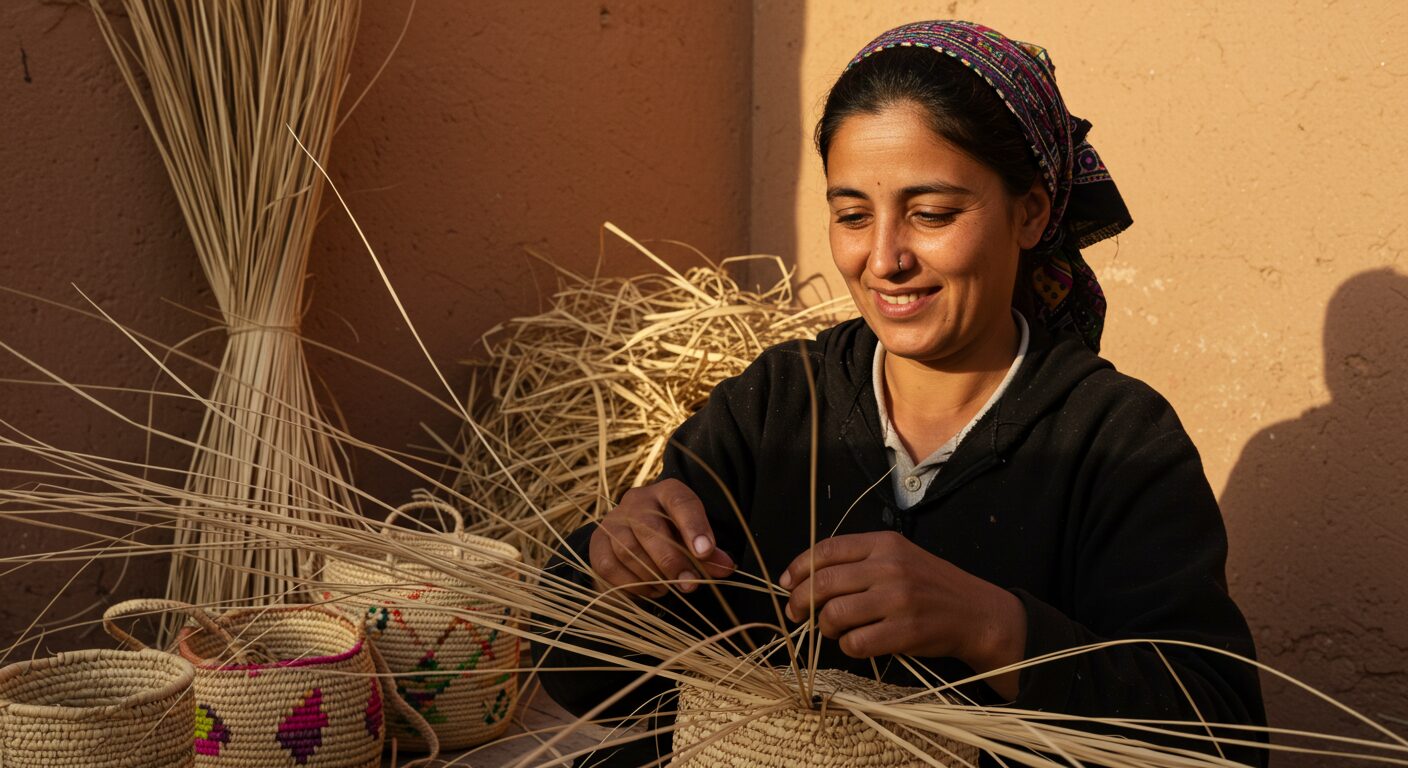
The rust-red lanes of Marrakech unfurl like a labyrinth, but Dounia can navigate them with her eyes closed. Each dawn she threads through the half-light, cradling armfuls of doum palm leaves — harvested from the palmeraie groves that ring the Marrakech region — still slick with desert dew. Fifteen years of weaving have made the motions second nature. She walks the familiar paths of Complex Al-Fakhara, a small settlement on the outskirts of Marrakech where the city’s noise hasn’t yet reached, and where the Al Amal cooperative has its roots. Here, in their own homes, a dozen women sit at their craft — each working at her own rhythm, hand-weaving without looms or machinery, the same patient art passed down coil by coil from their mothers. They shape broad-brimmed sun hats, lattice-pattern lamp shades, beach bags, and woven straw poufs whose braid lines echo Atlas-mountain switchbacks. For pieces calling for a finer, more lustrous weave, Dounia reaches for raffia palm — sourced from the wind-scoured Atlantic coast around Essaouira — whose natural sheen and suppleness complement the stiffer doum. Their co-op is called Al Amal — Hope — because that is what Dounia promised her young son, Yusuf, when the workshop opened: a future stitched from straw, not uncertainty.

Whispers in the Souk
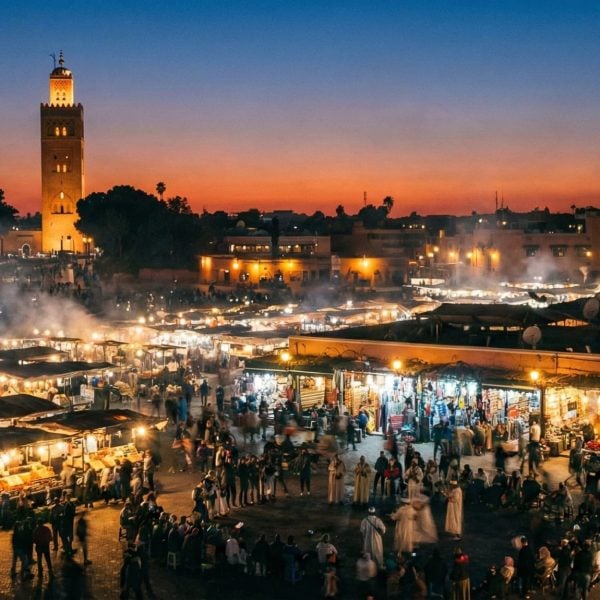
On market days the journey begins before sunrise — from Complex Al-Fakhara into the heart of the medina, baskets balanced and heavy. The women fan out through Bab Doukkala, their work piled high. Tourists admire the workmanship, yet money rarely changes hands. Leather stalls undercut them, factory imports mimic their shapes, and bargaining drains the little profit left. The raffia they source from Essaouira, two hours west, costs more than local doum straw — a quiet overhead that tourists never see and rarely account for in their haggling. Even the vendors next door sigh with sympathy: “Your craft deserves a bigger stage.” Dounia nods politely, but each unsold lamp shade feels like another stitch unravelled from her dream.
Read the UNESCO listing on date-palm knowledge, skills and practices — Morocco is among 15 nations that earned this recognition in 2022.
The Visitor Who Saw the World
One breathless afternoon a tall man pauses at their stall. His name is Houssam, co-founder of Marrakeche Crafts, an online store that photographs, lists, and ships Moroccan artisan goods to customers abroad. He lifts a raffia beach bag, admiring the flawless herringbone — the kind of precision only fifteen years of daily weaving can produce
“Your hands tell stories people in Tokyo and Toronto would love to hear,” he says.
“Storytelling doesn’t pay the rent,” Dounia replies.
“It will—if the world can listen.”
Houssam explains that Marrakeche Crafts handles the hard parts the artisans cannot: studio photography, SEO-rich product pages, secure payments, door-to-door shipping, even customer service in five languages. “You do the weaving; we’ll weave the web.” Dounia feels the market’s cacophony fade as his words sink in. She gathers her courage—and the co-op’s inventory—and follows him to the brand’s daylight-flooded studio near the Koutoubia.

Explore the best-selling straw creations:


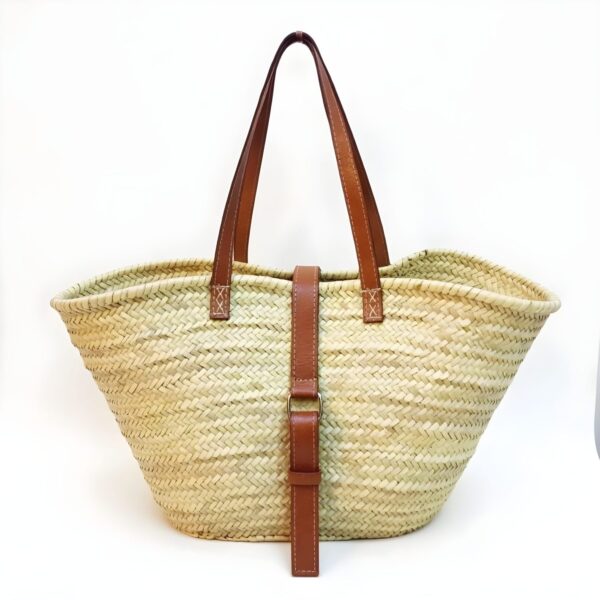
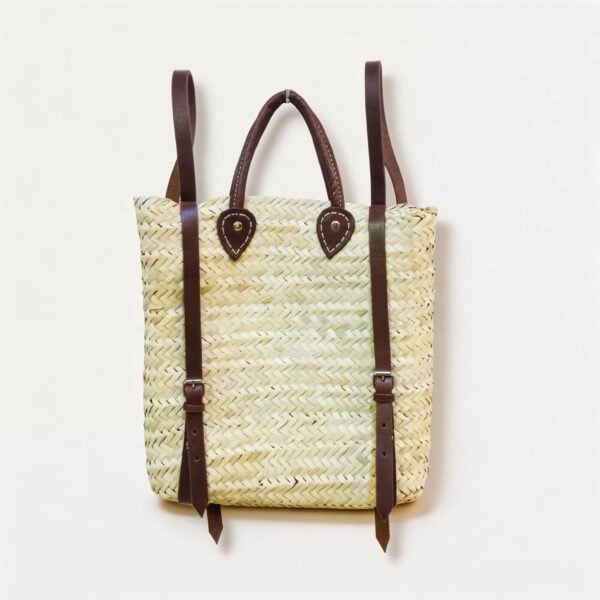

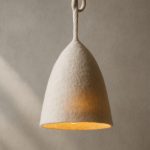
Handwoven Palm Leaf Dome Lampshade – Artisanal Boho Pendant Light
Price range: USD $ 113.00 through USD $ 127.00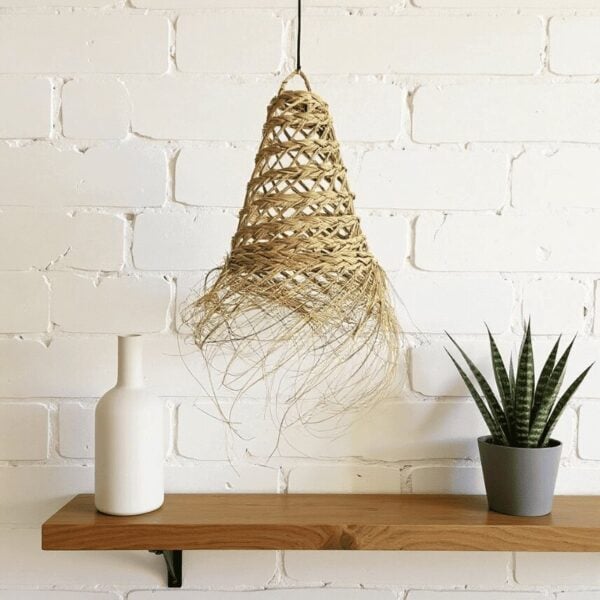

Handwoven Straw Pendant Light – Artisanal Natural Fiber Lamp Shade
Price range: USD $ 77.00 through USD $ 97.00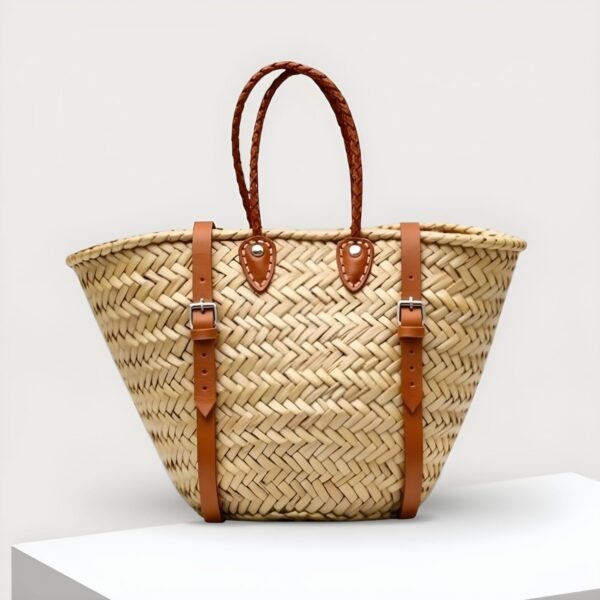
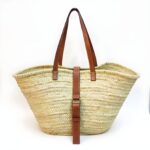
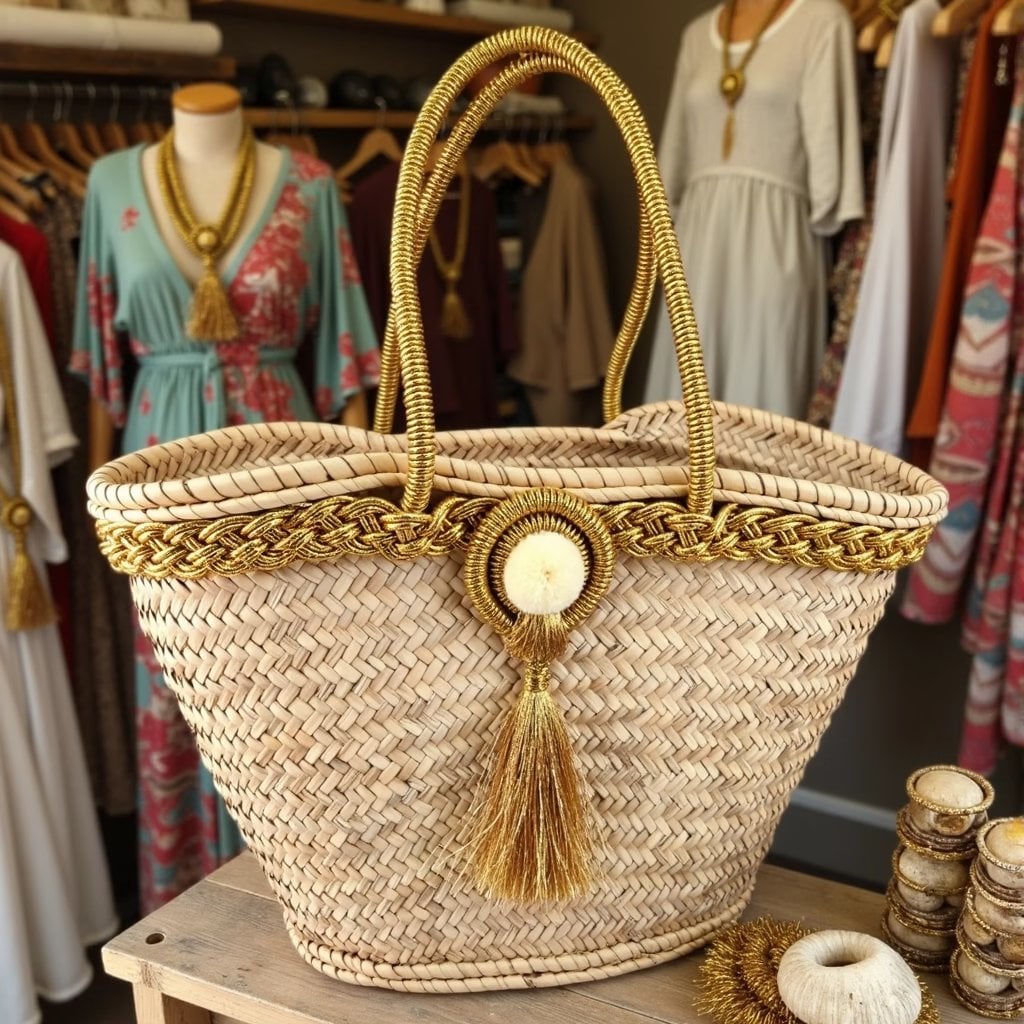
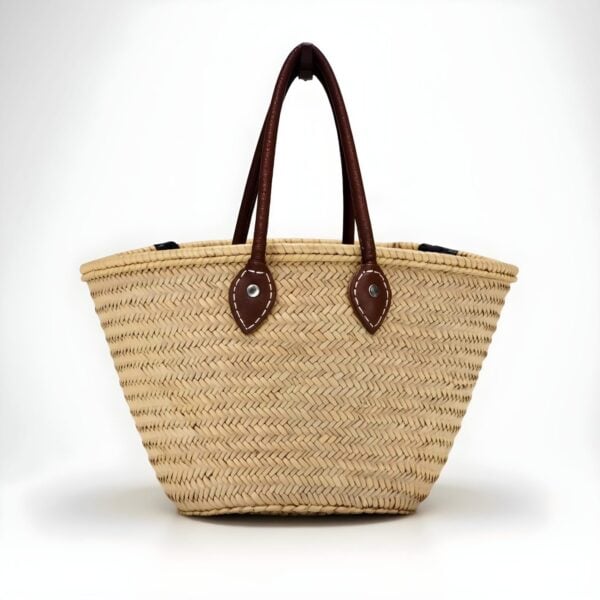
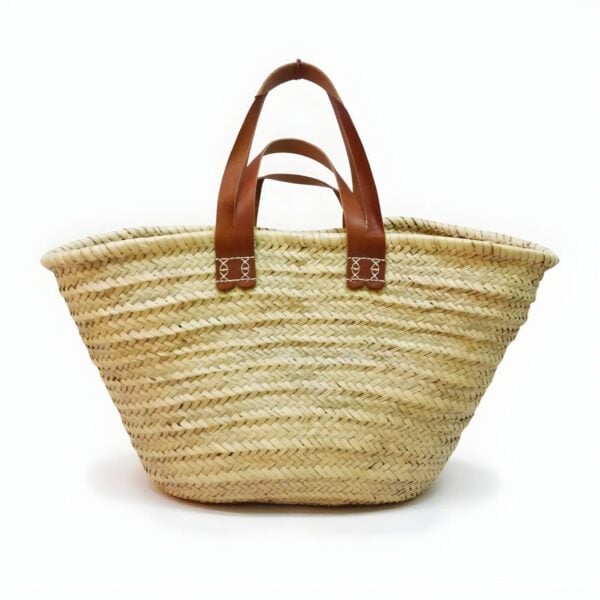
Handwoven Straw Market Tote with Braided Leather Handles and Decorative Straps

Threads of a New Beginning
Studio lights bloom like desert sun. A photographer positions a straw lamp against a clay-washed backdrop; another stylist tucks indigo tassels into a tote for colour pop. The women watch their work glow on the monitor, names correctly credited in crisp white type. There are no forms to fill, no shipping labels to decipher. Marrakeche Crafts’ team measures, prices, writes copy, and publishes each listing that very night, tagged with Hand-signed by Al Amal Cooperative.

The Unravelling of Hope
Hope had always been the co-op’s name; now it becomes their balance sheet. Profits triple in a month. New income buys better-quality doum and raffia stock, child-safe bicycle helmets, and evening literacy classes. The women laugh louder, weave faster, and—most important—set their own prices. For Dounia, the heaviest weight lifted is invisible: the fear that Yusuf would inherit scarcity instead of skill.

An Artisan’s Global Dawn
Back in Complex Al-Fakhara, in the same quiet room where hope once felt fragile, Dounia scrolls Marrakeche Crafts’ customer gallery: her straw lamps glow above a Brooklyn café; a Paris stylist pairs an Al Amal beach bag with couture linen; an Australian design blog crowns their raffia shades “must-have eco lighting.” Orders arrive from twelve countries, and local teenagers now queue for apprenticeships.
The distance between her workshop and the world has collapsed. The medina’s maze no longer cages her craft — it channels it outward, along with digital threads Houssam helped spin. She tightens the final coil on a doum palm tote — the same hand motion she has repeated for fifteen years — smiles, and whispers to Yusuf, “The world is woven right here in our hands.”
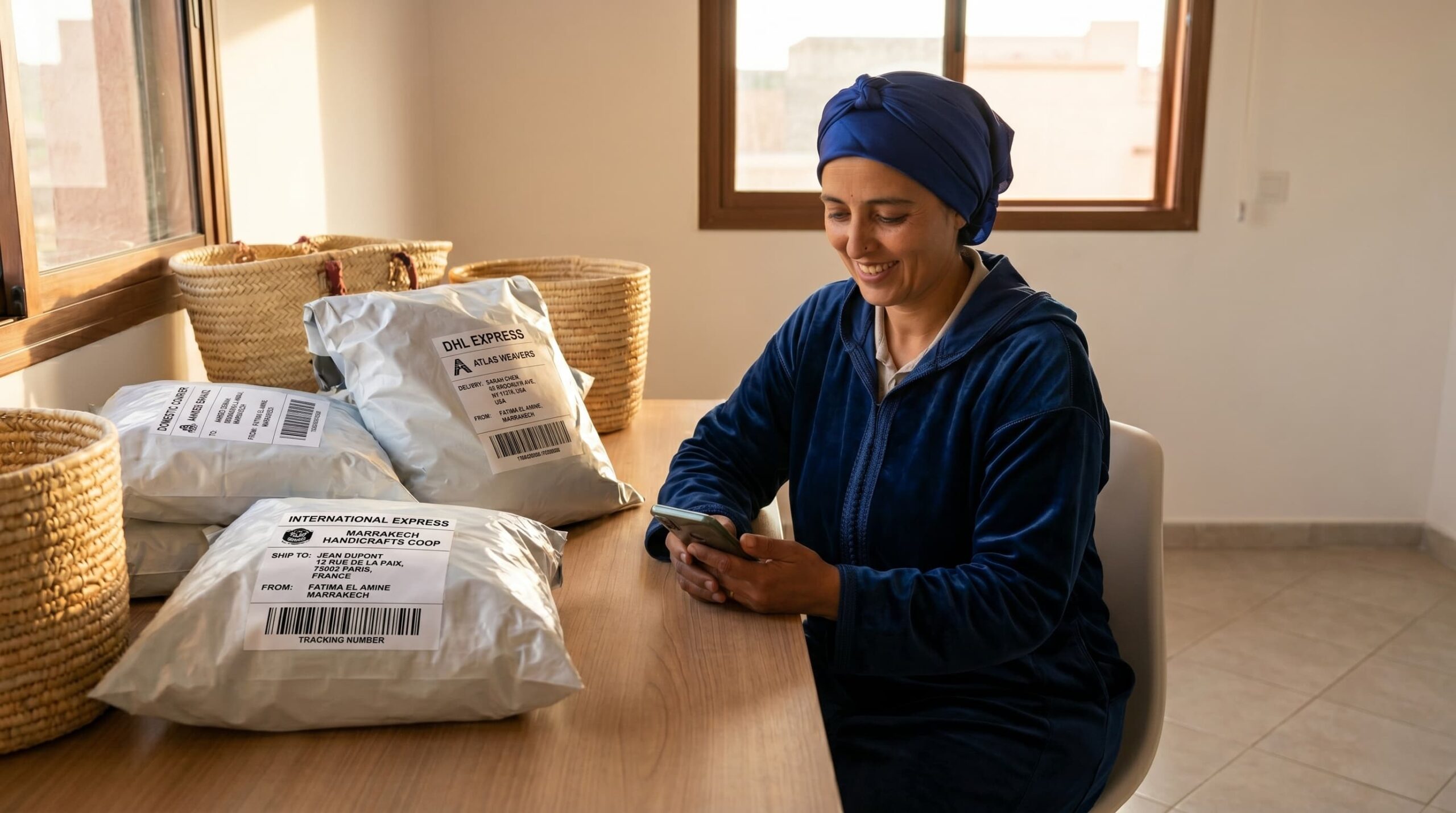
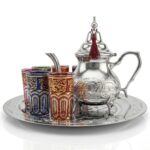
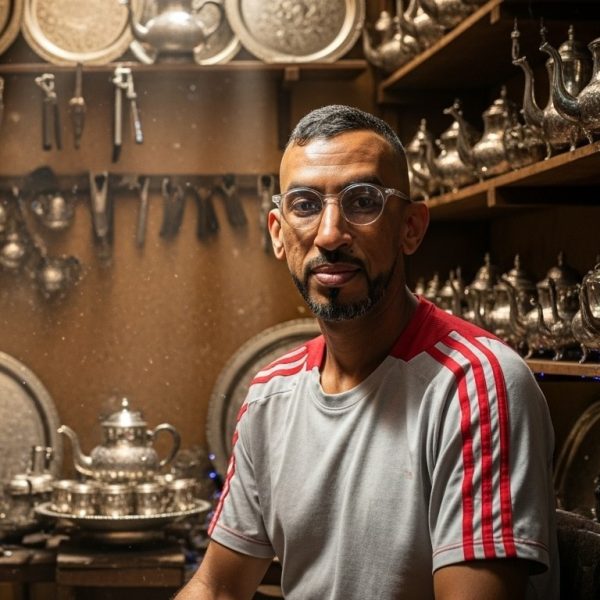
Read more artisan stories: Omar, master leather craftsman, Kamal, silver-plated tea set maker, and the full artisan collective.
About the artisan:
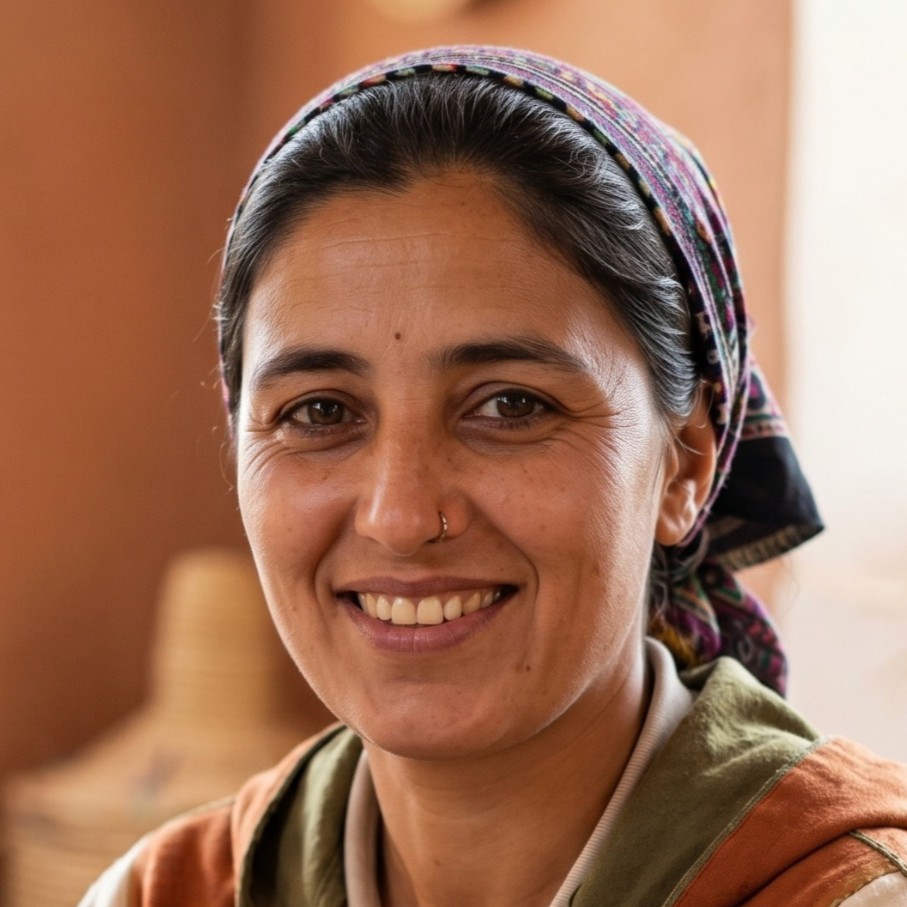
Dounia (Heart-Weaver of Marrakech)
- Technique: Hand-weaving at home — no looms or machinery
- Location: Complex Al-Fakhara, outskirts of Marrakech, Morocco
- Exhibition: Marrakech, medina
- Experience: 15 years
- Primary material: Doum palm straw — sourced from the Marrakech region
- Secondary material: Raffia palm — sourced from the Essaouira region
- Heritage: UNESCO Intangible Heritage — Date Palm Knowledge, Skills, Traditions and Practices (2022), Morocco co-signatory
- Products: Straw bags, straw poufs, lampshades, sun hats