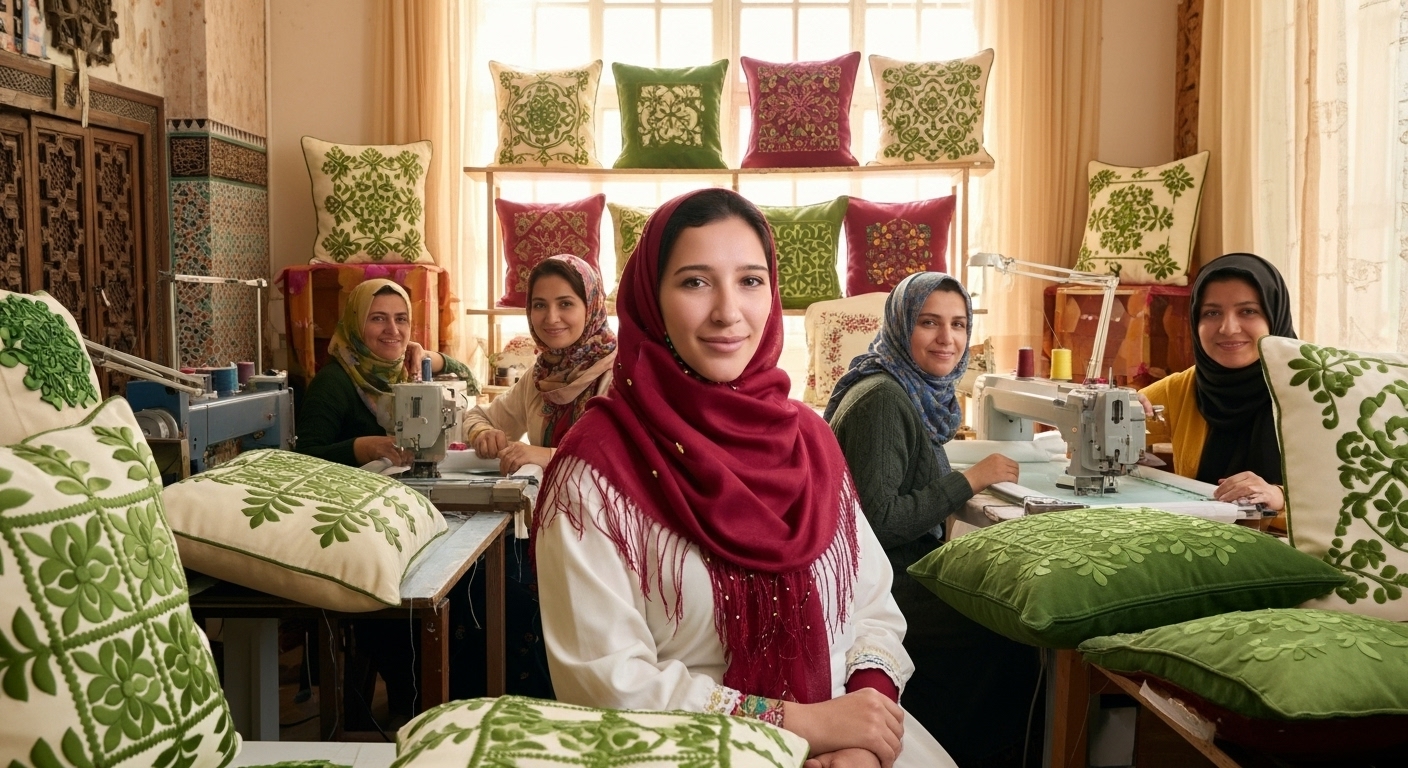
In a sunlit corner of her home, Hasna guides fabric beneath the needle of her embroidery machine with practiced precision. Her hands move in graceful rhythm, controlling the direction and flow of the stretched material as colorful threads transform plain cloth into works of art. Around her, several other women do the same, their embroidery machines humming in gentle harmony. This is no ordinary workspace—it’s where skill meets tradition, where motherhood intertwines with craftsmanship, and where the ancient art of Moroccan embroidery finds new life in contemporary handmade pillow covers.
Hasna is a mother of three and a master of ribbon embroidery, a specialized technique that creates the raised, textured designs found on the Moroccan pillow covers and leather poufs that grace homes around the world. But her story is about more than beautiful cushions—it’s about community, dedication, and the skilled hands that breathe life into fabric.
The Art of Guided Embroidery
“When I guide the fabric, I’m not just making cushion covers—I’m creating beauty for people’s homes,” Hasna explains, pausing to examine a floral pattern taking shape beneath her needle.
While many assume that machine embroidery is simply automated stitching, Hasna’s craft tells a different story. The technique she practices is a fascinating marriage of traditional handwork and modern tools. Though embroidery machines provide the needle movement and consistent stitching, the true artistry lies entirely in the craftswomen’s hands.
The process begins with carefully stretching the fabric to create the perfect canvas for embroidery. This tensioning is crucial—too loose, and the stitches will pucker; too tight, and the fabric may distort. Once properly prepared, the real magic begins. Hasna positions the stretched fabric under the machine’s needle, but unlike automated embroidery, she controls everything that happens next.
Her hands guide the fabric in fluid motions—forward, backward, in curves and spirals—as the needle stitches rapidly. It’s similar to free-motion embroidery, where the machine is the pen and the artisan’s hands are the artist. She controls the speed at which the fabric moves, the direction of each line, and the placement of every element in the design. This requires years of practice to master smooth curves, maintain consistent spacing, and create the intricate florals, geometric patterns, and traditional motifs that make Moroccan textiles so distinctive.
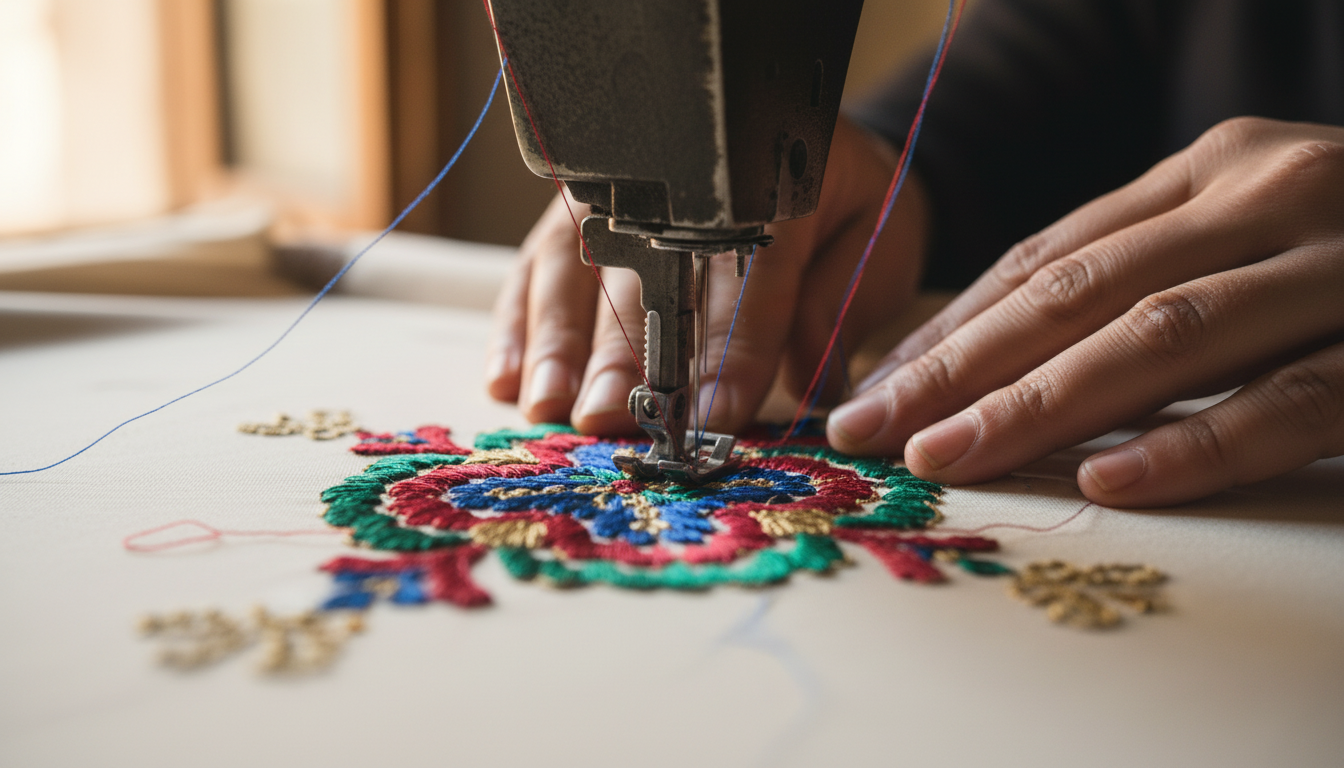
“People think the machine does all the work,” Hasna says with a knowing smile. “But look—” she demonstrates, moving the fabric to create a delicate petal, “my hands decide where every stitch goes. The machine gives me speed and consistency, but I give it direction and soul.”
This hand-guided technique creates three-dimensional texture that elevates each cushion cover beyond simple decoration. The ribbon embroidery produces raised, tactile designs that catch the light and invite touch—a quality that has made these pieces treasured elements of Moroccan home décor for generations.
A Workshop Built on Community
The workshop in Hasna’s home is more than just a place of production—it’s a space of collaboration, learning, and mutual support. Six other women work alongside her, their machines positioned around the room in a configuration that encourages conversation and shared problem-solving.
“We’re stronger together,” Hasna says, gesturing to her colleagues. “When someone discovers a better way to create a difficult curve, or finds the perfect tension for a new fabric, we all learn. When someone’s children are sick, we adjust. When orders are abundant, we celebrate together.”
This collective approach allows the women to balance the demands of skilled craftswork with their responsibilities as mothers and caregivers. Children often play nearby, occasionally peeking over to watch their mothers transform simple fabric into something extraordinary. It’s an organic way of passing down not just technical skills, but the values of dedication, artistry, and self-sufficiency.

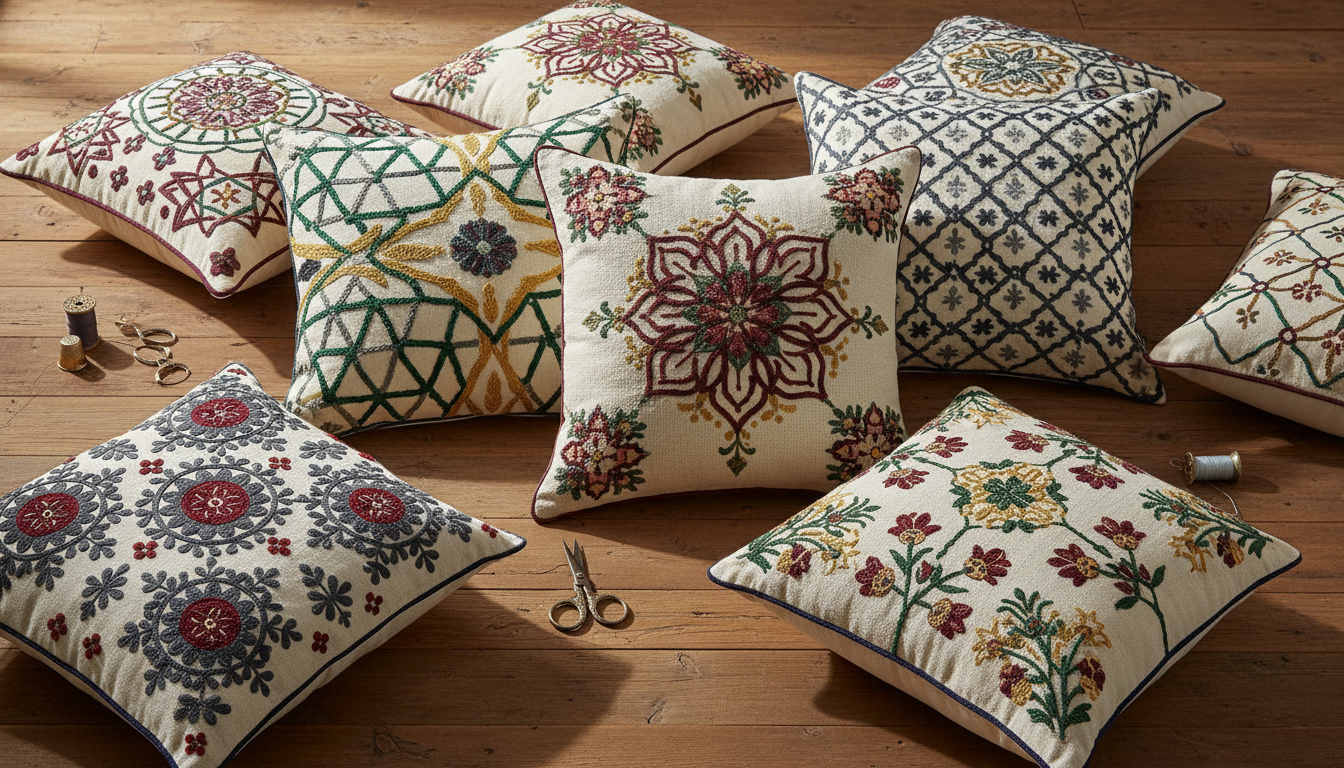
The atmosphere in the workshop is warm and industrious. Threads in jewel tones—deep crimsons, sapphire blues, emerald greens, and golden yellows—are organized in boxes along the walls. Finished cushion covers await quality inspection, their surfaces alive with traditional Moroccan patterns: stylized flowers, geometric stars, lattice work, and the abstract motifs that have characterized regional embroidery styles for centuries.
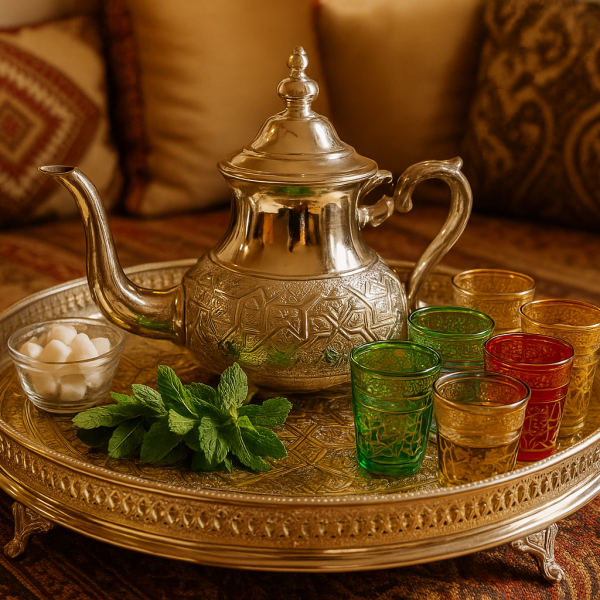
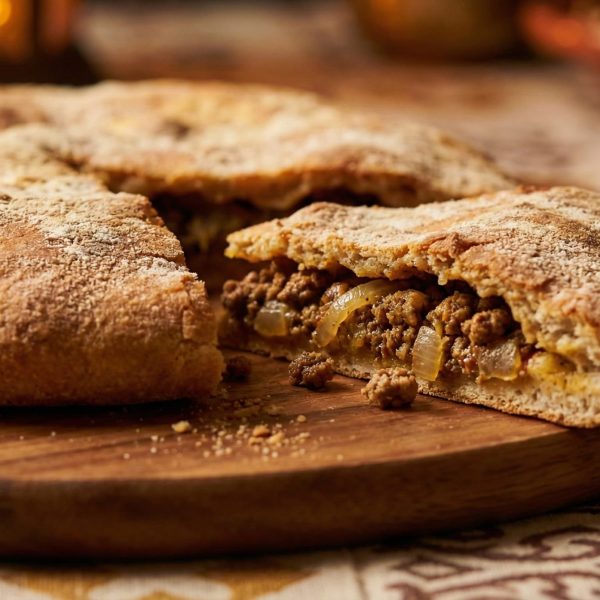
During breaks, the women share mint tea and homemade bread, discussing everything from design ideas to their children’s schoolwork. This social dimension of the craft cannot be overstated—for many of these women, the workshop provides not just economic opportunity but a vital sense of community and purpose.
A Living Tradition
Hasna learned embroidery from her aunt, a skilled craftswoman who recognized her niece’s steady hands and patient nature. “I was twelve when I first sat beside her, watching her hands guide the fabric,” Hasna recalls. “She told me: ‘This is not just work—it’s heritage. Every stitch connects you to the women who came before.'”
This transmission of skill through family lines is fundamental to Moroccan textile traditions. While Morocco has seven recognized regional embroidery styles—from Fes to Rabat to Tetouan—each with distinct design principles and techniques, they share common threads: the value placed on craftsmanship, the primarily female artisan tradition, and the integration of embroidered textiles into daily life and celebration.
In Moroccan culture, embroidered cushion covers are far more than decorative accessories. They appear in homes as marks of hospitality and refinement, are given as gifts during traditional weddings, and serve as tangible expressions of care and artistry. The cushions grace majlis seating areas, complement Moroccan poufs and ottomans, and add warmth to contemporary interiors around the world.
“My oldest daughter, who is thirteen, has started learning,” Hasna shares, her voice carrying quiet pride. “I watch her hands—still uncertain, still learning the rhythm—and I remember my own beginning. She may choose a different path, but she’ll always carry this knowledge, this connection to our craft.”
The economic importance of this work cannot be overlooked. For Hasna and the women in her workshop, their skilled labor provides meaningful income that contributes to their families’ wellbeing. It offers financial independence and the dignity of being recognized for their expertise—factors that resonate deeply in communities where women’s economic contributions are vital but not always valued.
Creating Beauty, Stitch by Stitch
Each cushion cover that leaves Hasna’s workshop represents hours of focused work. Depending on the complexity of the design, a single piece might require four to eight hours of constant hand-guiding. Simpler geometric patterns move more quickly; elaborate floral compositions with multiple colors and layered textures demand greater time and precision.
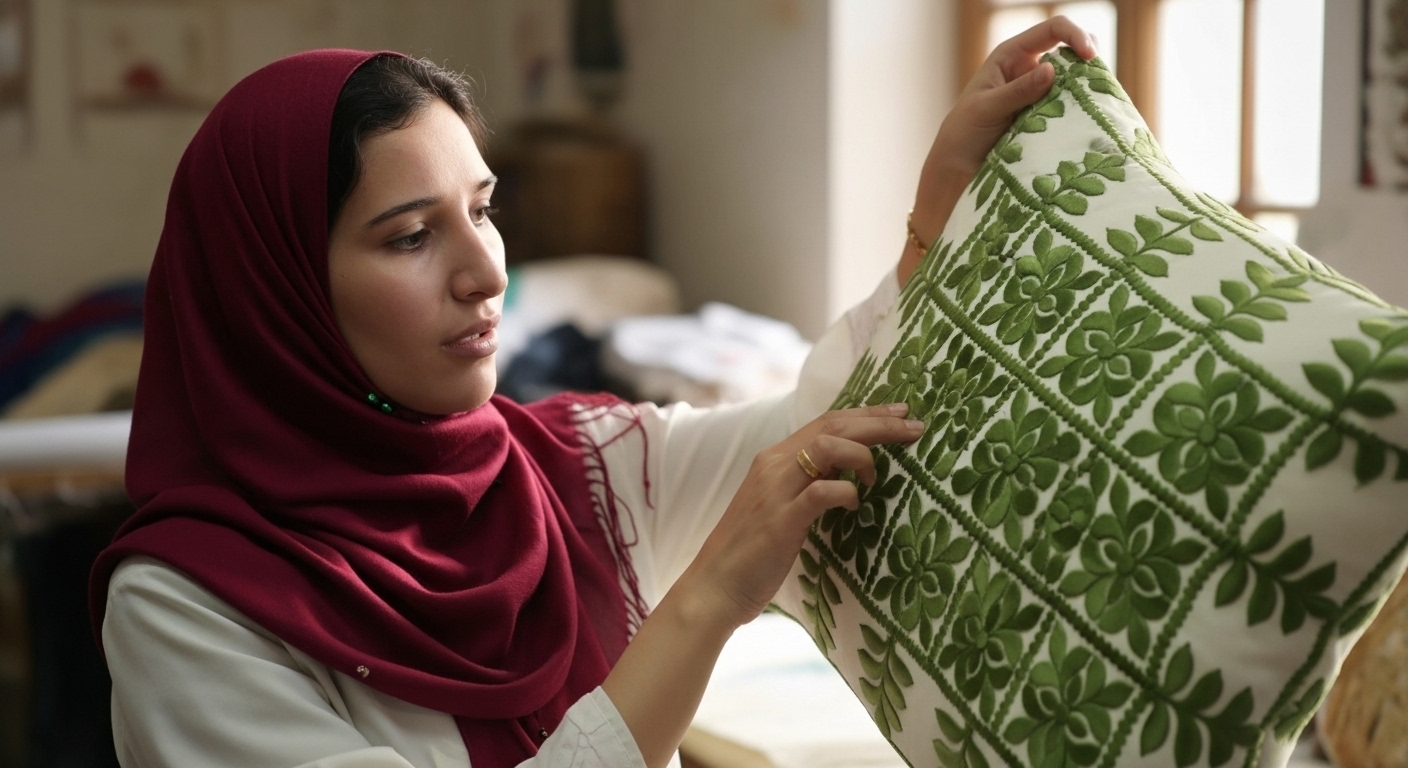
Hasna works primarily with cotton and linen base fabrics in natural tones—cream, beige, and soft white—that allow the vibrant embroidery threads to truly shine. Her color palette draws from both traditional and contemporary preferences: rich burgundies and navy blues honor classic Moroccan aesthetics, while dusty pinks, sage greens, and sunset oranges appeal to modern tastes.
“Every piece is unique,” she explains, running her fingers over a nearly complete cushion cover adorned with a pomegranate motif. “Even when we follow the same design, my hands will move slightly differently each time. The curves might be a little softer, the spacing might vary subtly. This is what makes handmade special—no two are exactly alike.”
The quality and durability of these cushion covers are exceptional. The combination of machine stitching with hand-guided placement ensures that each stitch is secure and precisely positioned. The raised ribbon embroidery maintains its dimension even after years of use, and the pieces can be gently cleaned without losing their beauty—a practical consideration that makes them both treasured heirlooms and functional home accessories.
Challenges and Triumphs
Hasna is candid about the physical demands of her craft. Hours of focused hand-guiding can cause fatigue, and the precision required strains her eyes, particularly as natural light fades in the afternoon. “Sometimes my hands ache,” she admits. “But then I finish a piece, hold it up, and see how beautiful it is—that makes everything worth it.”
Market fluctuations present ongoing challenges. During peak seasons—particularly before major holidays and wedding months—orders surge and the workshop buzzes with activity. Quieter periods require careful financial planning. Access to quality materials at fair prices is another persistent concern, though Hasna has developed relationships with reliable suppliers over the years.
Yet these challenges are balanced by profound satisfaction. “When someone chooses one of my cushion covers for their home, or as a gift for someone they love, I feel proud,” Hasna says. “I know that piece will be touched, admired, used. It will be part of their daily life. That’s a beautiful thing.”
The sense of mastery that comes from years of perfecting her craft is another source of pride. Hasna can now execute designs that once seemed impossibly complex. She can judge by touch whether fabric is properly tensioned, can anticipate how different threads will behave under the needle, and can improvise solutions when unexpected challenges arise. This expertise, earned through thousands of hours of practice, is its own reward.
Looking Forward
As afternoon light filters through the window, casting warm patterns across her workspace, Hasna considers the future. She hopes to see greater recognition for the skill and artistry involved in crafts like hers—not just locally, but internationally. She dreams of her work reaching people who truly understand and value the human hands behind each piece.
“I want people to know the artisans behind what they buy,” she says thoughtfully. “To understand that real people created this, that we have families, dreams, skills we’ve spent years developing. When you buy something handmade, you’re supporting all of that.”
For her children, she hopes for education and opportunity, while also hoping they’ll carry respect for traditional crafts into whatever futures they choose. “Whether they become embroiderers, teachers, engineers—I want them to understand the value of work done with skill and care. Those lessons will serve them anywhere.”
As for the craft itself, Hasna sees it adapting and enduring. While traditional designs remain popular, she and her colleagues are also exploring contemporary patterns that appeal to younger customers and international markets. The fundamental technique—human hands guiding fabric, creating texture and beauty stitch by stitch—remains timeless, even as the designs evolve.
The Soul in the Stitches
As the day’s work draws to a close, Hasna completes another cushion cover, carefully removing it from the machine and examining it with a critical eye. She runs her fingers over the raised embroidery, checking for consistency, admiring the way light plays across the textured surface. Satisfied, she adds it to the stack of finished pieces awaiting delivery.
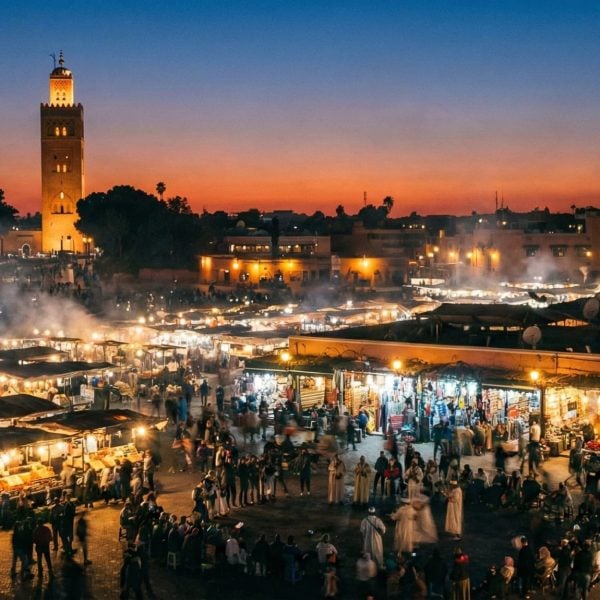
Tomorrow, she’ll begin again—stretching fabric, threading machines, guiding designs into existence with skilled hands. Around her, the other women will do the same, their collective effort producing beauty that will travel far from this workshop, far from Marrakech, to grace homes around the world.
“Every stitch,” Hasna says softly, folding the finished cushion cover with care, “is a conversation between my hands and the machine. And together, we create something that lasts.”
In Hasna’s story—and in the stories of craftswomen like her—we find a powerful reminder: true artistry doesn’t come from tools alone, but from the human hands that guide them, the dedication that perfects the craft, and the soul that transforms simple materials into objects of lasting beauty.
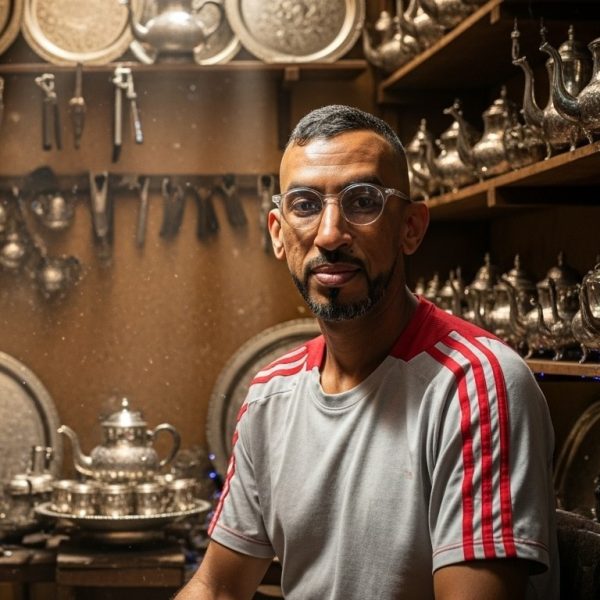
Interested in supporting craftswomen like Hasna? Explore our collection of handmade Moroccan pillow covers and meet more artisans whose skilled hands shape Moroccan craftsmanship: Omar, our master leather craftsman, Abdul Jalil, our brass lamp maker, Kamal, our silver-plated tea set artisan, and the full artisan collective.