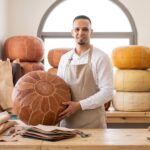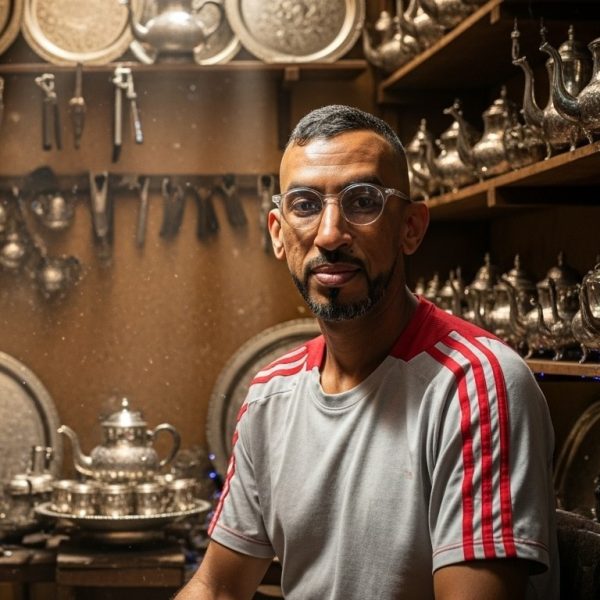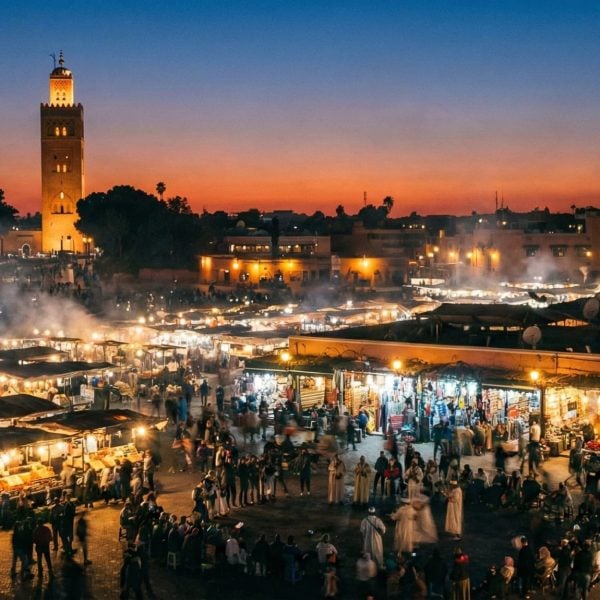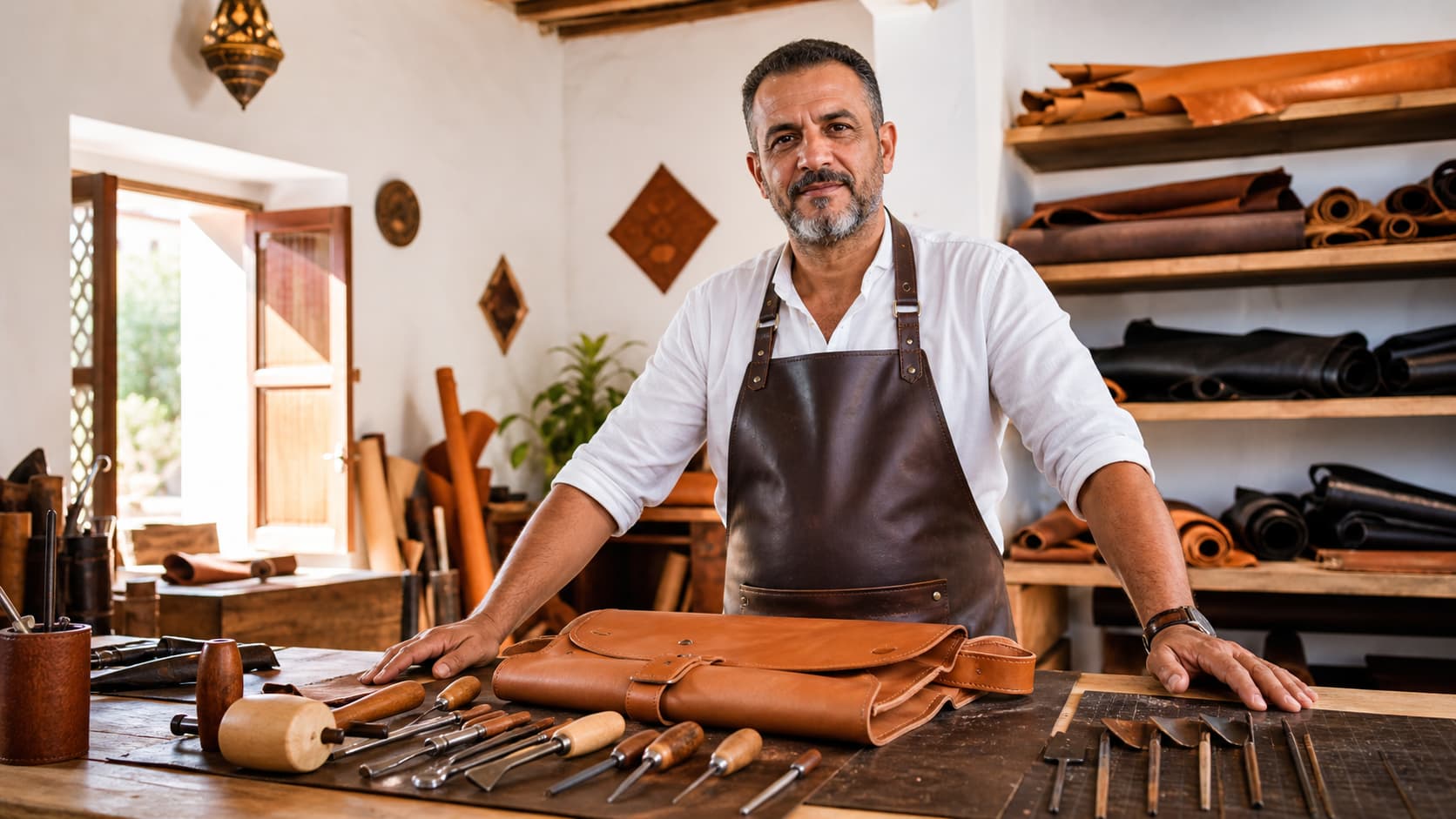
A hush fell over the medina the day the planes stopped coming. In the normally raucous quarter around Bab Debbagh, only the soft slap of drenched hides against stone broke the silence. For Omar — a third-generation Marrakech leather artisan with twenty years of practice at the same terracotta vats — each echo felt like a heartbeat slipping away.
“When the medina went silent, the only sound left was the beating of my own heart — so I decided to let that rhythm guide my hammer.” — Omar, master leather artisan, Bab Debbagh
1. The Day the Medina Fell Silent
The labyrinth of Marrakech’s Bab Debbagh quarter once rang with donkey hooves, muezzin calls, and tourists bargaining for bright babouches (slippers). Omar has worked these alleys for two decades — first as an apprentice at his father’s vat, then as a maâlem (master craftsman) running his own operation: a workshop tucked deep in the old medina where the tanning and cutting happens, and a retail stall in Souk Cherratin, Marrakech’s dedicated leather market, where finished bags, wallets, and belts are displayed for discerning buyers.
Then COVID-19 grounded flights, sealed borders, and slashed global tourism by a staggering 74 percent in 2020. For Omar, that statistic wasn’t abstract; it was rent unpaid, vats standing idle, and three children asking why baba looked worried.
2. Bloodlines in Leather: A Craft Older than Maps
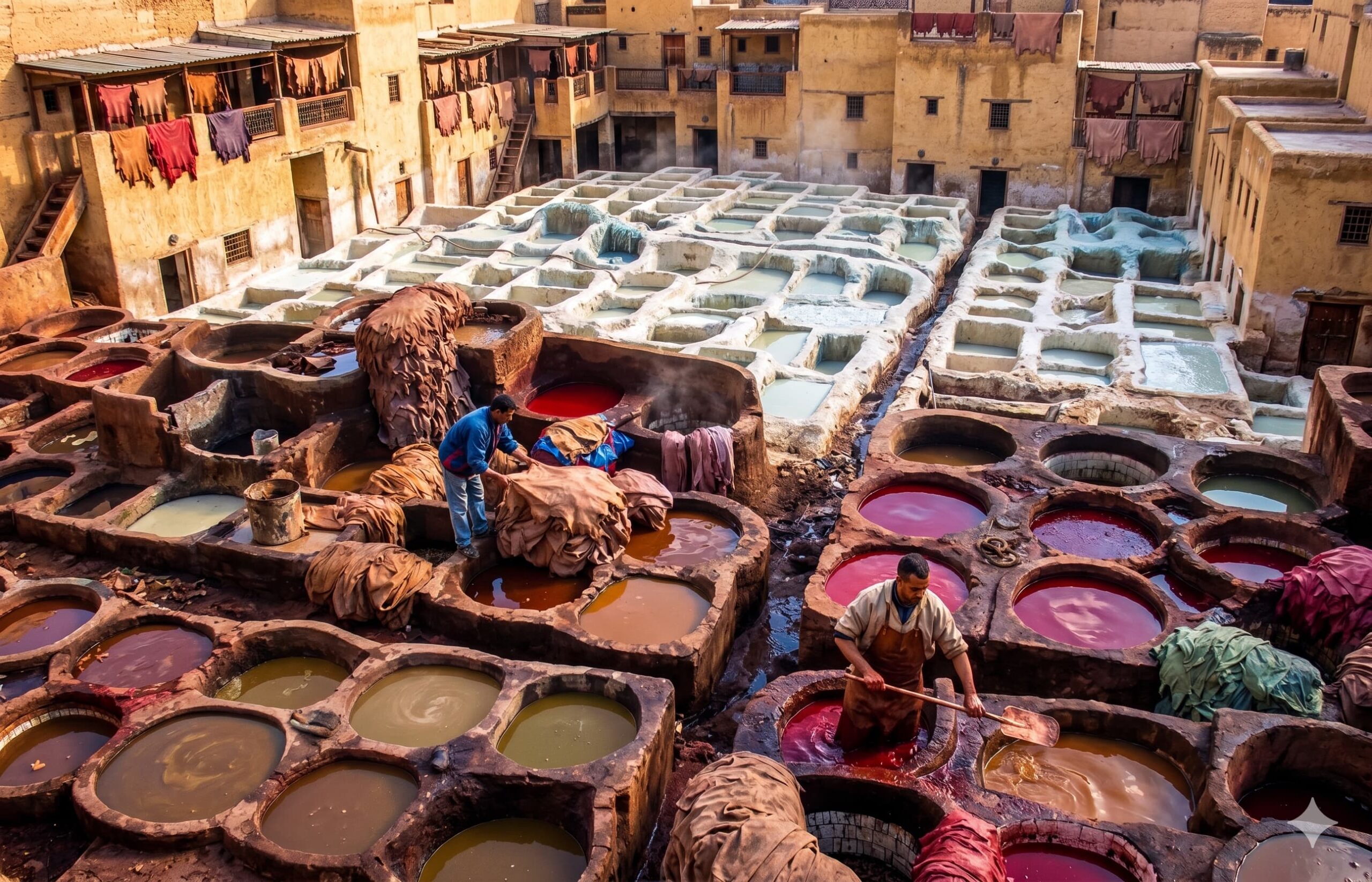
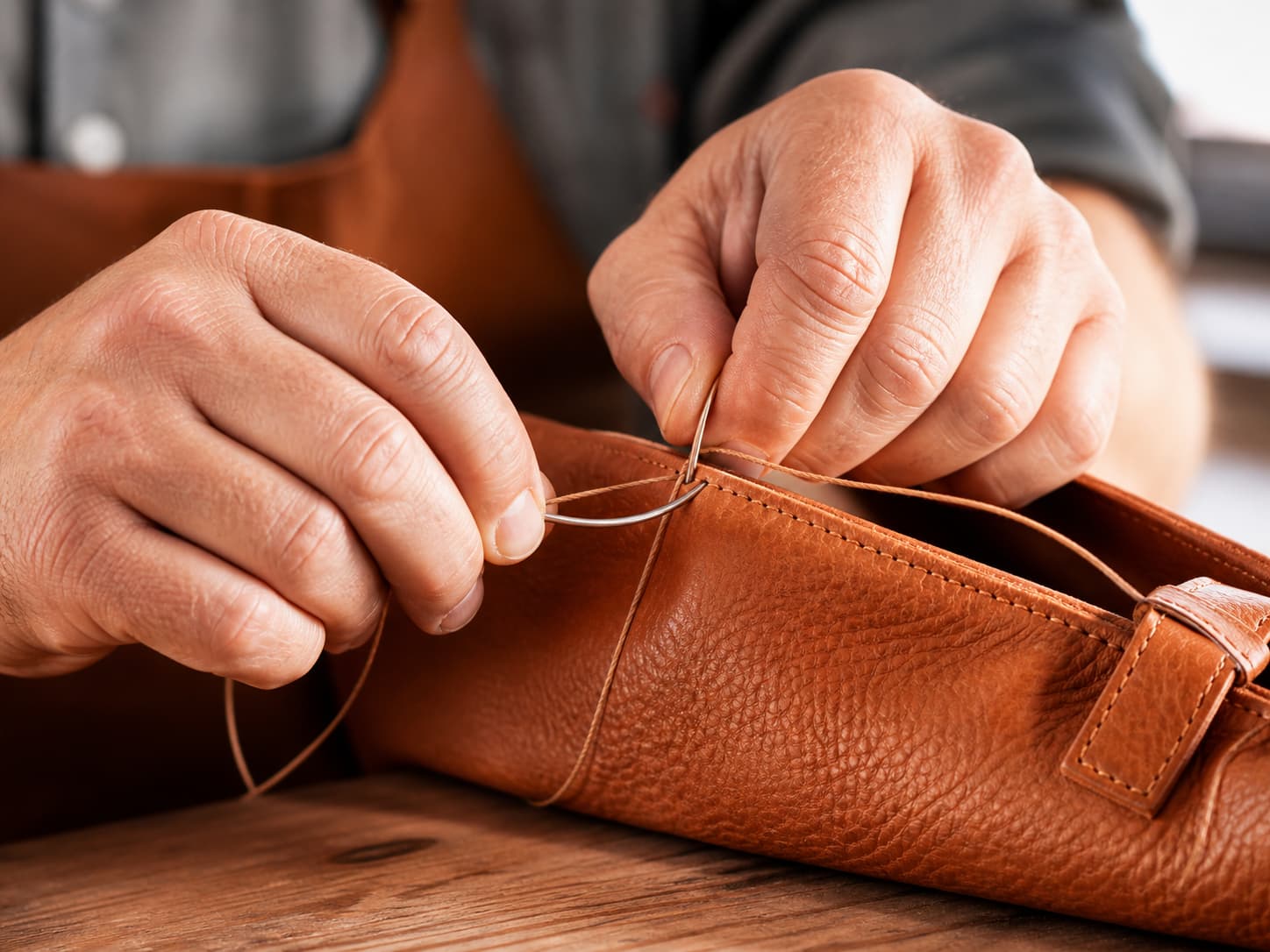
Long before Marrakech earned its Red City nickname, Omar’s great-grandfather was already tanning hides in the earth-scented pits of the medina. Omar has spent the last twenty years refining that same process — hand-cutting, hand-stitching, and hand-finishing every bag, backpack, tote, and clutch that leaves his bench. Morocco’s sister city Fez still hosts the Chouara Tannery, a UNESCO-heritage icon that has worked the same natural dyes since the 9th century. Omar honours that lineage by vegetable-tanning with pomegranate rind, indigo, and henna — methods kinder to skin and soil than chromium-based industrial tanning.
3. When Pride Meets Empty Pockets
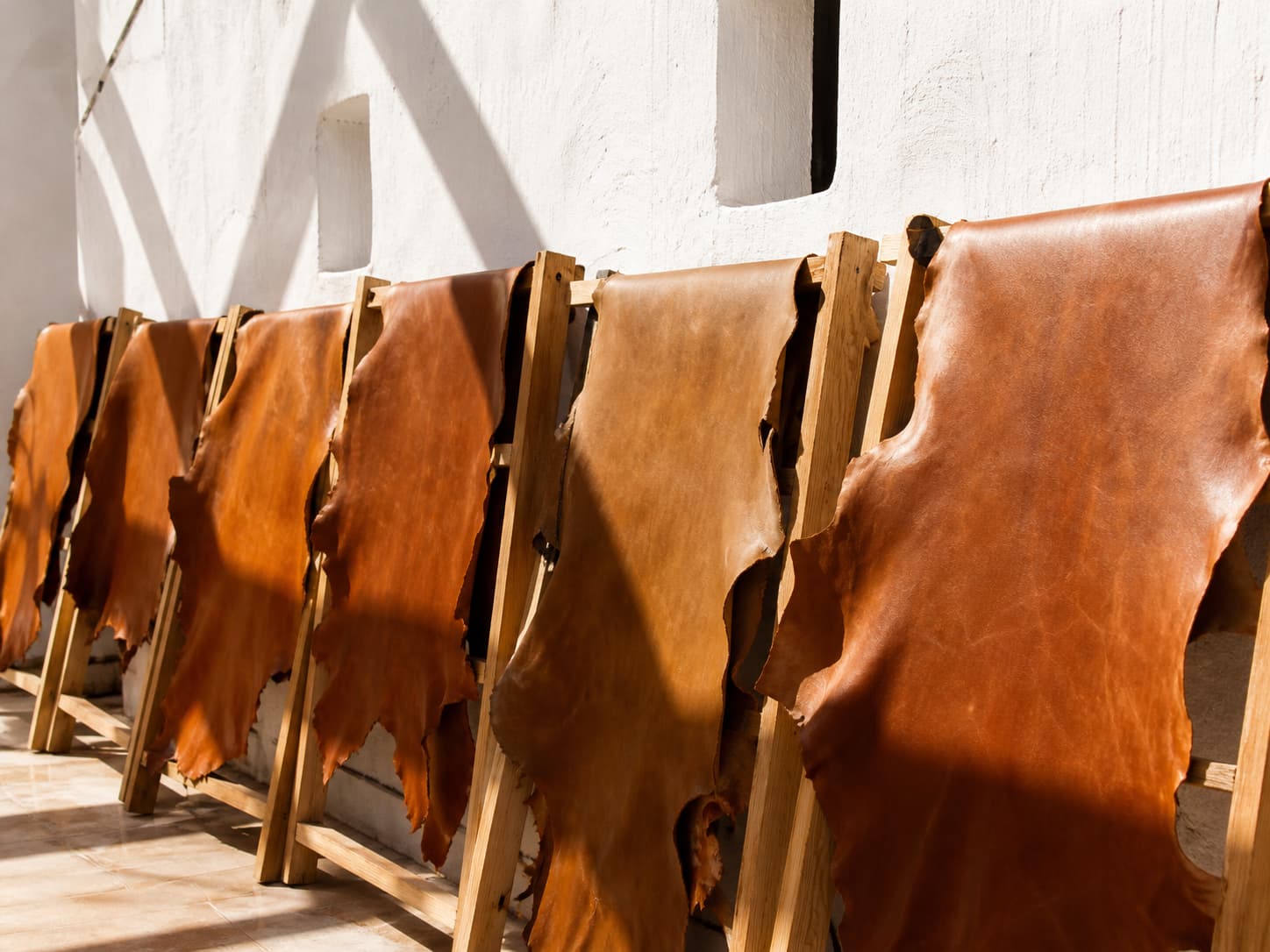
By late-spring 2020 Omar sold Fatima’s heirloom bangles just to keep the vats wet. He swore he’d never compromise on quality: each goatskin must rest 48 hours in lime, then re-soften in a pigeon-dropping bath, then sun-dry until the hide “smells like the desert after rain,” as his father taught him.
Learn why natural patina matters in our Ultimate Guide to Buying Leather Bags in Moroccan Souks, and discover how to maintain that patina with our Moroccan leather care guide.
4. A Digital Door Opens
Enter Mohammed, Co-founder of Marrakeche Crafts. He was mapping shuttered workshops for an online marketplace that could shoulder:
- Studio-grade photography
- Cross-border logistics
- Transparent, fair-trade pricing
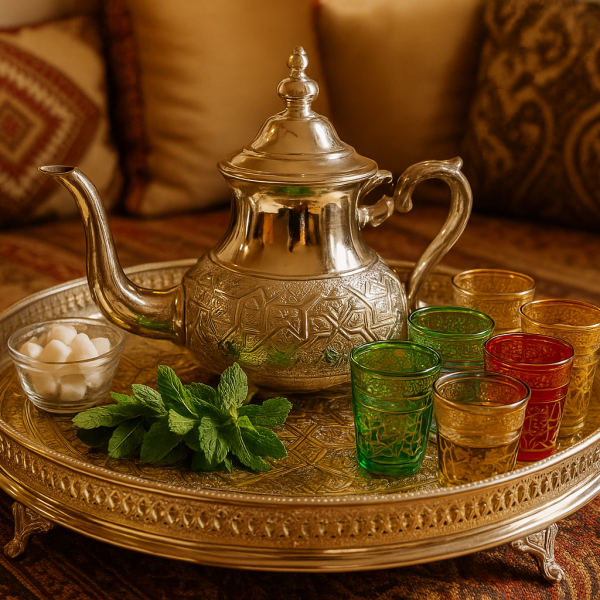
All Omar had to do was create. Skeptical? Sure. Desperate? More. He agreed while sipping mint tea that tasted oddly of hope.
5. First Ping, First Prayer
Hours after his product page went live, an email chimed: “1 × Hand-tooled Satchel – Ship to Vancouver.” Omar checked the screen twice; Mohammed laughed and snapped a candid. Two more orders arrived before the call to Isha prayer.
6. Family Futures Re-Stitched
Fatima’s mint-tea tray is back, along with her smile. Daughter Salma writes product descriptions in English class; little Youssef polls Instagram followers for next-season colour palettes. Even the neighbours benefit—Omar buys goat hides in bigger lots, giving market tanners predictable income.
7. Why Your Purchase Matters
Ethical Leather vs. Fast Fashion
| Factor | Omar’s Workshop | Mass-Produced Factory |
|---|---|---|
| Tanning | 100 % vegetable | Chromium salts |
| Workers | Family & local artisans | Low-wage industrial |
| Carbon Footprint | Regional supply chain | Global shipping loops |
Supporting Omar keeps heritage skills alive and curbs toxic waste entering Morocco’s waterways—an issue documented in academic studies of Fez’s tanning effluents1.
8. How to Shop Omar’s Collection
Omar’s craft lives entirely in leather goods for carrying. After twenty years at the bench, he has mastered every seam configuration that a bag demands — from the single-panel messenger to the structured double-gusset briefcase he considers his hardest challenge. Everything he makes is cut, stitched, and finished by hand in his old medina workshop.
What Omar makes:
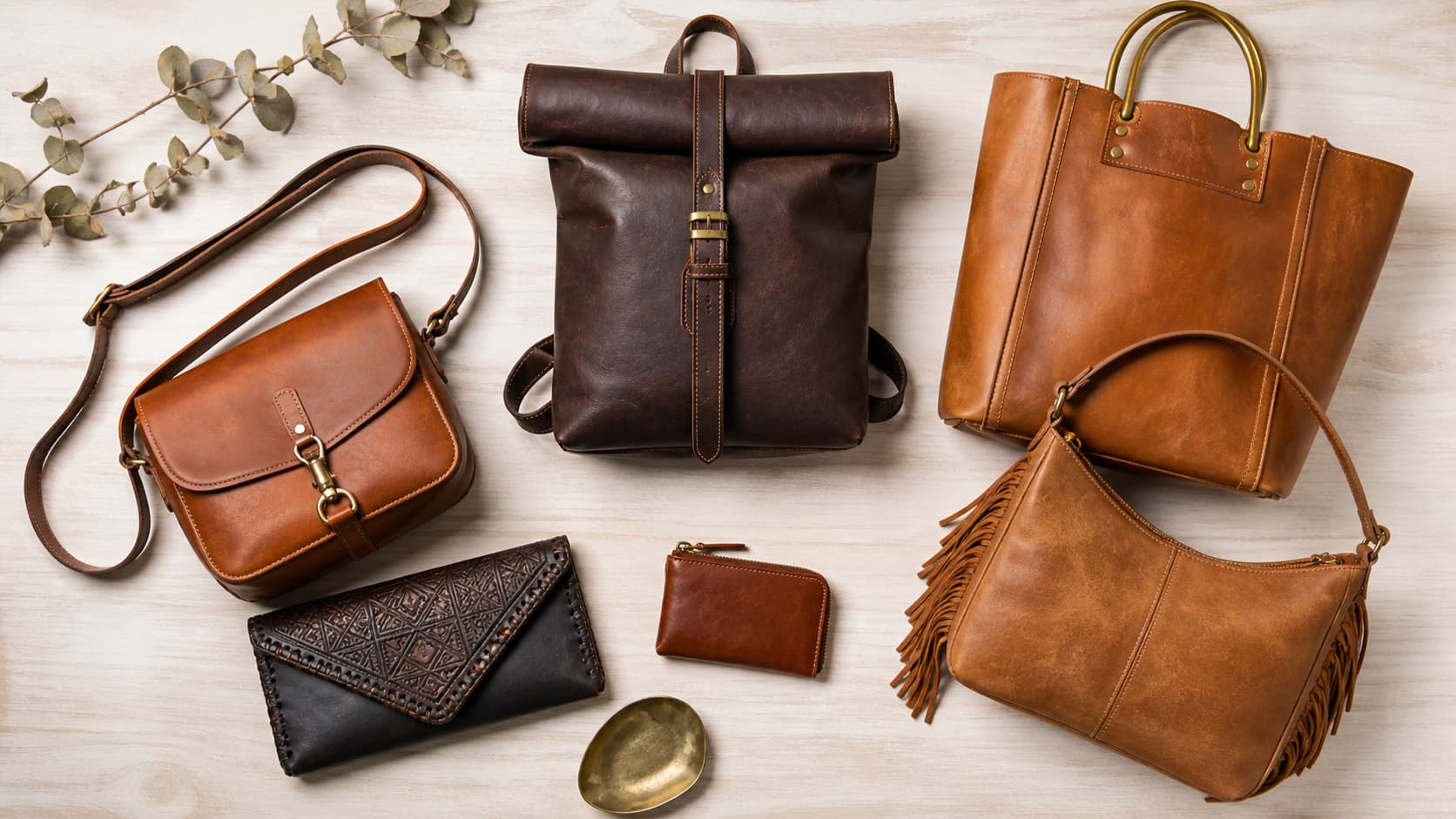
- Leather Bags — crossbodies, shoulder bags, tote bags, clutches, and travel duffles in hand-tanned goatskin and cowhide
- Leather Backpacks — structured roll-tops and classic silhouettes with brass hardware and padded laptop sleeves
- Leather Totes — spacious, double-handled, and built to carry a week’s worth of everything
- Shoulder Bags — from compact evening clutches to deep-saddlebag silhouettes with hand-tooled embossing
- Leather Footwear — traditional babouches in the same vegetable-tanned leather as his bags
To shop: Browse the full collection above, choose your style, and check out — the Marrakeche Crafts team handles secure payment and doorstep delivery worldwide. Every piece is made to order after your purchase, not sitting in a warehouse.
9. Beyond the Cart: Visiting Marrakech’s Tanneries
If travel brings you to Morocco, you can experience both sides of Omar’s world. His production workshop in the old medina — in the labyrinth behind Bab Debbagh — is where the real craft happens: the vats, the drying racks, the smell of vegetable tannins drying in the sun. A short walk brings you to Souk Cherratin, the leatherworkers’ market, where his finished pieces are displayed alongside the work of neighbouring artisans. Combine a visit with a day-trip to Fez’s Chouara Tannery, where balcony viewpoints reveal a honeycomb of ochre and indigo vats (tip: carry fresh mint). Before you go, the Moroccan Tourism Board lists current opening hours and dress guidelines.

10. Meet the Maâlem: Quick-Fire Q&A
| Question | Omar’s Answer |
|---|---|
| Favourite leather to work? | Goatskin—soft yet strong. |
| Hardest bag to master? | A double-gusset briefcase; every seam must sing. |
| Dream buyer? | Someone who hands the bag to their child in ten years. |
| How long have you been working leather? | Twenty years — started as an apprentice, now I train my own. | |
11. The Echo Carries On
The pandemic’s silence once threatened to smother Omar’s workshop. Today, every DHL pickup is an echo that travels farther than the medina’s call-to-prayer ever could.
By buying a single wallet, satchel, or travel bag, you become part of that echo—proof that handcrafted heritage still thrives in a click-and-ship world.