Table of Contents
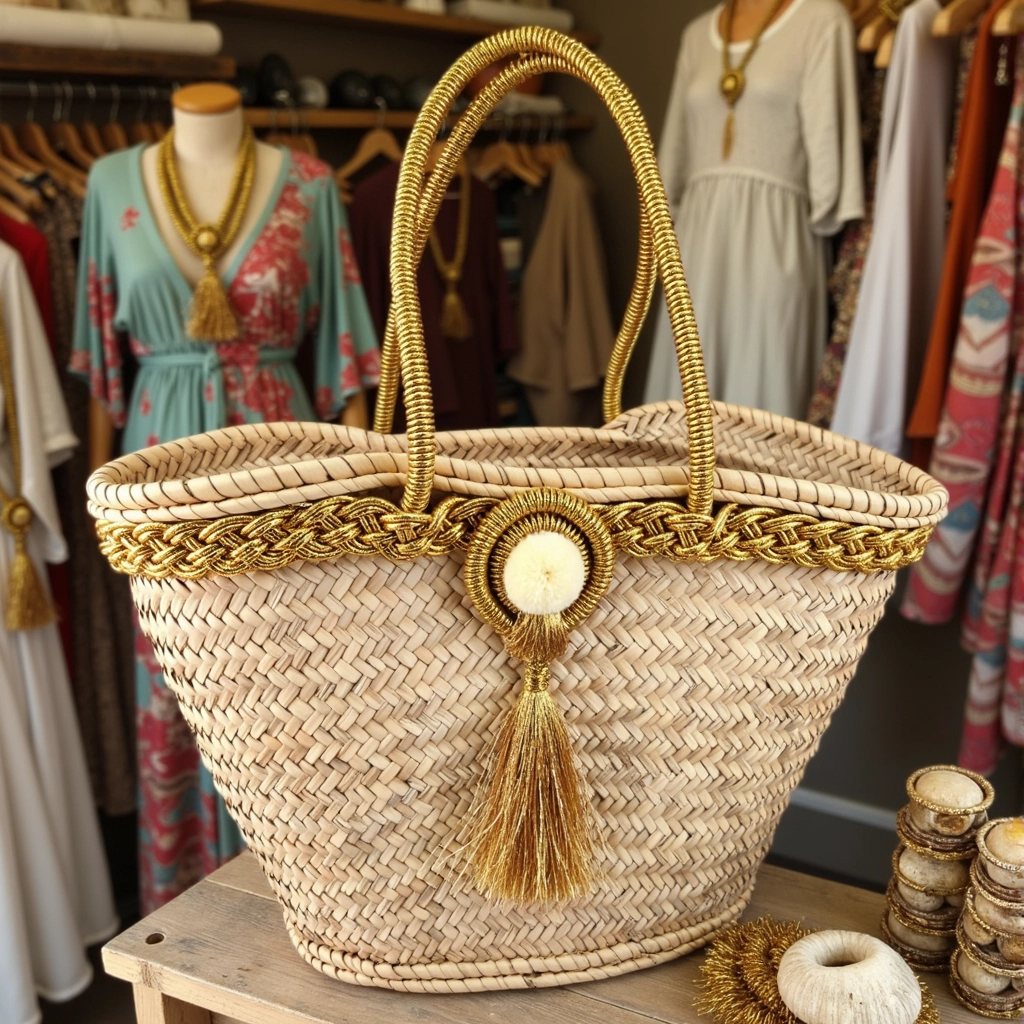
Morocco’s vibrant souks are a treasure trove of handcrafted goods, with leather bags standing out as some of the most sought-after items — alongside the increasingly popular Moroccan straw bags woven by co-operatives like Dounia’s Al Amal collective. These pieces aren’t just accessories; they’re a testament to centuries-old craftsmanship and a vital part of Moroccan cultural heritage. Whether you’re planning a trip to Morocco or shopping online, this guide will help you navigate the world of buying leather bags in Moroccan souks with confidence.
Quick Answer: How to Buy Authentic Moroccan Leather Bags
Authentic Moroccan leather bags are made from vegetable-tanned goatskin or cowhide, hand-stitched with tight even seams, and carry a natural earthy smell — never chemical or plastic. In Marrakech’s souks, expect to pay 400–1,200 MAD ($40–$120 USD) for quality pieces; prices below 200 MAD almost always indicate synthetic or chrome-tanned leather. For guaranteed quality without the bargaining stress, shop directly from artisan workshops online. Every bag traces back to a named craftsman — the same principle that guides our brass lamp maker Abdul Jalil and all the artisans in our collective.
1. The Rich History of Moroccan Leather
Leatherworking in Morocco dates back over a thousand years, with techniques passed down through generations. The ancient city of Fez is particularly renowned for its tanneries, where animal hides are transformed into supple, durable leather using methods that have remained largely unchanged for centuries.
The tanning process involves soaking hides in a mixture of lime, water, and pigeon droppings to remove hair and soften the leather. It’s then dyed using natural pigments in large stone vats, creating a rainbow of colors that’s become iconic in Moroccan craftsmanship.
While leather is a cornerstone of Moroccan craft, don’t miss out on other traditional arts like our Tamegroute Pottery Collection, showcasing another aspect of Morocco’s rich artisanal heritage.
For more on the cultural significance of Moroccan craftsmanship, see UNESCO’s page and our article on Traditional craftsmanship.
2. Types of Leather Bags You’ll Find in Souks
Moroccan souks offer a wide variety of leather bags, blending traditional designs with modern interpretations:
- Pouches and coin purses | Shop Our Leather Pouches
- Messenger bags and satchels | View Moroccan Messenger Bags
- Tote bags and shoppers | Browse Leather Totes
- Backpacks | Explore our backpacks
- Duffel bags
- Clutches and evening bags
Explore Our Leather Bag Collection to see examples of authentic Moroccan designs.

3. Identifying Quality Leather
To ensure you’re getting a high-quality leather bag, keep these factors in mind:
- Texture: Quality leather should feel smooth and supple.
- Smell: Genuine leather has a distinct, natural scent.
- Stitching: Look for even, tight stitches without loose threads.
- Hardware: Zippers, clasps, and other hardware should be sturdy and well-attached.
The Leather Workers Forum offers more detailed information on assessing leather quality.

3b. Understanding Moroccan Leather Types
Not all Moroccan leather is equal. Knowing what hide type and tanning method you’re looking at is the single most important quality signal — and it’s knowledge most souk vendors assume you don’t have.
The Three Main Hide Types
Goatskin is the gold standard of Moroccan leather. Omar, our master artisan at Bab Debbagh, works almost exclusively with goatskin because of its distinctive pin-grain texture — tiny, tight pores you can feel under your fingertips — combined with a weight-to-durability ratio that makes it ideal for bags that get daily use. When tanned correctly, goatskin develops a rich, deepening patina over years rather than cracking or peeling.
Cowhide produces a thicker, softer leather better suited to larger bags — totes, duffels, and weekenders. It lacks goatskin’s pin-grain character but offers a buttery softness that wears beautifully. Most of our travel bags use full-grain cowhide for exactly this reason.
Camel hide, less common but unmistakable, has a coarser grain and a warm golden-tan colour that is difficult to replicate artificially. Genuine camel-leather bags are rare in the souks and command higher prices — if a vendor claims camel leather at bargain prices, treat it with scepticism.
Vegetable Tanning vs. Chrome Tanning: Why It Matters
Traditional Moroccan leather is vegetable-tanned — a process using natural plant extracts including pomegranate rind, indigo, and henna. Omar’s hides rest in lime for 48 hours to remove hair, then re-soften in natural baths before sun-drying until, as Omar describes it, “the hide smells like the desert after rain.” This process takes weeks and produces leather that is:
- Naturally water-resistant and improves with age
- Free from chromium — safer for skin contact and the environment
- Distinguishable by its warm, earthy smell (never sharp or chemical)
- Capable of developing deep patina that makes each bag unique over time
Chrome-tanned leather, by contrast, is processed with chromium salts in under 24 hours. It’s softer initially but doesn’t age gracefully, often developing an unpleasant smell in heat and lacking the structural memory of vegetable-tanned hides. The majority of cheap souk bags — and virtually all factory-made Moroccan-style bags — use chrome tanning. The giveaway: a uniform, plasticky sheen and a faint chemical smell when you press your nose to the interior.
4. The Art of Bargaining in Moroccan Souks
Bargaining is an expected part of shopping in Moroccan souks. It’s not just about getting a lower price; it’s a social interaction. Here are some tips:
- Start at about 50-60% of the asking price
- Be respectful and keep a sense of humor
- Be prepared to walk away if you can’t agree on a price
- Remember that the goal is a fair price for both parties
After you’ve mastered bargaining for your bag, why not explore Moroccan Decor Ideas for Your Home to complete the look?
5. Price Ranges: What to Expect
Prices in Moroccan souks vary dramatically — not just by size, but by leather type, tanning method, and how close you are to a tourist square. Here’s an honest guide to what things should cost, and what suspiciously low prices actually signal.
Souk Price Guide (Before Bargaining)
| Bag Type | Fair Souk Price (MAD) | USD Equivalent | Red Flag If Below |
|---|---|---|---|
| Small crossbody / envelope | 400–700 MAD | $40–70 | Below 200 MAD |
| Shoulder bag | 500–900 MAD | $50–90 | Below 300 MAD |
| Tote bag | 600–1,100 MAD | $60–110 | Below 350 MAD |
| Backpack | 700–1,400 MAD | $70–140 | Below 400 MAD |
| Weekend duffle | 1,200–2,200 MAD | $120–220 | Below 700 MAD |
| Laptop messenger | 900–1,800 MAD | $90–180 | Below 500 MAD |
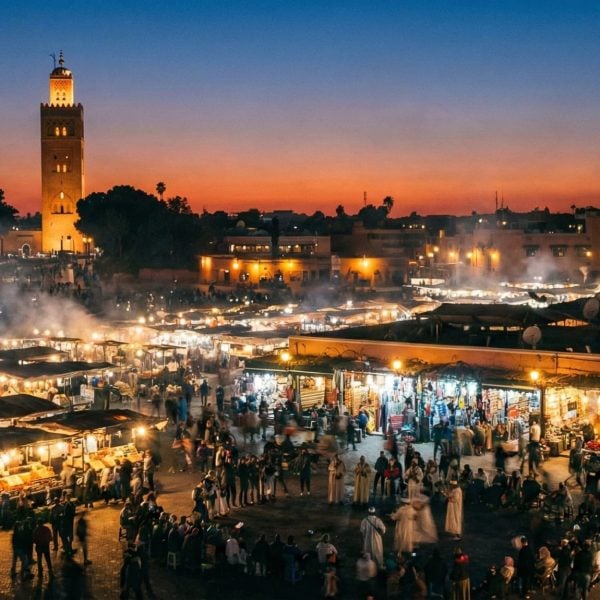
Note: These are starting prices for quality vegetable-tanned leather. Prices near Jemaa el-Fna are typically 30–40% higher than in Souk Cherratin or smaller side alleys — not because the bags are better, but because of higher footfall and tourist premium.
Online vs. Souk: The Real Comparison
Buying from a reputable artisan workshop online costs a similar amount to a fair souk price — but with meaningful differences that matter after you get home:
- Tanning method guaranteed: Every bag from Omar’s workshop is vegetable-tanned — you don’t have to guess or negotiate
- No tourist premium: You’re buying at artisan direct pricing, not souk-inflated rates
- No bargaining stress: Fixed prices mean no post-purchase doubt about whether you paid too much
- Returns policy: Something the souk definitively cannot offer
- Artisan traceability: You know exactly whose hands made your bag and where

6. Authenticity: Handmade vs. Mass-Produced
To identify genuine handcrafted items:
- Look for slight imperfections that indicate handwork
- Ask about the production process
- Check for a strong leather smell and natural variations in color
Learn more about supporting local artisans through Ethical Tourism in Morocco.
6b. Red Flags: How to Avoid Getting Scammed
Morocco’s souks are genuinely wonderful — but they’re also a high-pressure environment designed to disorient visitors. These are the five warning signs that experienced buyers recognise immediately.
1. The “Helpful” Guide Who Leads You to a Shop
If a friendly local offers to show you “the best leather shop” or “his uncle’s workshop,” the shop has already factored in a 20–40% commission for that guide — which you will pay. Politely decline and navigate yourself. The words “La, shukran” (No, thank you in Arabic) said firmly and while walking away are all you need.
2. The Tannery Visit Upsell
Being taken to view a tannery is a genuinely memorable experience — but it almost always ends in a rooftop shop where prices are the highest in the medina. The leather there is no better than in the souk alleys; you’re paying for the theatre. Visit the tanneries for the experience, then buy your bag separately in Souk Cherratin.
3. The Chemical Smell Test
Press the interior of the bag to your nose. Authentic vegetable-tanned leather smells earthy, warm, and organic — like soil after rain. A sharp chemical or plastic smell signals chrome tanning, regardless of what the vendor tells you. This test works even on coloured and embossed bags.
4. Perfect Uniformity
Genuine handmade leather bags have micro-variations: slight tonal differences in the hide, minor asymmetries in the stitching pattern, or small natural grain irregularities. If a bag looks machine-stamped perfect — every panel identical, every stitch robotically even — it was almost certainly factory-made, likely imported from China and sold as Moroccan-made.
5. Prices That Seem Too Good
A full goatskin crossbody bag cannot be profitably made and sold for 150 MAD ($15). If the price is dramatically below our table above, you’re either buying synthetic leather, chrome-tanned low-grade hide, or a mass-produced import. Real craftsmanship — 48-hour lime baths, hand-stitching, natural dyes — has an irreducible minimum cost. Paying a fair price isn’t naivety; it’s how you ensure your bag lasts a decade rather than a season.
7. Care and Maintenance of Your Moroccan Leather Bag
To keep your leather bag looking its best:
- Clean with a soft, dry cloth
- Condition regularly with leather balm
- Store in a cool, dry place when not in use
- Stuff with paper to maintain shape during storage

8. Ethical Considerations
When shopping for leather goods, consider:
- Supporting local artisans directly when possible
- Asking about the source of the leather and production methods
- Looking for cooperatives that ensure fair wages for workers
9. Where to Buy: Navigating the Souks
Popular souks for leather goods include:
- Fez: The Chouara Tannery area
- Marrakech: The babouche (slipper) souk in the main medina
- Rabat: The Rue des Consuls
The Morocco Tourism Official Site offers more information on craft centers throughout the country.

The Custom Order Option (Most Visitors Don’t Know This)
One of the best-kept secrets of Marrakech’s leather district: many workshops will create a custom bag for you based on a photo or sketch. You choose the hide type, colour, lining, and hardware. Turnaround is typically 2–3 days, and the price is often comparable to a ready-made piece — sometimes cheaper. If you have a few days in the city and something specific in mind, this is worth exploring in Souk Cherratin’s smaller workshops away from the main alleys.
Prefer the same custom-quality guarantee without the time pressure? Our leather bags collection is made to order in Omar’s workshop — every piece crafted after your purchase, not sitting in a warehouse.
10. Buying Moroccan Leather Bags Online
Can’t make it to Morocco in person — or want quality guaranteed before it arrives at your door? Every bag below is handcrafted by Omar, a third-generation leather artisan working in Marrakech’s Bab Debbagh quarter, using vegetable-tanned goatskin and cowhide. No souk theatre, no mystery tanning methods, no bargaining required.
Our Top Recommendations by Category
For Daily Use
Embossed Leather Mandala Crossbody Bag — Hand-tooled mandala embossing on full-grain goatskin with adjustable strap and suede interior lining. Light enough for all-day carry, structured enough to hold its shape for years. From $75
Handmade Brown Leather Tote with Zipper — Full-grain cowhide with brass zipper and double handle. Fits a 13″ laptop, a water bottle, and everything else. The one bag that replaces three. From $99
For Special Occasions & Gifting
Brown Leather Shoulder Bag with Embossed Cutwork — Intricate cutwork embossing on naturally tanned cowhide with a structured silhouette. The kind of bag that comes with a story worth telling. From $99
Cognac Leather Travel Duffle 50cm — Weekend-ready duffle in full-grain cowhide with hand-stitched seams, brass fittings, and a removable shoulder strap. Made to be handed down. From $185
Budget-Friendly Options
Urban Black Leather Backpack — Clean roll-top design in smooth black leather with padded laptop sleeve and brass hardware. Where medina craft meets city aesthetic. From $87
Brown Leather Crossbody Bag with Tassel Detail — Compact everyday crossbody in hand-stitched goatskin with a signature tassel — the entry point to Moroccan leather at its most accessible. From $91
Browse the Full Collection →Why These Bags Stand Out
- Vegetable-tanned leather only — using pomegranate rind, indigo, and henna, never chromium salts
- Third-generation artisan craftsmanship — every bag made by Omar and his Bab Debbagh workshop collective
- Fair trade wages — artisans earn 3–4x Morocco’s minimum wage; your purchase sustains the craft
- Artisan traceability — each bag ships with a card detailing the maker, hide origin, and tanning process
- 30-day returns — complete peace of mind on every order, something no souk can offer
Learn more about how Marrakeche Crafts works directly with Moroccan artisans →
Conclusion
Buying a leather bag from a Moroccan souk is more than just a transaction; it’s an opportunity to connect with centuries of tradition and bring home a piece of living art. Whether you’re haggling in the bustling lanes of Marrakech or clicking through an online store, keep these tips in mind to ensure you find a high-quality, authentic Moroccan leather bag that you’ll treasure for years to come.
Ready to find your perfect Moroccan leather bag? Shop Our Authentic Moroccan Leather Bags collection today.
Frequently Asked Questions About Moroccan Leather Bags
Look for these key authenticity markers:
- Natural leather scent (not chemical smell)
- Slight imperfections indicating handwork
- Hand-stitched details with visible thread variations
- Traditional designs like geometric patterns or Berber symbols
- Certificate of authenticity from reputable sellers
Shop verified authentic bags in our Moroccan Leather Bags Collection
We recommend starting with a medium-sized crossbody bag ($60-95 range) because they:
- Showcase traditional craftsmanship without overwhelming design
- Perfect size for daily use
- Durable enough to last years with proper care
- Great introduction to Moroccan leather quality
Browse our beginner-friendly options here:
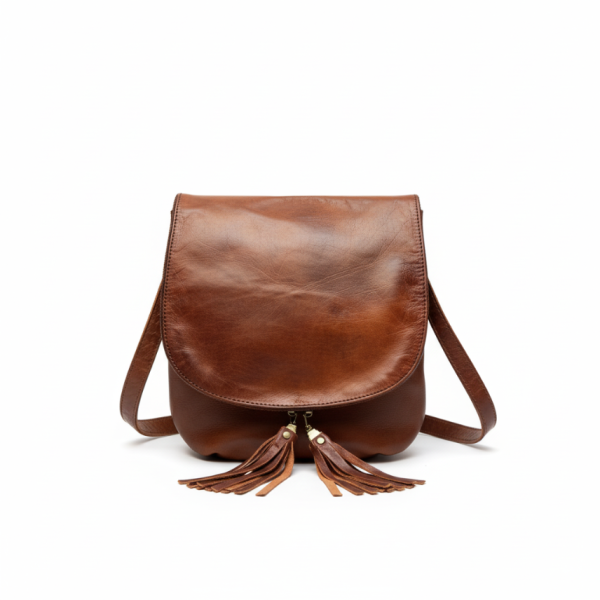
Brown Leather Crossbody Bag with Tassel Detail – Handcrafted Purse
Original price was: USD$ 202.00.USD$ 91.08Current price is: USD$ 91.08.
Brown Leather Crossbody Purse – Handmade Envelope Bag with Adjustable Strap
Original price was: USD$ 190.00.USD$ 88.44Current price is: USD$ 88.44.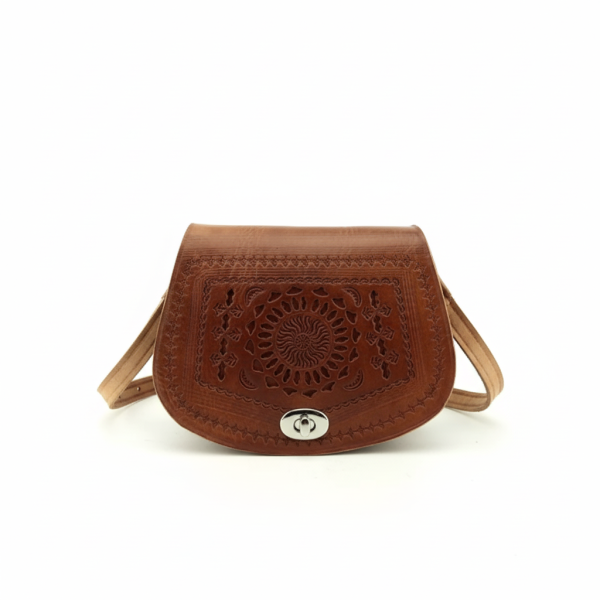
Embossed Leather Mandala Crossbody Bag – Handcrafted Saddle Purse
Original price was: USD$ 190.00.USD$ 75.00Current price is: USD$ 75.00.
Cognac Leather Crossbody Purse – Handcrafted Everyday Bag
Original price was: USD$ 190.00.USD$ 88.44Current price is: USD$ 88.44.Authentic Moroccan leather bag prices vary by size and craftsmanship:
- Small pouches: $15-35
- Medium bags: $50-120
- Large/premium bags: $100-300
- Master artisan pieces: $200-500+
Anything significantly cheaper likely isn’t authentic handmade leather.
Souk shopping offers bargaining but requires:
- Travel costs and time
- Negotiation skills
- Quality assessment expertise
- Shipping arrangements
Online shopping provides:
- Verified authenticity guarantees
- Detailed product descriptions
- Easy returns and exchanges
- Competitive pricing without haggling stress
Follow these essential care steps:
- Clean with soft, dry cloth monthly
- Condition with leather balm every 3-4 months
- Store in cool, dry place with shape-maintaining stuffing
- Avoid direct sunlight and excessive moisture
- Handle oils and stains immediately with appropriate cleaners
Learn more about leather care in our Complete Guide to Caring for Moroccan Leather.
Absolutely! Moroccan leather bags are designed for durability. Traditional tanning methods create leather that:
- Improves with age (develops beautiful patina)
- Resists wear from daily handling
- Maintains shape with proper care
- Complements both casual and formal outfits
Fez leather is considered premium because:
- Ancient tanning methods dating back 1,000+ years
- Natural dyes from traditional sources
- Specialized artisans with generational skills
- Unique texture from the traditional lime and pigeon dropping process
Yes! We provide:
- Worldwide shipping to 50+ countries
- Secure packaging to prevent damage
- Tracking information for all orders
- Customs documentation handled professionally
- Insurance options for high-value purchases
Free shipping available on all orders.
Yes! We offer a 30-day return policy for items in original condition. Return shipping is free if we made an error, otherwise customer pays return costs. We also offer exchanges and handle damaged items case-by-case.
For complete return conditions, process details, and restrictions, please review our Return & Refund Policy.
Based on our sales data, crossbody bags with traditional embossing are most popular because they:
- Perfect for travel and daily use
- Showcase authentic Moroccan craftsmanship
- Available in multiple colors and sizes
Vegetable-tanned leather uses natural plant extracts — pomegranate rind, indigo, henna — in a process taking several weeks. It produces leather with a natural earthy smell, improved water resistance, and a deepening patina over years of use. Chrome-tanned leather uses chromium salts and takes under 24 hours; it’s softer initially but deteriorates faster and carries a faint chemical smell. Authentic Moroccan artisan workshops, including our own, exclusively use vegetable tanning.
Three reliable tests: first, look for micro-variations — genuine handmade bags have slight asymmetries in stitching and tonal variations in the leather that machines cannot replicate. Second, check the seams on the interior — hand-stitched seams show visible thread passage through the leather. Third, ask the vendor which souk workshop made it; authentic artisans know the name of the maâlem (master craftsman) and are proud to share it. Vague answers or immediate deflection to the price suggest factory-made goods.
Both cities offer excellent leather, but with differences. Fez — home to the famous Chouara Tannery — has a longer tanning history and goods are generally 10–20% cheaper than in Marrakech’s tourist-heavy souks. Marrakech offers more variety in modern styles and the convenience of being Morocco’s most-visited city. If quality and price are your priority, Fez is worth the trip. If convenience matters more, Souk Cherratin in Marrakech — away from Jemaa el-Fna — offers the best balance of authenticity and accessibility.